IB DP Biology: SL復習筆記3.3.1 Inheritance

Mendel's Experiments
- Gregor Mendel?was an Austrian monk
- He was trained in mathematics and natural history at the University of Vienna
- In the mid-19th century, Mendel carried out breeding experiments on large numbers of pea plants whilst looking after the monastery gardens
- He studied how?characteristics were passed on between generations of plants
- Due to his extensive work on the understanding of inheritance, he is sometimes called the?father of genetics
Mendel's groundbreaking work
- Mendel carefully?transferred pollen?from one pea plant to the reproductive parts of another
- This technique?eliminated any uncertainty?from his data since he knew which plants were fertilized by which pollen
- He?collected the pea seeds from these plants?and grew them in favourable conditions to find out their characteristics
- He also?cross-bred offspring peas?in order to find out which, if any characteristics would appear in future generations
- Mendel investigated the?height?of pea plants, the?colours of their flowers?and the?smoothness of their seed coat
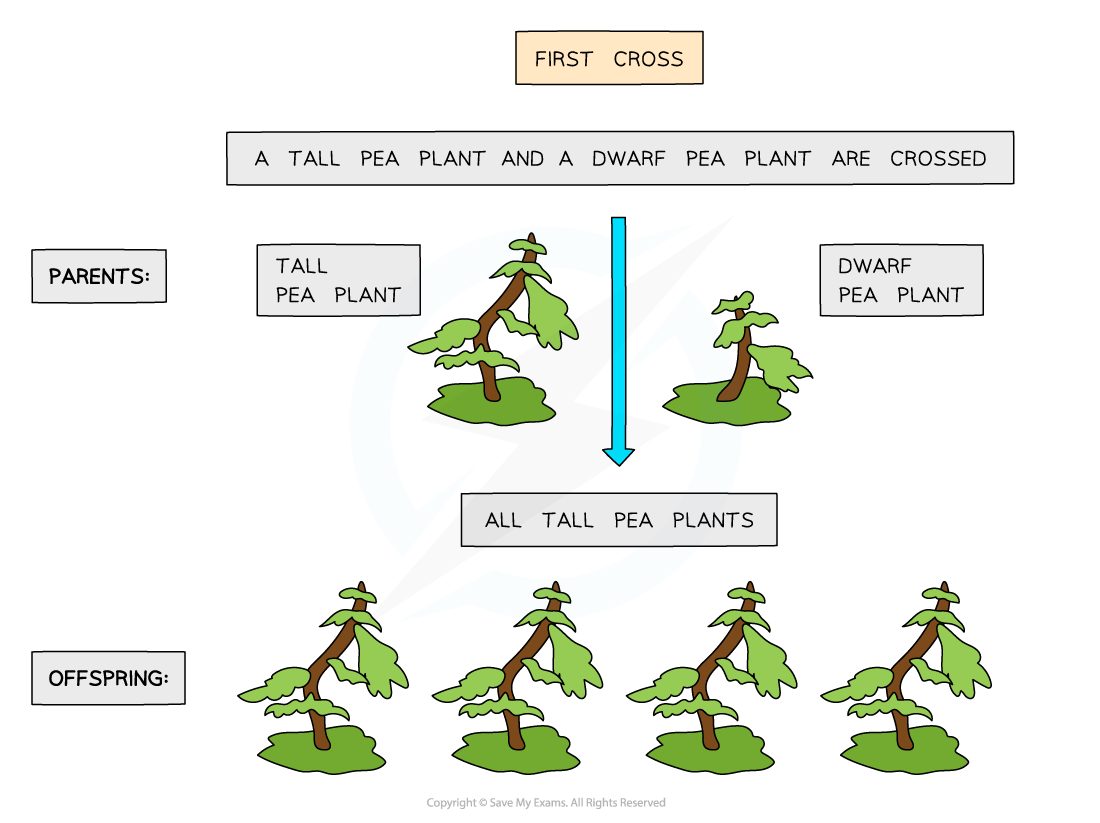
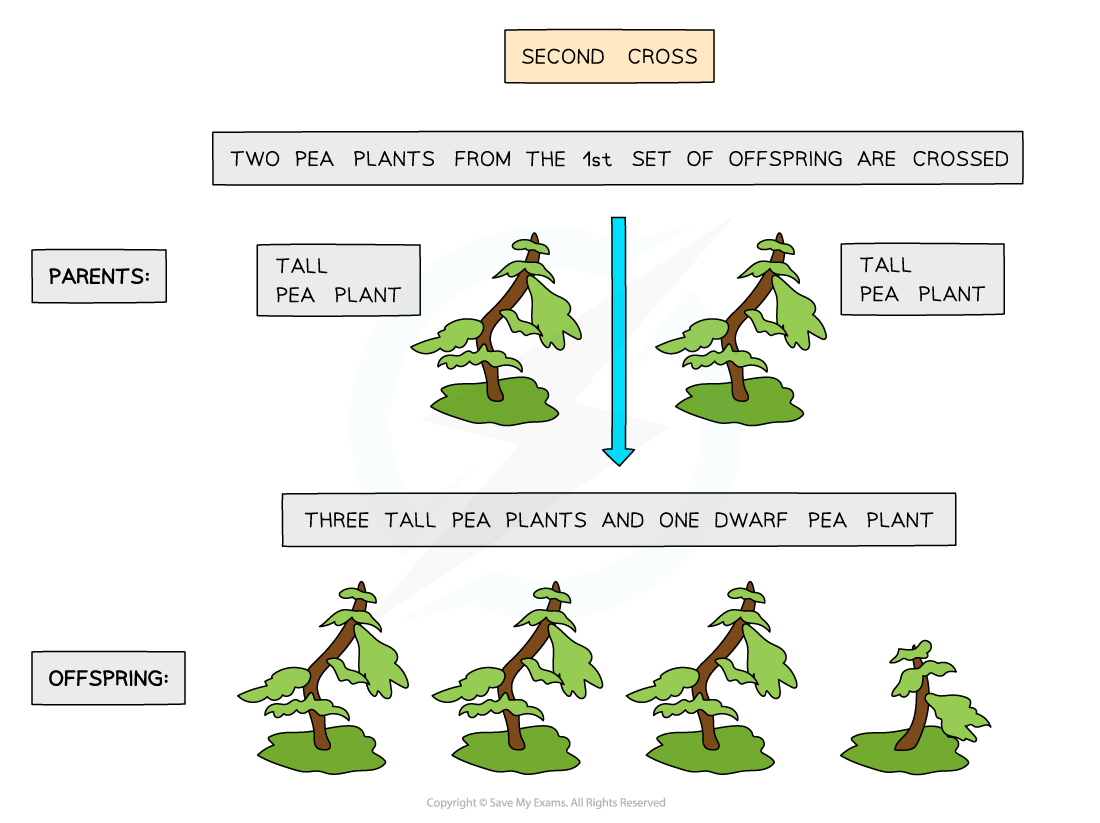
Mendel's pea plant crosses
Mendel's Pea Plant Results Table
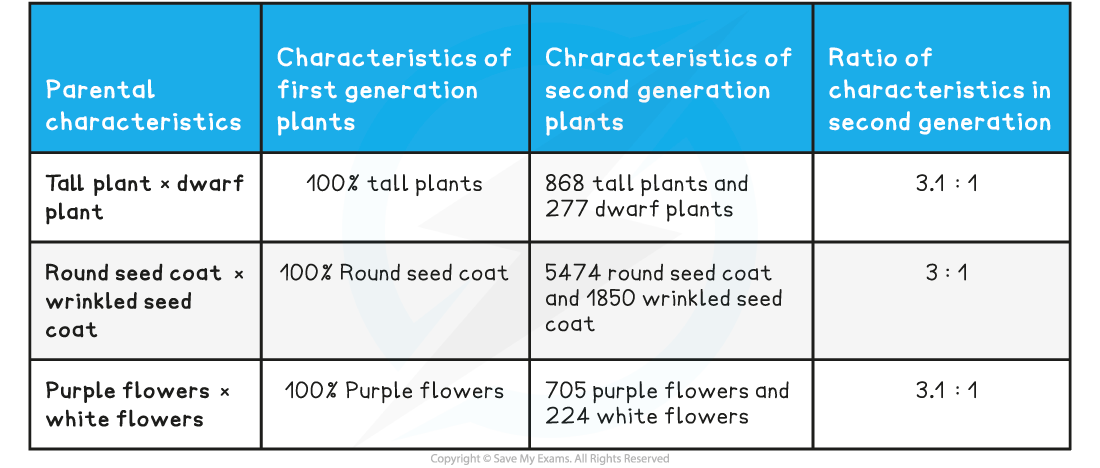
- Mendel found that characteristics were?inherited?in a?predictable pattern
- All?pea plants in the first generation had the same characteristic as?one?of the parental plants
- The offspring plants in the second generation had characteristics of?both?parent plants in a?3:1 ratio
- Without knowing it, Mendel had discovered genes, he referred to them as?'units of inheritance'
- He also discovered that some genes are?dominant?and some genes are?recessive
- Different forms of the same gene are called?alleles
Mendel's Experimental Technique
NOS: Making quantitative measurements with replicates to ensure reliability; Mendel's genetic crosses with pea plants generated numerical data
- Mendel was not the first to investigate inheritance using plants
- However, he was the first to generate strong numerical (quantitative) data, as opposed to observations only (qualitative)
- Mendel also used a?large number?of pea plants in his studies, for example in one investigation he recorded the characteristics for over 7,000 pea seeds
- By recording data for such a large number of seeds he ensured?reliability?in his conclusions
- Many replicates?are important in a scientific investigation because they allow for:
- Ensuring reliability of results
- Identification of anomalous points
- Further statistical analysis to establish a significant difference
Gametes
- Gametes are the?sex cells?of an organism
- For example, the?sperm?and?egg?(ovum) cells in humans
- The?egg is larger than the sperm?as most of its space contains food to nourish a growing embryo
- The sperm cell contains?many mitochondria?to release energy for its motion
- Gametes?fuse?during fertilization to form a?zygote
- These sex cells are formed during?meiosis?and only have?one?copy of each chromosome and so are?haploid?cells
- For humans, that means the sperm and egg cells contain?23 single chromosomes?in their nucleus
- As there is only?one chromosome from each homologous pair?there is only?one allele?of each gene present
- This allele may be dominant, recessive or?co-dominant
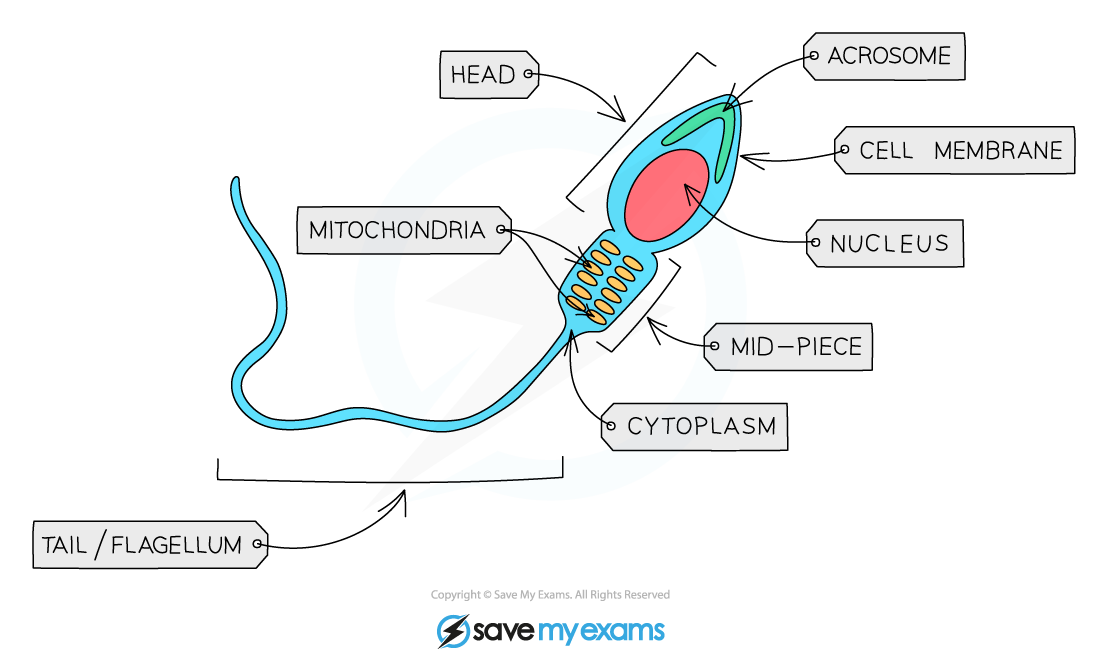
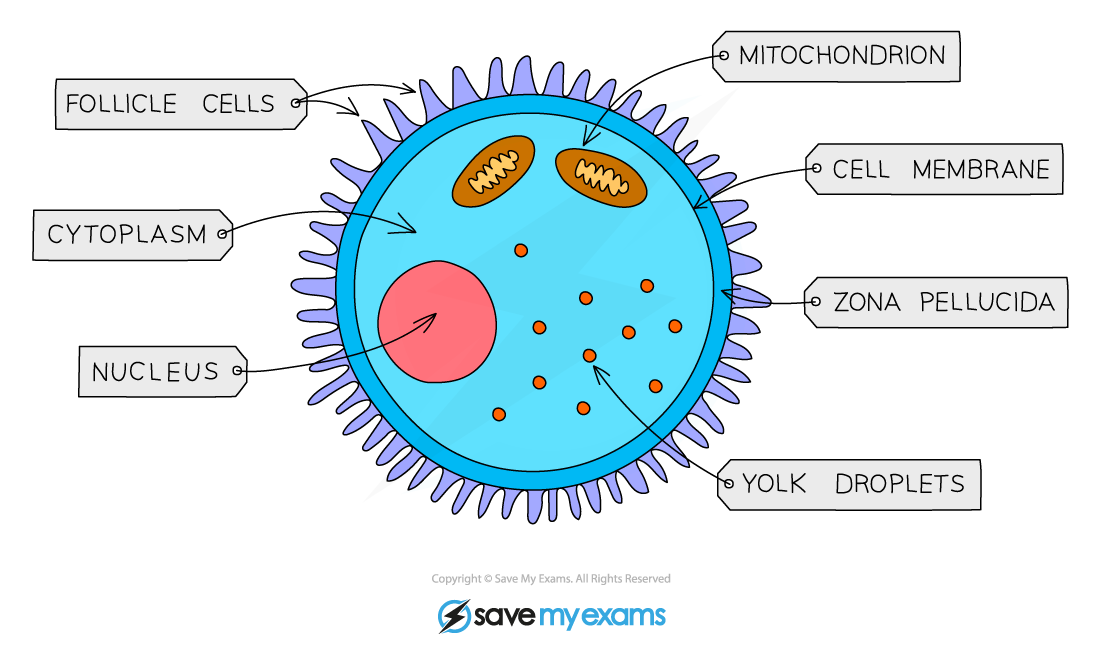
The structure of human gametes - the sperm and egg
Exam Tip
You will not need to be able to quote all of Mendel's experiments and his results but you should be able to explain why there is always a 3:1 ratio in second generation organisms
轉載自savemyexams
以上就是關于【IB DP Biology: SL復習筆記3.3.1 Inheritance】的解答,如需了解學校/賽事/課程動態,可至翰林教育官網獲取更多信息。
往期文章閱讀推薦:
翰林獨家 | 經濟學競賽核心精講,一冊打通NEC/IEO/USAEBO!
2026 AMC10/12美國數學競賽新賽季!【翰林教育 × 清華大學出版社】獨家教材全面發售!


翰林AMC8視頻課重磅上線!

國際競賽真題資源免費領取






