IB DP Physics: HL復習筆記4.3.5 Malus’s Law

Malus's Law
Intensity of Polarised Light
- The?intensity?of unpolarised light is reduced as a result of polarisation
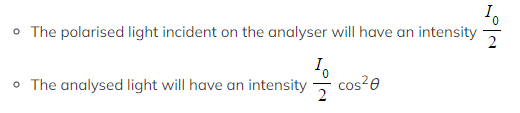
- If unpolarised light of intensity?I0?passes through a polariser, the?intensity of the transmitted polarised light falls by a half
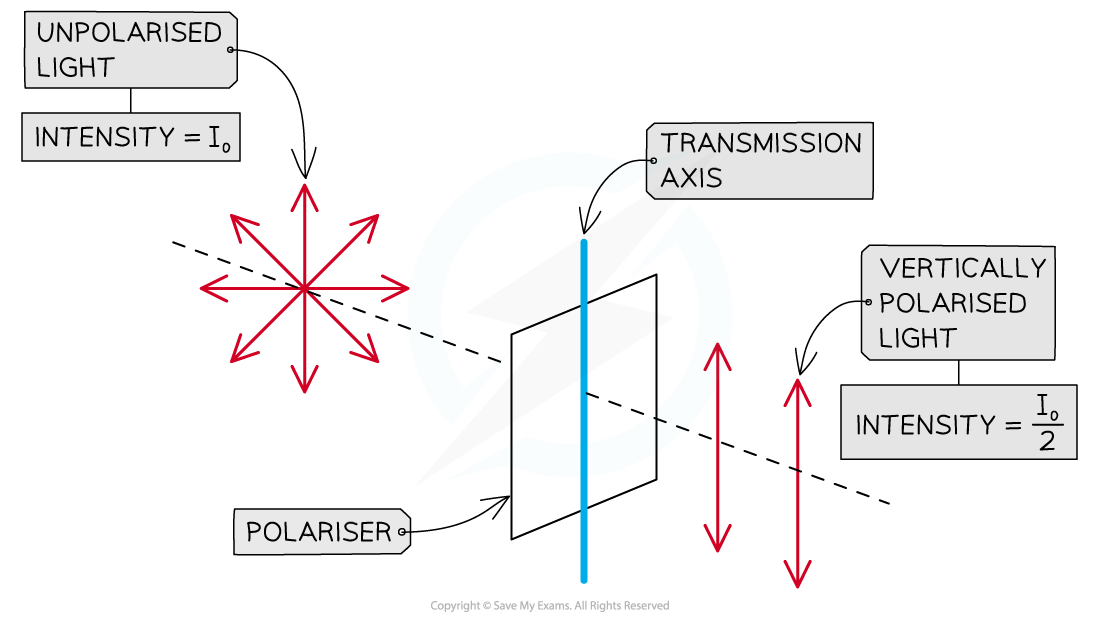
The intensity of polarised light transmitted by a polariser is half the intensity of the unpolarised light incident on it
Intensity of Analysed Light
- The first filter that the unpolarised light goes through is the?polariser
- A second polarising filter placed after the first one is known as an?analyser?
- If the analyser has the?same orientation?as the polariser, the light transmitted by the analyser has the?same intensity?as the light incident on it
- If they have a different orientation, we must use?Malus's Law?to determine the intensity of the transmitted light
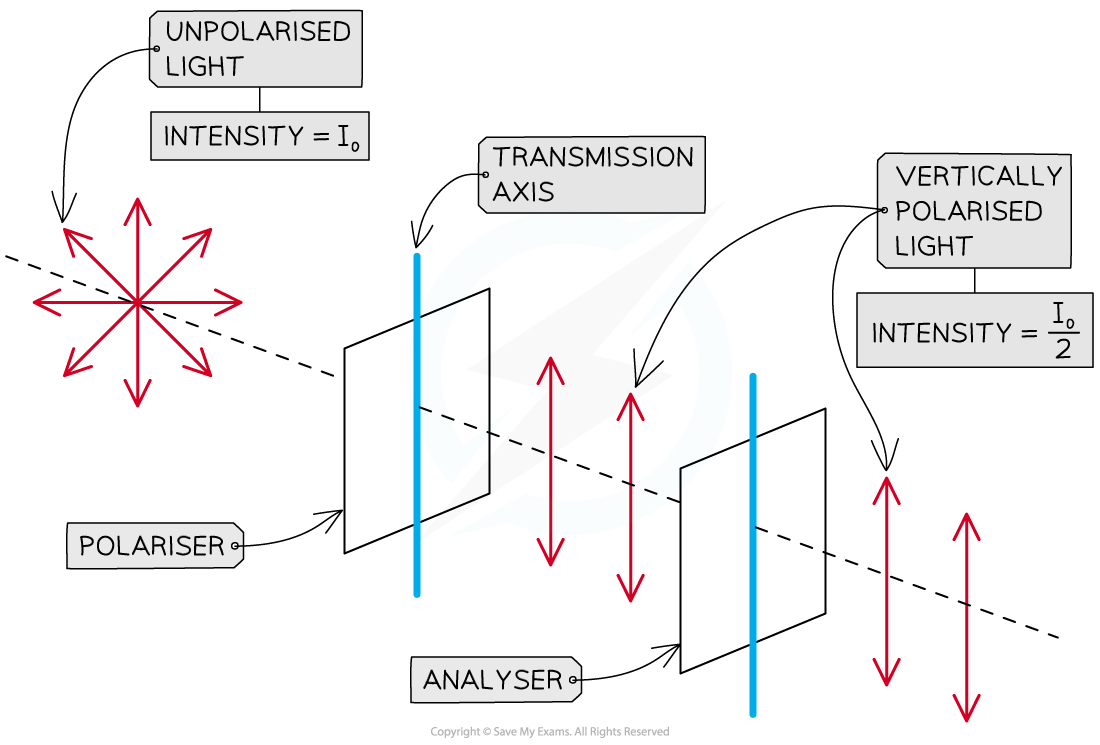
When the polariser and the analyser have the same orientation (i.e. parallel transmission axes), the intensity of analysed light is the same as the intensity of polarised light
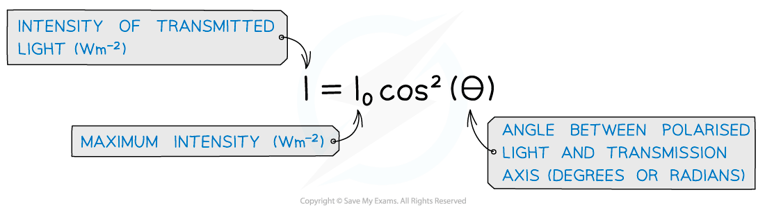
- Malus's Law states that if the analyser is rotated by an angle?θ?with respect to the polariser, the intensity of the light transmitted by the analyser is
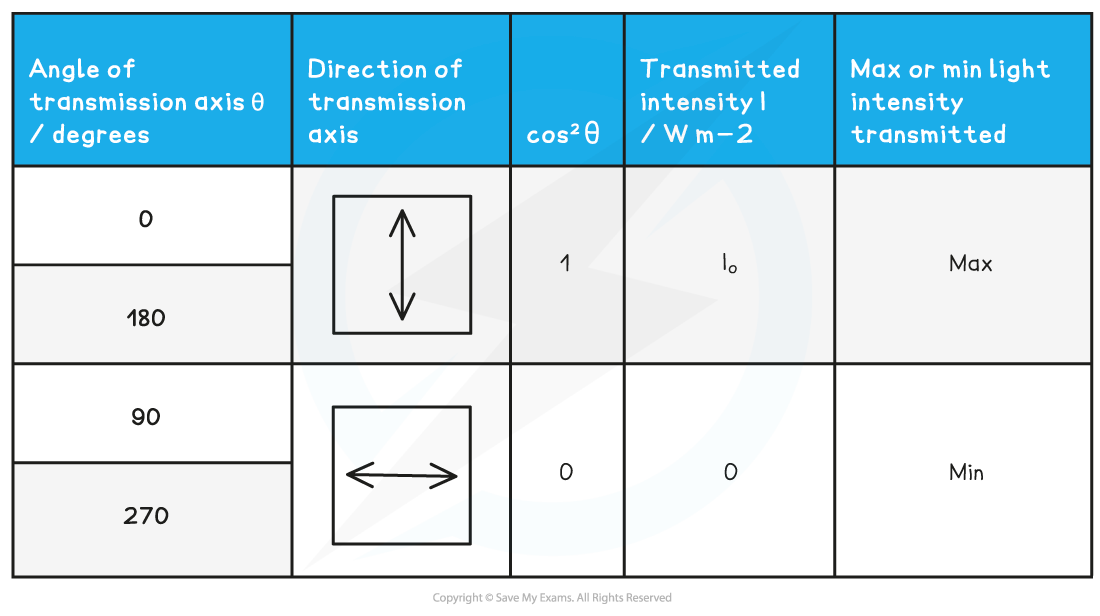
- If the polariser and the analyser have the?same orientation, light transmitted by the analyser has the?same?intensity?as light that is incident upon it, since cos(0) = 1
 The intensity will not decrease between the polariser and the analyser
- If the analyser is rotated by?90°?with respect to the polariser (θ?= 90°), the intensity of the light transmitted by the analyser will be?zero, since?cos(90°) = 0
- If vertically polarised light is incident on an analyser with a horizontal transmission axis, none of the light will be transmitted through the analyser
- In this instance, all the light will be absorbed
Table of transmitted intensity when vertically polarised light is incident upon an analyser
- If the analyser has?any other orientation?with respect to the polarised light incident upon it, then?Malus's Law?is used to determine the intensity of the analysed light
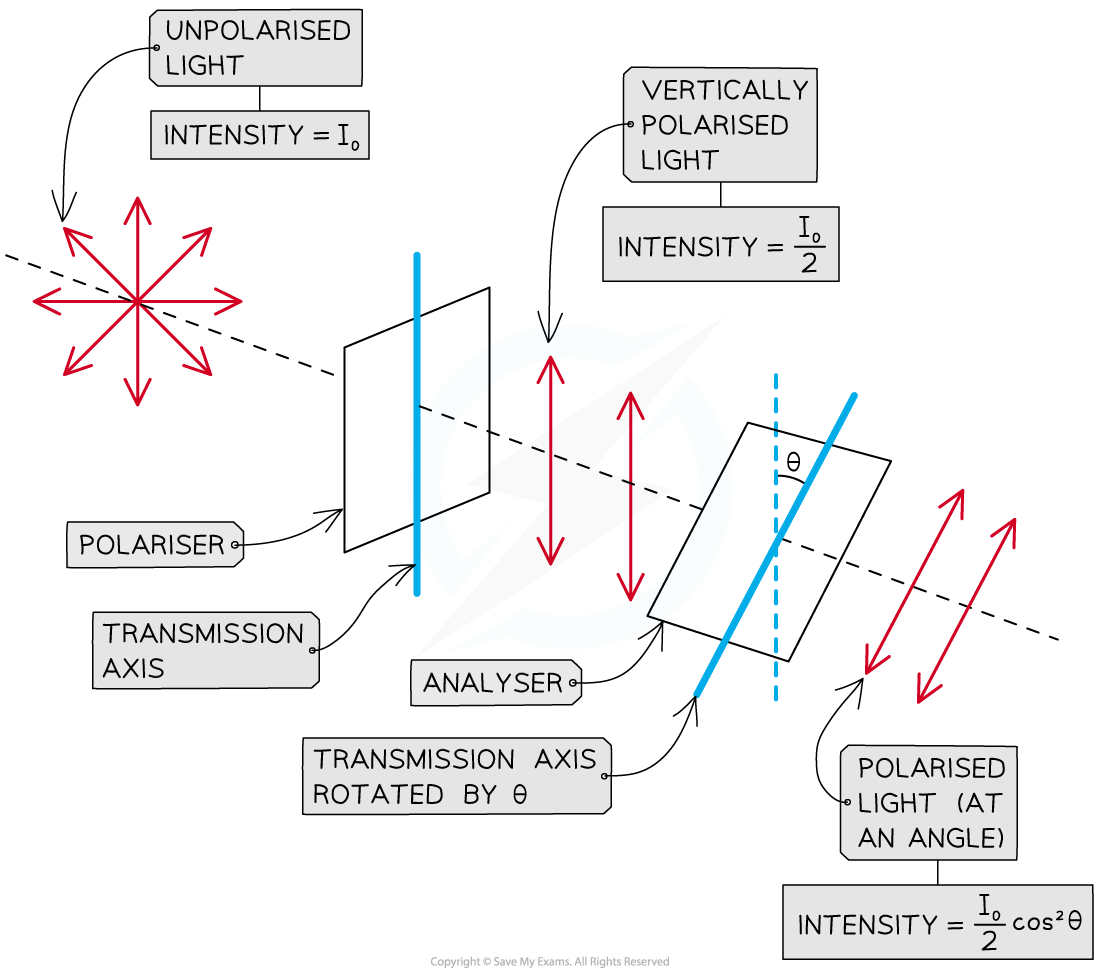
When the analyser is rotated with respect to the polariser by an angle, the intensity of analysed light variates with cos2θ
- The resulting graph of the light intensity with angle, as the analyser is rotated through 360°, looks as follows:
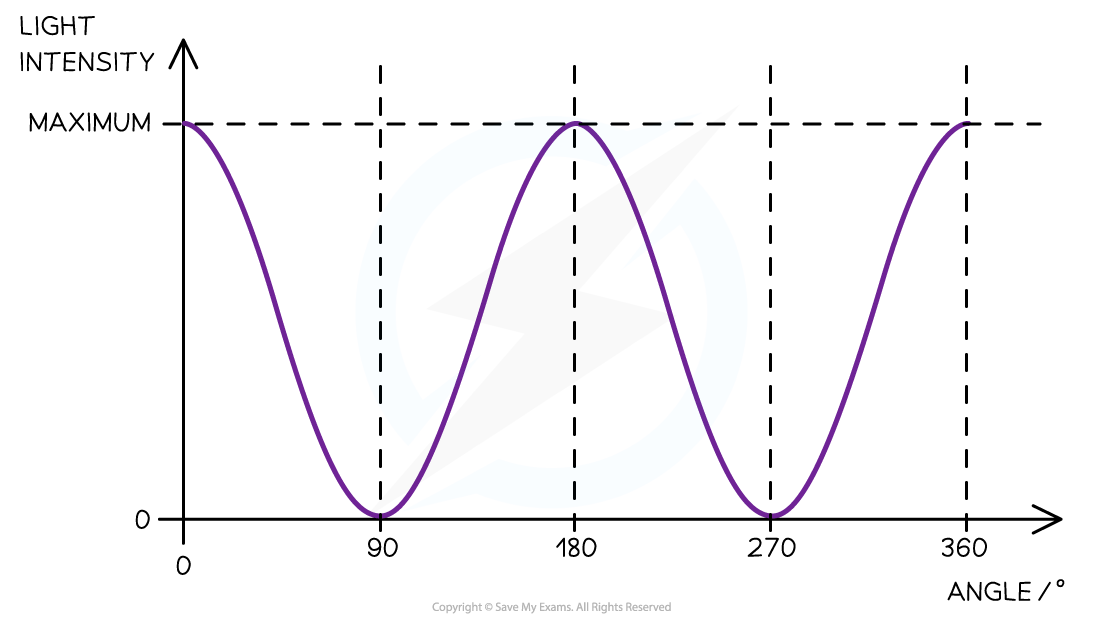
Graph showing how the intensity of the analysed light beam varies with the angle between the transmission axes of the polariser and analyser
- The maximum light intensity?I?of the graph is still?half?of the intensity from the unpolarised light (I0)

- The two extremes of maximum light intensity and minimum light intensity depend on the orientations of just one of the polarisers
- If an unpolarised light source is placed in front of two identical polarising filters,?A?and?B, with their transmission axes?parallel:
- Filter?A?will polarise the light in a certain axis
- All of the polarised light will pass through filter?B?unaffected
- In this case, the?maximum intensity of light is transmitted
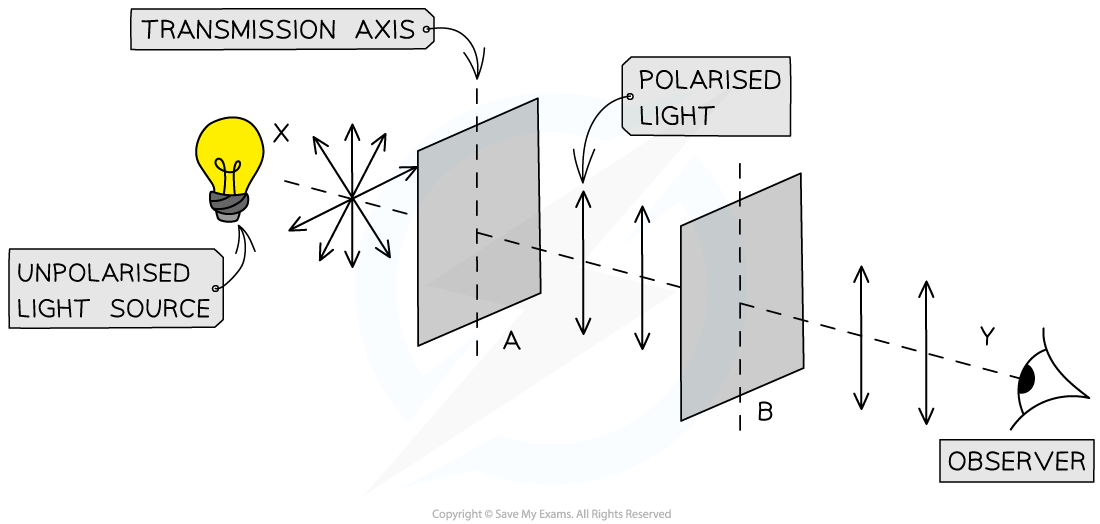
When both polarisers have the same transmission axis, the intensity of the transmitted light is at its maximum
- As the polarising filter?B?is rotated anticlockwise, the intensity of the light observed changes periodically depending on the angle?B?is rotated through
- When?A?and?B?have their transmission axes?perpendicular?to each other:
- Filter?A?will polarise the light in a certain axis
- This time none of the polarised light will pass through filter?B
- In this case, the?minimum intensity of light is transmitted
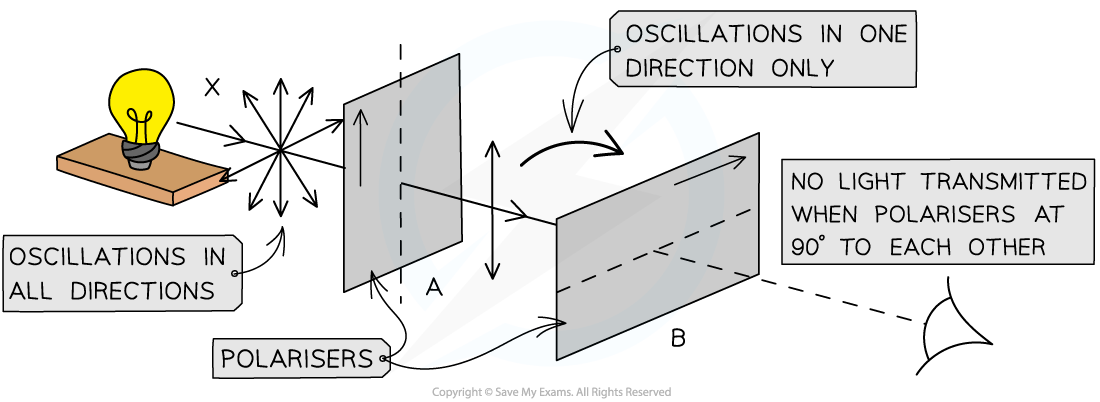
When one of the polarisers is rotated through 90°, the intensity of the transmitted light drops to zero
Worked Example
Unpolarised light of intensity?I0?is incident on a polariser. The transmitted polarised light is then incident on an analyser. The transmission axis of the analyser makes an angle of 45° with the transmission axis of the polariser.
Determine the intensity of light transmitted by the analyser.
Step 1: Write down the known quantities
-
- Intensity of unpolarised light =?I0
- Angle of rotation of analyser with respect to polariser,? θ = 45°
Step 2: Write down Malus's law?

Step 3: Substitute the value of the angle θ = 45°?



-
- The intensity of light transmitted by the analyser is?a quarter?the intensity of unpolarised light
- (and one half the intensity of light transmitted by the polariser)
Exam Tip
Remember that the unpolarised light coming through will always halve in intensity when it becomes polarised through an polariser. Only?then?should you use Malus' law to find the intensity of the light after it has passed through the analyser. Therefore, the I and I0?in Malus' law are the intensities of light that are already polarised.
轉載自savemyexams
以上就是關于【IB DP Physics: HL復習筆記4.3.5 Malus’s Law】的解答,如需了解學校/賽事/課程動態,可至翰林教育官網獲取更多信息。
往期文章閱讀推薦:
翰林獨家 | 經濟學競賽核心精講,一冊打通NEC/IEO/USAEBO!
2026 AMC10/12美國數學競賽新賽季!【翰林教育 × 清華大學出版社】獨家教材全面發售!


翰林AMC8視頻課重磅上線!

國際競賽真題資源免費領取






