Edexcel A Level Physics:復習筆記4.5 Hooke's Law

Hooke's Law
- When a force?F?is added to the bottom of a vertical metal wire of length?L, the wire?stretches
- A material obeys Hooke’s Law if:
The extension of the material is directly proportional to the applied force (load) up to the limit of proportionality
- This linear relationship is represented by the Hooke’s law equation:
ΔF?=?kΔx
- Where:
- F?= applied force (N)
- k?= spring constant (N m–1)
- Δx?= extension (m)
- The spring constant is a property of the material being stretched and measures the?stiffness?of a material
- The larger the spring constant, the stiffer the material
- Hooke's Law applies to both?extensions?and?compressions:
- The extension of an object is determined by how much it has?increased?in length
- The compression of an object is determined by how much it has?decreased?in length

Stretching a spring with a load produces a force that leads to an extension
Force–Extension Graphs
- The way a material responds to a given force can be shown on a force-extension graph
- A material may obey Hooke's Law up to a point
- This is shown on its force-extension graph by a?straight line through the origin
- As more force is added, the graph may start to curve slightly
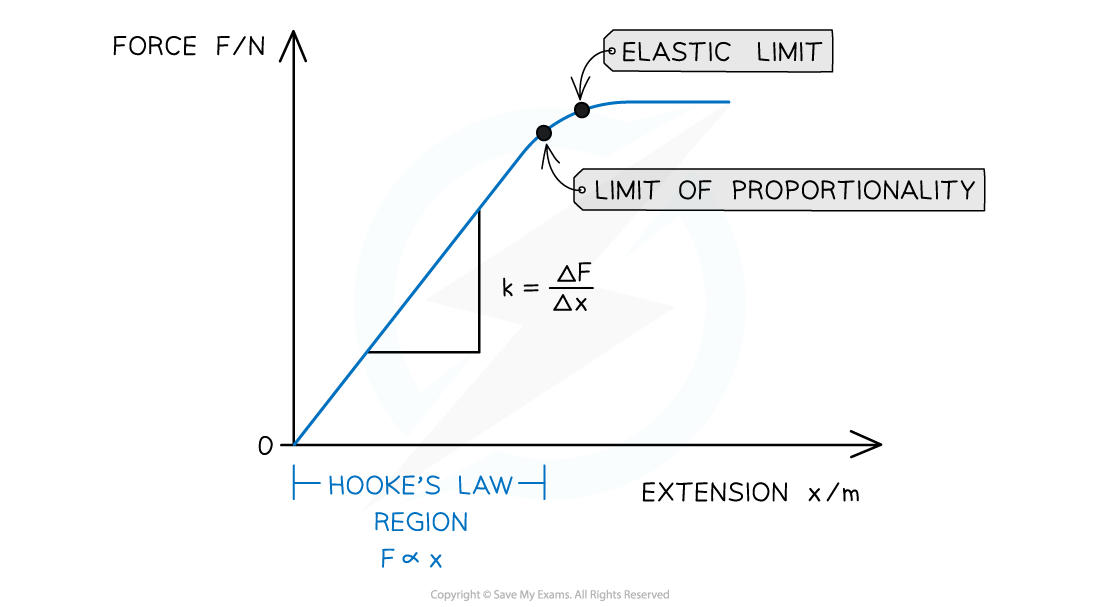
The Hooke's Law region of a force-extension graph is a straight line. The spring constant is the gradient of that region
- The key features of the graph are:
- The limit of proportionality:?The point beyond which Hooke's law is no longer true when stretching a material i.e. the extension is no longer proportional to the applied force
- The point is identified on the graph where the line starts to curve (flattens out)
- Elastic limit:?The maximum amount a material can be stretched and still return to its original length (above which the material will no longer be?elastic). This point is always?after?the limit of proportionality
- The?gradient?of this graph is equal to the?spring constant?k
- The limit of proportionality:?The point beyond which Hooke's law is no longer true when stretching a material i.e. the extension is no longer proportional to the applied force
Worked Example
A spring was stretched with increasing load.
The graph of the results is shown below.
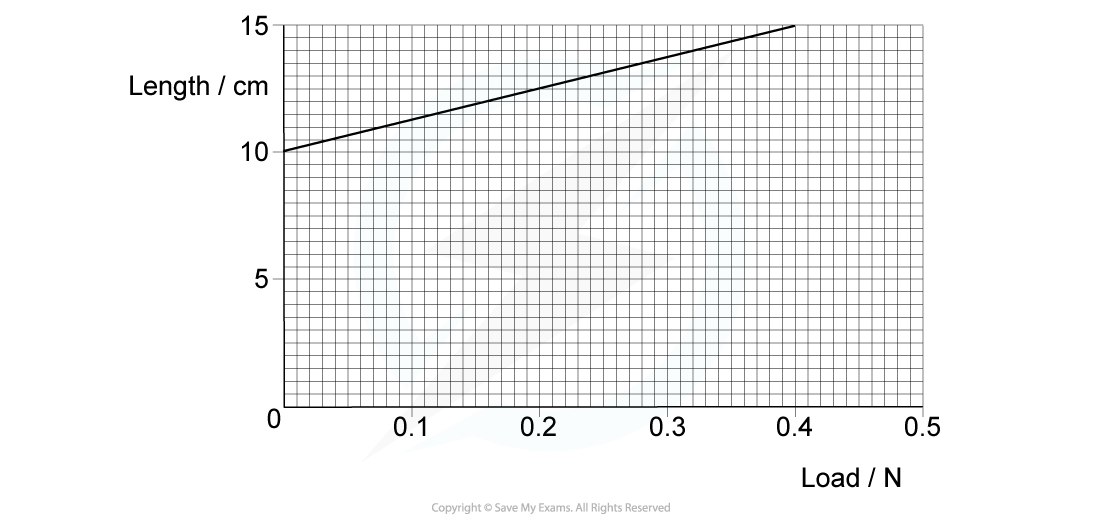
What is the spring constant?
Step 1: Rearrange Hooke's Law to make the spring constant the subject
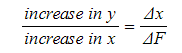 Step 2: Compare the gradient to the equation in Step 1
-
- This graph is length - extension, so the gradient gives:

-
- Therefore k is the reciprocal of the gradient
Step 3:? Find the gradient
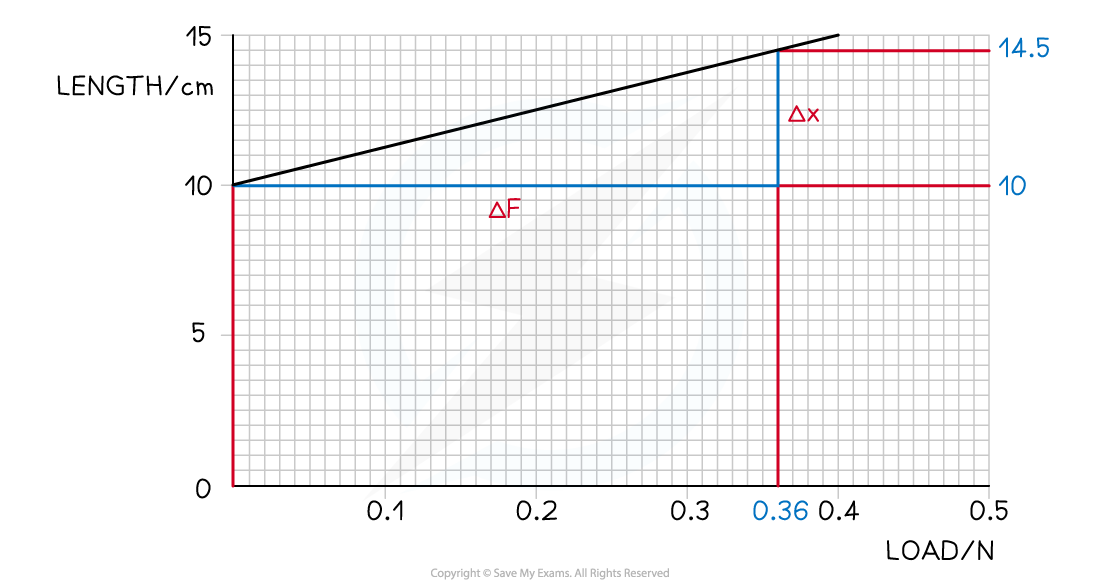
Step 4: Calculate gradient

Step 5: Calculate the spring constant by finding the reciprocal of the gradient
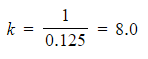
Step 6: Write the answer, including units
-
- Spring constant, k = 8.0 N m?1
Exam Tip
Always double check the axes before finding the spring constant as the gradient of a force-extension graph. Exam questions often swap the force (or load) onto the x-axis and extension (or length) on the y-axis.
In this case, the gradient is?not?the spring constant, it is?1 ÷ gradient?instead.
轉載自savemyexams
以上就是關于【Edexcel A Level Physics:復習筆記4.5 Hooke's Law】的解答,如需了解學校/賽事/課程動態,可至翰林教育官網獲取更多信息。
往期文章閱讀推薦:
翰林獨家 | 經濟學競賽核心精講,一冊打通NEC/IEO/USAEBO!
2026 ALEVEL 夏考A率出爐!愛德思vs牛津AQA,哪些科目真的“好出分”?


翰林AMC8視頻課重磅上線!

國際競賽真題資源免費領取






