AQA A Level Biology復習筆記1.5.4 The Structure of RNA

The Structure of RNA
- Like DNA, the nucleic acid RNA (ribonucleic acid) is a?polynucleotide?– it is made up of?many nucleotides?linked together in a chain
- Like DNA, RNA nucleotides contain the nitrogenous bases adenine (A), guanine (G) and cytosine (C)
- Unlike DNA, RNA nucleotides?never contain?the nitrogenous base?thymine?(T) – in place of this they contain the nitrogenous base?uracil?(U)
- Unlike DNA, RNA nucleotides contain the pentose sugar?ribose?(instead of deoxyribose)
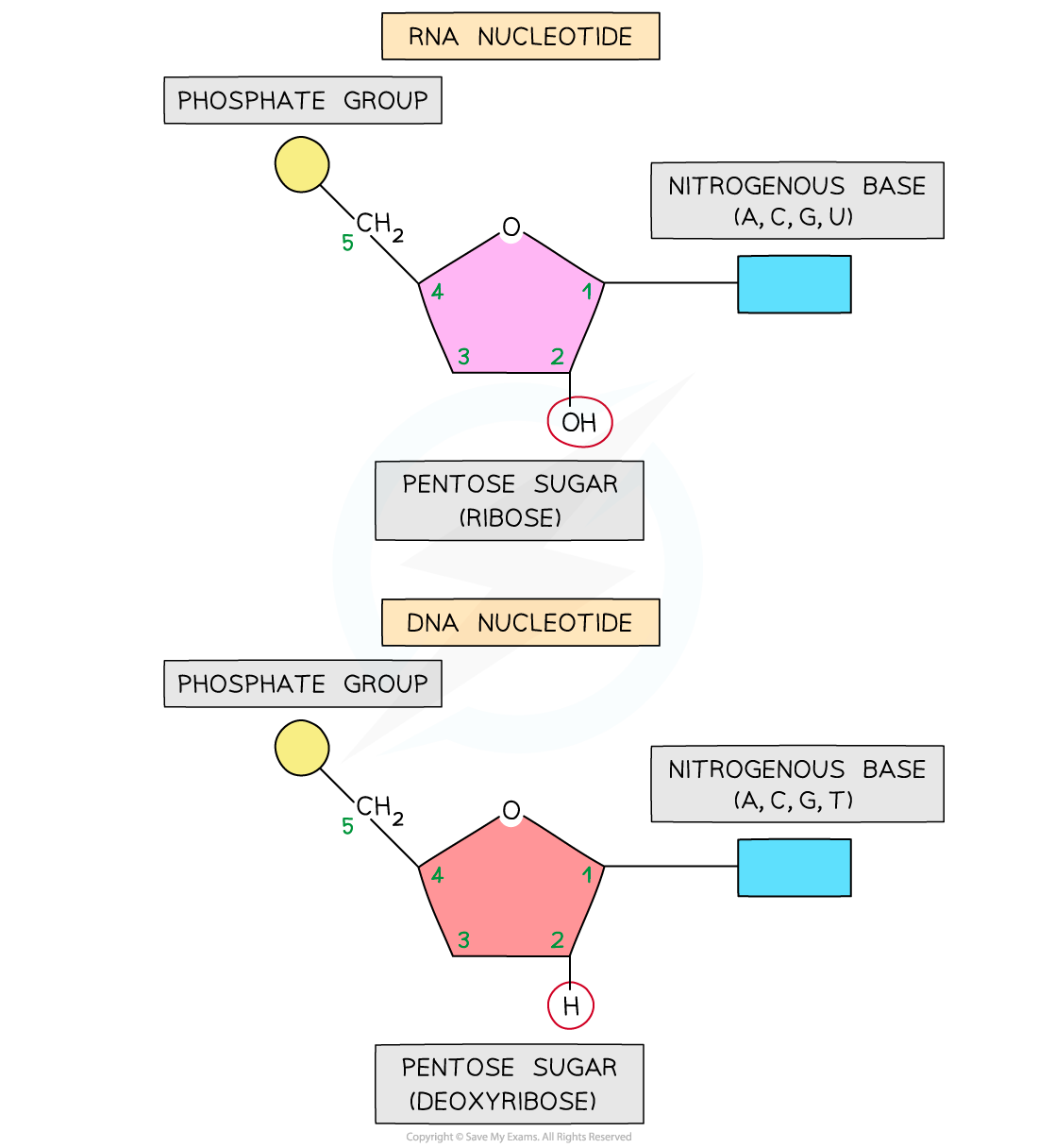
An RNA nucleotide compared with a DNA nucleotide
- Unlike DNA, RNA molecules are only made up of?one polynucleotide strand?(they are single-stranded)
- RNA polynucleotide chains are relatively?short compared to DNA
- Each RNA polynucleotide strand is made up of?alternating ribose sugars and phosphate groups linked together, with the nitrogenous bases of each nucleotide projecting out sideways from the single-stranded RNA molecule
- The?sugar-phosphate bonds?(between different nucleotides in the same strand) are?covalent?bonds?known as?phosphodiester bonds
- These bonds form what is known as the?sugar-phosphate backbone?of the RNA polynucleotide strand
- The phosphodiester bonds link the?5-carbon of one ribose sugar?molecule to the phosphate group from the same nucleotide, which is itself linked by another phosphodiester bond to the?3-carbon of the ribose sugar molecule of the next nucleotide?in the strand
- An example of an RNA molecule is?messenger RNA?(mRNA), which is the transcript copy of a gene that encodes a specific polypeptide. Two other examples are?transfer RNA (tRNA)?and?ribosomal RNA (rRNA)
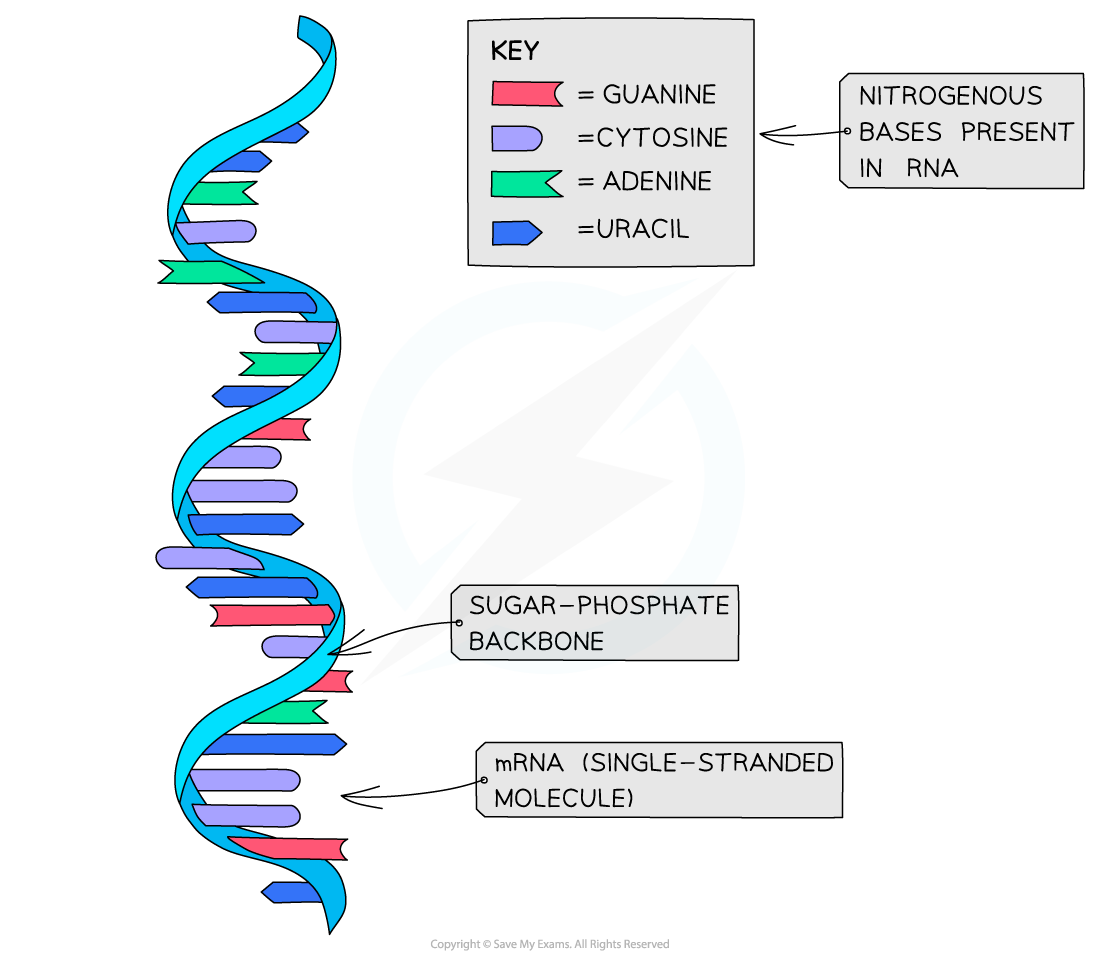
Messenger RNA (mRNA) provides a good example of the structure of RNA
轉載自savemyexams
以上就是關于【AQA A Level Biology復習筆記1.5.4 The Structure of RNA】的解答,如需了解學校/賽事/課程動態(tài),可至翰林教育官網獲取更多信息。
往期文章閱讀推薦:
翰林獨家 | 經濟學競賽核心精講,一冊打通NEC/IEO/USAEBO!
2026 ALEVEL 夏考A率出爐!愛德思vs牛津AQA,哪些科目真的“好出分”?


翰林AMC8視頻課重磅上線!

國際競賽真題資源免費領取






