AQA A Level Biology復習筆記1.1.1 Biological Molecules: Key Terms

Biological Molecules: Key Terms
- There is much variety of life within and between organisms but the biochemical basis of life is similar for all living things
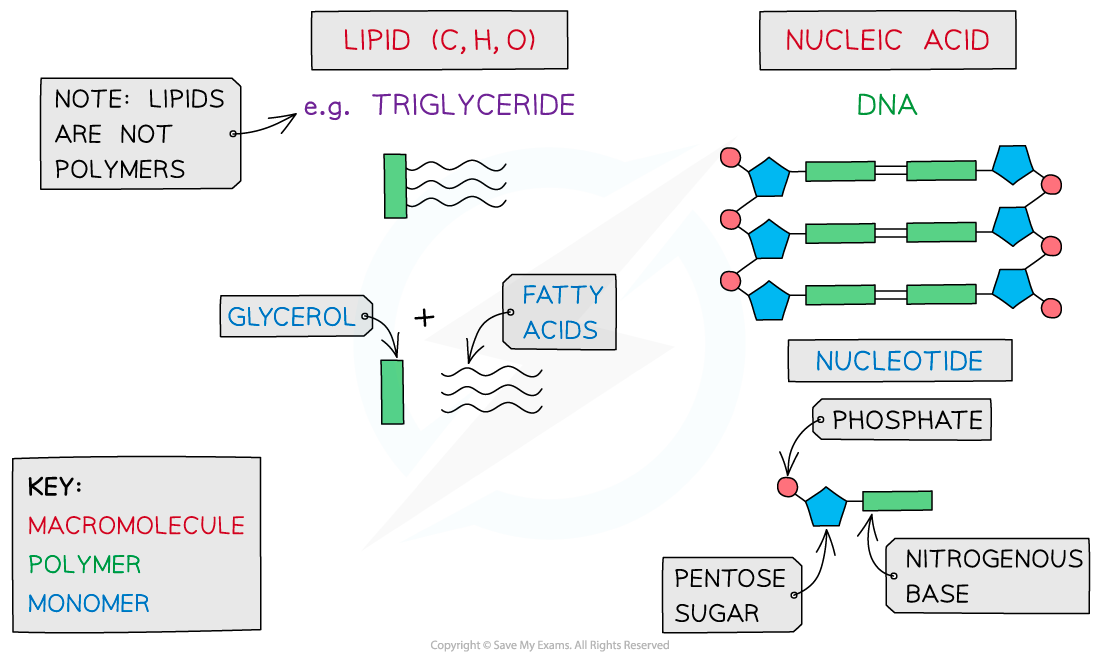
- The key molecules that are required to build structures that enable organisms to function are:
- Carbohydrates
- Proteins
- Lipids
- Nucleic Acids
- Water
- Monomers?are the smaller units from which larger molecules are made
- Polymers?are molecules made from a large number of monomers joined together in a chain
?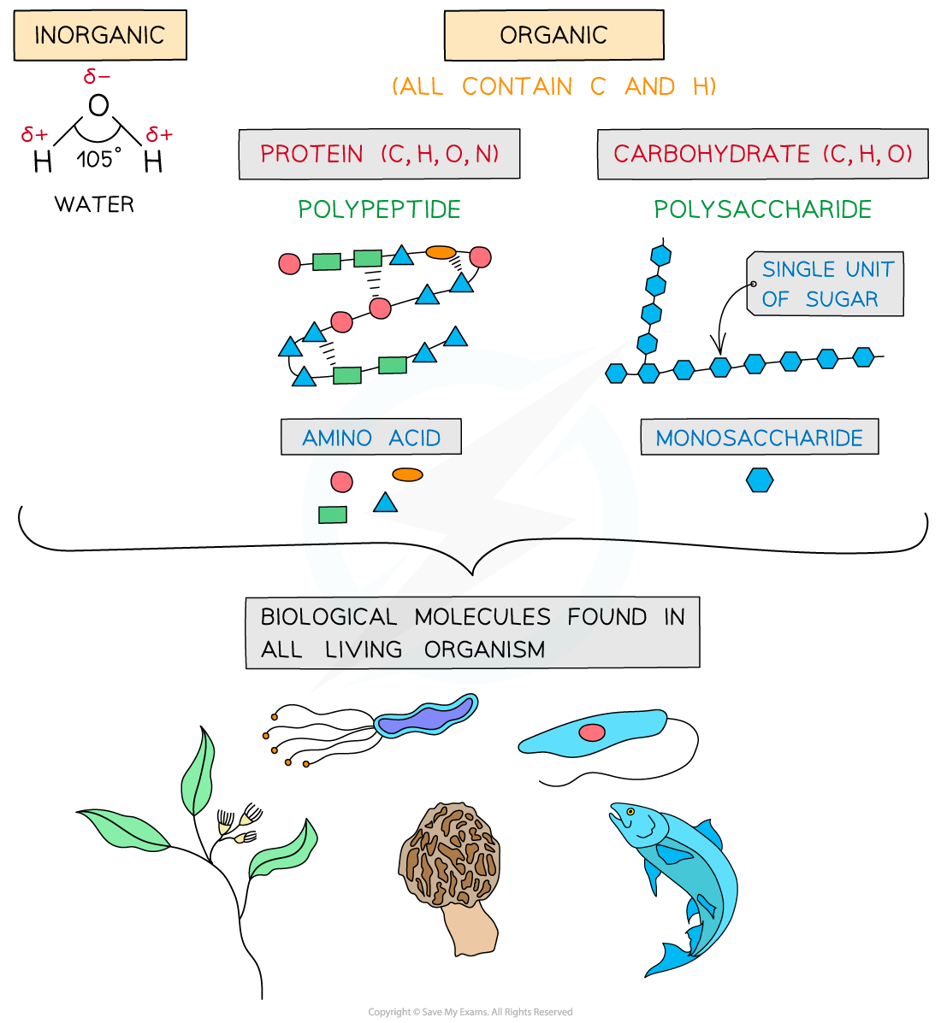
The key biological molecules for living organisms
- Carbohydrates, proteins, lipids and nucleic acids contain the elements?carbon?(C) and?hydrogen?(H) making them?organic compounds
- Carbon atoms are key to the organic compounds because:
- Each carbon atom can form?four?covalent bonds?– this makes the compounds very stable (as covalent bonds are so strong they require a large input of energy to break them)
- Carbon atoms can form covalent bonds with oxygen, nitrogen and sulfur
- Carbon atoms can bond to form?straight chains,?branched?chains?or?rings
- Carbon compounds can form small single subunits?(monomers)?that bond with many repeating subunits to form large molecules?(polymers)?by a process called?polymerisation
- Macromolecules?are very large molecules
- That contain 1000 or more atoms therefore having a?high molecular mass
- Polymers can be macromolecules, however?not?all?macromolecules are polymers as the subunits of polymers have to be the?same?repeating units
Carbohydrates
- Carbohydrates are one of the main carbon-based compounds in living organisms
- All molecules in this group contain?C,?H?and?O
- As?H?and?O?atoms are always present in the?ratio?of?2:1?(eg. water H2O, which is where ‘hydrate’ comes from) they can be represented by the formula?Cx?(H2O)y
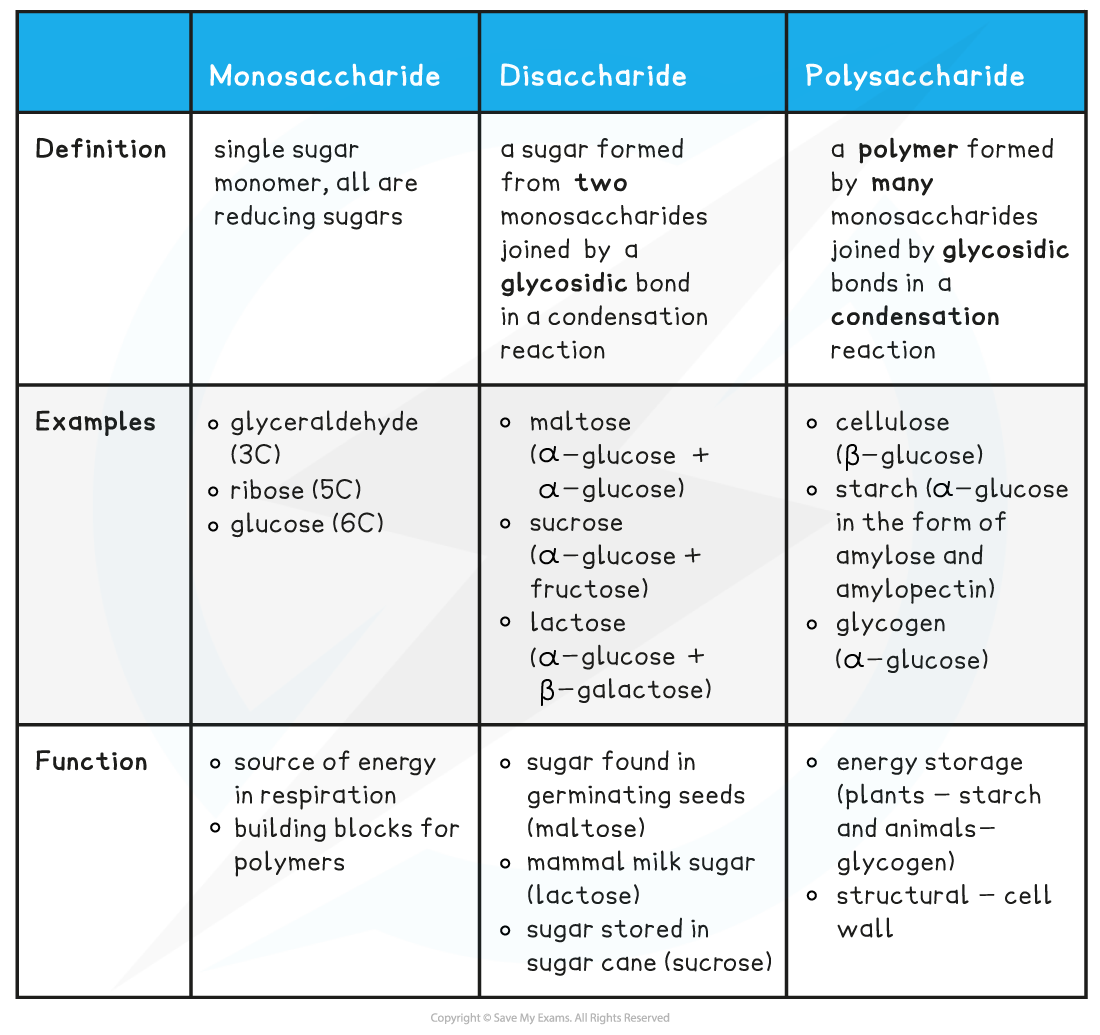
- The three types of carbohydrates are?monosaccharides,?disaccharides?and?polysaccharides
Types of Carbohydrates Table
轉載自savemyexams
以上就是關于【AQA A Level Biology復習筆記1.1.1 Biological Molecules: Key Terms】的解答,如需了解學校/賽事/課程動態,可至翰林教育官網獲取更多信息。
往期文章閱讀推薦:
翰林獨家 | 經濟學競賽核心精講,一冊打通NEC/IEO/USAEBO!
2026 ALEVEL 夏考A率出爐!愛德思vs牛津AQA,哪些科目真的“好出分”?


翰林AMC8視頻課重磅上線!

國際競賽真題資源免費領取






