每個人天生都擅長外語學習,就看你方法用對了沒(二)

每個人天生都擅長外語學習,就看你方法用對了沒(一)每個人天生都擅長外語學習,就看你方法用對了沒(三)
5
像傻子一樣練習
Being self-conscious is your biggest enemy. You cannot speak a foreign language without feeling stupid at some point. You have to get over that. You have to twist your mouth into strange new shapes that make you feel like a caricature; you will speak and not be understood and you will listen and not understand. a lot. It's really okay and in fact necessary to learning. If you think about it, what's the big deal? So you look stupid. Who cares?過于關注自我是你最大的敵人。如果不在某種程度上感到自己很傻,你是不可能學好一門外語的,你必須克服它。你不得不使自己的嘴巴變成各種奇怪的形狀,你要說出來并且不要指望別人能聽懂,你要仔細聽即使聽不太懂。
這個過程需要許多。看起來很傻真的沒什么,而且對學習是必須的。你想想,有什么大不了?即使你看起來傻,又有誰在乎?
If you instead give yourself credit every time you feel stupid you can turn this around. Give yourself a little mental gold star each time you feel stupid because those moments are learning moments. Feeling stupid is actually a sign of progress, or the moment just prior to progress.
如果每次在感到自己很傻的時候給自己一個獎勵,就可以把這種窘迫感倒轉過來。每次你感到自己很笨的時候,給自己一點精神獎勵,因為這些時刻就是你學習的時刻。感到很笨實際上是進步的標志,也是進步之前的標志。

6
了解自己的水平
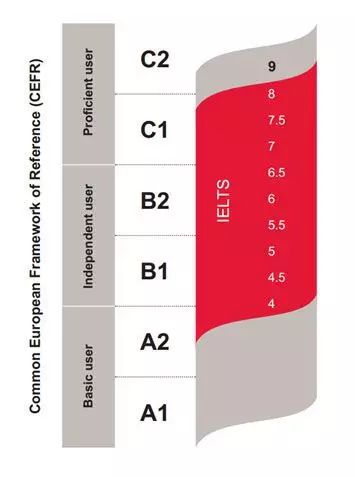
I strongly advise you measure your level using CEFR levels (CEFR Levels - The Common European Framework of Reference for languages) as these are now standard across Europe.大家可以使用CEFR標準來定位現有的英語水平,因為這在整個歐洲都是通用的。
從下圖可以看出雅思考試分數與CEFR各個能力等級的對應程度:
7
設定目標
Goal setting (and measuring progress against those goals) is one of the most effective tools in your learning arsenal. I highly recommend setting short term and longer terms goals.設定目標(并且以這些目標來衡量學習進步程度)是語言學習中非常有效的工具。推薦大家設定短期目標與長期目標。
Short term goals can be as simple as how many hours of study you will do each week. If you (say) want to study one hour a day then write seven boxes on a sheet and every hour you study, check a box. It feels good and you're measuring progress which is visible to you even when you don't feel like you're progressing.
短期目標可以僅僅是你每周要達到的學習時間數。如果你像每天學習1個小時,那么你可以在紙上畫7個小方格,每次你學完1個小時就畫一個勾。衡量進步程度會讓你感覺良好,即使當你感覺不到自己在進步時。
Set longer terms goals like passing a specific CEFR level.
長期目標則可以定義為達到CEFR某一等級,或是雅思、托福等語言考試的一定分數。
8
重復、重復、重復
Repetition is absolutely vital to learning most things but especially important when learning a language. It sounds boring but it doesn't need to be. More on this in a moment. One more time, just in case you didn't get it: repetition is vital to learning.重復在大部分學習中都很重要,尤其對語言的學習。這點聽起來有點無聊,但不得不做。再說一遍,怕你記不住:重復對學習至關重要。
以上就是關于【每個人天生都擅長外語學習,就看你方法用對了沒(二)】的解答,如需了解學校/賽事/課程動態,可至翰林教育官網獲取更多信息。
往期文章閱讀推薦:
準大一必看!如何利用暑假“搶跑”拿下高GPA?翰林預學班全攻略!


翰林AMC8視頻課重磅上線!

國際競賽真題資源免費領取






