2016PUPC普林斯頓大學(xué)物理競(jìng)賽Onsite真題與答案免費(fèi)下載

歷年PUPC普林斯頓大學(xué)物理學(xué)術(shù)活動(dòng)真題與答案免費(fèi)下載
Onsite現(xiàn)場(chǎng)學(xué)術(shù)活動(dòng)部分

翰林國(guó)際教育全網(wǎng)首發(fā)
力爭(zhēng)超快速發(fā)布最全資料
為你
千千萬(wàn)萬(wàn)遍
2016PUPC普林斯頓大學(xué)物理學(xué)術(shù)活動(dòng)完整版真題免費(fèi)下載
Onsite現(xiàn)場(chǎng)學(xué)術(shù)活動(dòng)部分此卷共3題
但每題下分不同數(shù)量的小題
完整版下載鏈接見(jiàn)文末
真題預(yù)覽:
Problem 1. A Jelly-Filled Universe (10 points total)
Suppose the Universe is ?lled with some strange gelatinous substance which produces a pseudo-drag force. A particle of mass m will experience a braking force (which we will also call the pseudo-drag force)
F = - ka
where k is some positive constant and a is the particle’s acceleration. For the following questions, assume the particle moves in one dimension for simplicity.
a) (1 point) Suppose there are no other forces on the particle. Describe the motion of the particle’s position x(t) for all times t≥0, assuming its initial speed v(0) = v0 and initial position x(0) = x0.
b) (1 point) Now suppose the particle experiences a constant external force Fext > 0 beginning at t = 0. Describe the motion of the particle’s position x(t) for all times t≥0, assuming its initial speed v(0) = v0 and initial position x(0) = x0.
c) (1 point) What is the total work W done on the particle during the time interval 0 ≤t≤T under this constant applied force? (Include the work done by the applied force and the pseudo-drag force.)
d) (2 points) Describe the physical implication of the pseudo-drag force F for the particle. In particular, describe how this pseudo-drag force di?ers from kinetic friction (a constant braking force) and low-velocity viscous drag (a braking force proportional to the particle’s speed). Please be as speci?c as possible in your explanation.
e) (1 point) Suppose the particle is dropped near the Earth’s surface where there is a gravitational ?eld strength g. How long does it take ( t) for the particle to fall through a height h? (Assume the force of gravity is mg downward, and does not depend appreciably on the height of the particle above the surface of the Earth.)
f) (2 points) It is possible to recover the same result as in part e) for the movement of the particle by removing the pseudo-drag force F and replacing g with an e?ective gravitational ?eld ge?.Find this effective field for a given value of k and m. Consider the limits in which m→0 and m→∞. Do your answers make sense? Explain.
g) (2 points) In electromagnetism, the Abraham-Lorentz force is a braking force that depends on the derivative of the particle’s acceleration:
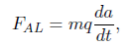
where q is some constant and m is the particle’s mass, included for convenience. Including a time-varying external force Fext(t), the equation of motion is
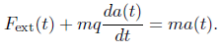
We can integrate this expression to ?nd the solution for a(t),
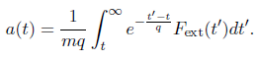
Suppose a constant external force Fext(t)= Fext is turned on at some faraway time t = T> 0 and lasts for all t≥T . What is the acceleration a(t) of the particle for t≥0 according to the solution for a(t) given above? What is strange about this situation? Please be speci?c by commenting on any times of interest.
完整版真題下載鏈接請(qǐng)注冊(cè)或登錄后查看
文件為PDF格式
推薦使用電腦下載
2016PUPC普林斯頓大學(xué)物理學(xué)術(shù)活動(dòng)完整版答案免費(fèi)下載
請(qǐng)點(diǎn)擊訪問(wèn)下方鏈接進(jìn)入下載頁(yè)面
免費(fèi)領(lǐng)取最新年份學(xué)術(shù)活動(dòng)真題及解析

翰林學(xué)員全站資料免費(fèi)打包下載,專(zhuān)享高速下載通道。
[vc_btn title="查看更多PUPC相關(guān)詳情" color="primary" align="center" i_icon_fontawesome="fa fa-globe" css_animation="zoomIn" button_block="true" add_icon="true" link="url:http%3A%2F%2Fwww.linstitute.net%2Farchives%2F26506||target:%20_blank|"]
以上就是關(guān)于【2016PUPC普林斯頓大學(xué)物理競(jìng)賽Onsite真題與答案免費(fèi)下載】的解答,如需了解學(xué)校/賽事/課程動(dòng)態(tài),可至翰林教育官網(wǎng)獲取更多信息。
往期文章閱讀推薦:
AMC/BPhO/UKChO…下半年20+賽事集中開(kāi)考!抓住競(jìng)賽"黃金備賽期"!
2026五大奧賽中國(guó)隊(duì)斬獲四個(gè)世界第一,全員金牌收官!


翰林AMC8視頻課重磅上線!

國(guó)際競(jìng)賽真題資源免費(fèi)領(lǐng)取






