紐約時報STEM寫作競賽新賽季開啟,用500字闡述你的議題

紐約時報STEM寫作學術活動(New York Times STEM Writing Contest)是紐約時報舉辦的一系列學生寫作學術活動之一。比賽要求學生找到一個感興趣的與STEM(理科、數學、工科、科學等科目)相關的問題、概念或議題,用500字或更少的字數,向讀者解釋你的理解,讓我們明白為什么它很重要。
紐約時報系列比賽是全球寫作學術活動中最受關注、含金量最高的比賽之一,你可以借助性影響力的《紐約時報》平臺,為全世界的讀者發表專題寫作,分享你的真知灼見,影響全球同齡人,同時,參與其中將對你的英語寫作水平及申請名校的學術背景有極大提升助力。
適合對象
全球11-19歲初高中學生,對STEM相關及科普寫作教育的學生們均可參加。
美國和英國13至19歲的學生,以及世界其他地方16至19歲的學生,可以自己提交參賽作品。
年齡較小的學生必須由老師或者家長代為提交。
賽事時間
2022年2月2日——3月9日(近期為最佳備賽時間)
參賽作品要求
文章不得超過500字,不包括標題。
文章需為獨立原創作品,不得在其他地方投稿或發表過。
文章需為英文,注意寫作用詞文明。
每位學生僅可提交一份參賽作品。
文章需要包括三個要素:
1.能夠引起觀眾的注意,我們感興趣的主題;
2.有引用或對主題的診斷的研究,以提供背景信息和專家可信度;
3. 詳細說明你為什么認為該主題很重要,人們會關心這個主題,它會影響誰或影響什么,為什么以及如何影響,它與該領域的更廣泛問題,當今世界以及我們自己的生活有什么關系。
評審標準
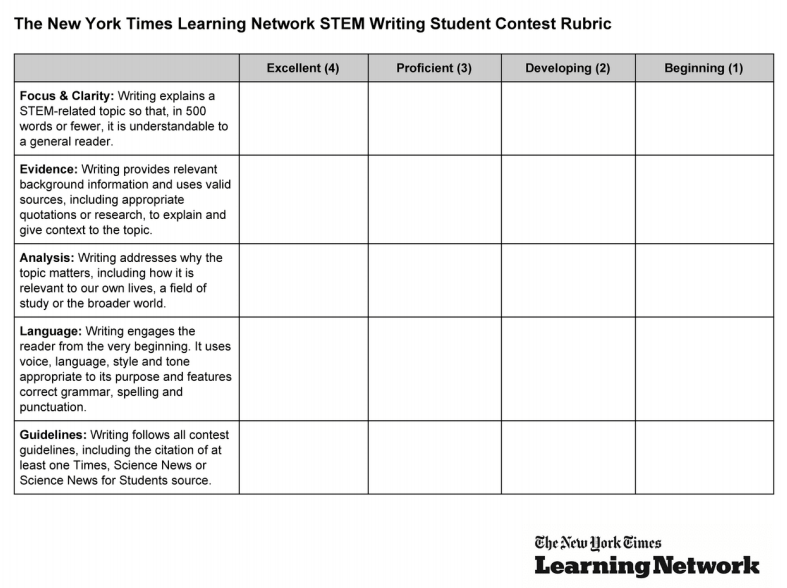
成果獎項
Winners
Runners-Up
Honorable Mentions
入圍者的作品將在作者本人同意后,被發表在紐約時報學習網上 。
結果將于比賽結束后四到六周左右的時間發布。最終入圍者將收到郵件通知。
往屆優秀作品
Sleep to Clean: A Prevention of Plaques That Lead to Alzheimer’s Disease
Our brain’s storage is like a teenager’s room — messy, cluttered and a fortress of personal memories. Scattered around are beloved belongings, such as your family heirloom or favorite cat, but imagine if suddenly these treasures disappeared, with only dust bunnies lying in their wake. Poof. Gone.
Despite seeming like deceptive magic, this is the blunt reality of an individual’s brain with Alzheimer’s, a daunting and currently incurable disease. With about 10 percent of people over the age of 65 diagnosed, it seems inevitable that it would affect individuals and families. But, what if this disease could be prevented through something simple — sufficient sleep?
Take a look inside the structure of a healthy brain. As they are created and destroyed, billions of neurons reside and correspond with each other through synapses. As new experiences feed into our brain every second, the synapses receive neurotransmitters that are responsible for the communication in our brain: seeing, thinking, remembering. However, in the brain of an Alzheimer’s patient, harmful proteins called amyloid-beta 42 block these synapses. Naturally produced by neurons, amyloid-beta proteins accumulate and lead to Alzheimer’s if not cleaned out fast enough by microglia cells, the cleaners for the brain. Over time, the rapid rate of amyloid-beta production causes the proteins to clump up into plaque. This unsettling change results in brain dysfunction; proteins like tau create neurofibrillary tangles that choke off the insides of neurons. Now, the once messy room is structurally and functionally destroyed by a hurricane. Looking to rapidly fix the chaos, microglia cells secrete inflammatory factors, resulting in prolonged inflammation and even the destruction of neurons.
In the past years, scientists began noticing a relationship between Alzheimer’s disease and sleep. Dr. Yo-El Ju evaluated patients in sleep apnea treatment. Following their successful treatment, she found that both the production and number of beta-amyloids had decreased. Laura Lewis, an assistant professor from Boston University who conducted a study on brain waves and sleep, said that the patients seemed “to have a change in their ability to clear proteins or waste products from their brain.” Hence, sleep has a vital role in the reduction of beta-amyloid plaques — the emerging signs of oncoming Alzheimer’s.
But, how come? In a separate study done by Dr. Maiken Nedergaard, it was discovered that the brain cleans waste two times faster when asleep. “So things like amyloid-beta, which are implicated in Alzheimer’s disease, seem to actually be removed more rapidly from the brain,” Dr. Lewis pointed out. Allowing microglia cells and other proteins to actively sweep out waste at much faster rates, sleep reshapes the untidy room in the brain, solidifying memories. With a healthy sleep routine, the fate of our brains could be deterred from Alzheimer’s disease.
There is still much to discover. As Dr. Lewis said, “I don’t know whether it’s that sleep increases clearance or whether sleep decreases the production of waste products.” Every step in the understanding of neurology can help uncover new preventions for Alzheimer’s, improving brain health for generations to come.
近期熱門國際學術活動
01美國生物奧林匹克 USABO
02紐約時報秋季評論大賽
03全美經濟學挑戰賽 NEC
04英國物理奧林匹克學術活動 BPhO
05國際腦科學大賽?BrainBee
06全球女性科創賽?Technovation
07美國高中生傳媒大賽
08美國計算機奧林匹克 USACO
09青年影響力大賽?YIC
10北美計算語言學 NACLO
更多賽事信息及參賽經驗分享
請掃碼添加翰林顧問老師詳細咨詢
還有不定期的高能講座等你來參加!
以上就是關于【紐約時報STEM寫作競賽新賽季開啟,用500字闡述你的議題】的解答,如需了解學校/賽事/課程動態,可至翰林教育官網獲取更多信息。
往期文章閱讀推薦:
2026秋季國際寫作賽事:HIR/NYT/CWA/…全清單!
2027 IOLC/NACLO語言學奧賽進入新賽季,資格和備賽順序需提前確認!


翰林AMC8視頻課重磅上線!

國際競賽真題資源免費領取






