2021 International Genetically Engineered Machine Competition(iGEM)

2021 International Genetically Engineered Machine Competition
2021 國際遺傳工程機器大賽

項目介紹
International Genetically Engineered Machine Competition (iGEM)國際遺傳工程機器大賽于2003年由MIT麻省理工創辦。2005年后發展壯大成為一個國際性學術學術活動,iGEM涉及生物學、計算機科學、數學、藝術設計等多學科,是以合成生物學為核心多學科交叉國際級科技學術活動,其理念在于鼓勵大學生和中學生積極創新,用創新去改變世界。iGEM涉及的合成生物更是是近年來新興研究領域,受到了學術界和工業界的廣泛關注,其參賽隊伍所做的相關研究成果常年發表于《Nature》、《Science》、《Scientific American》、《Economists》 等頂尖學術期刊,同時受到BBC等媒體的關注和專題報道? 。
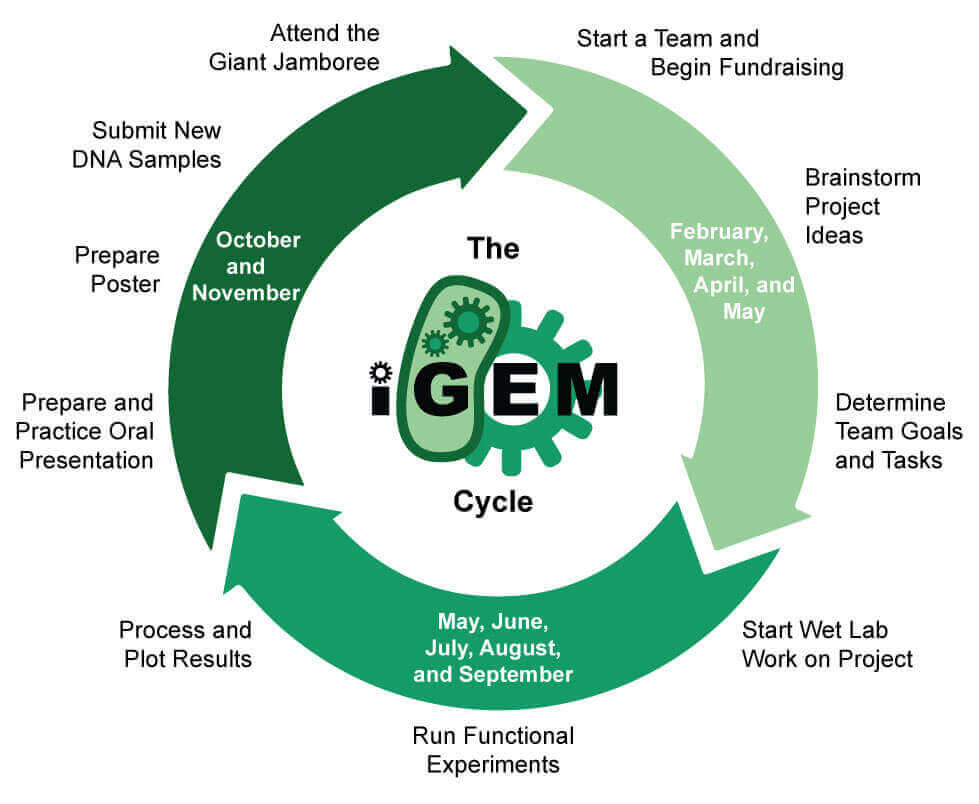
iGEM創始之初僅是針對在校本科生的校內學術活動,后逐漸擴大到研究生以及高中生。涵蓋多學科的iGEM團隊需要利用標準生物模塊(Biobricks)來構建基因回路、建立有效的數學模型,實現對精致復雜人工生物系統(artificial biosystem)的預測、操縱和測量以完成比賽。參賽選手必須把自己研究的項目所有重要內容都放進一個海報并準備一個20分鐘的演講。iGEM為學生們提供了靠自己通過解決世界面臨的日常問題來突破合成生物學的邊界機會,施展自己的才能。每年都有近6000人把他們的暑假獻給iGEM,然后在秋天匯聚一堂,展示各自的成果,項目交流學習。來到這里,展示他們的工作,參加一年一度的聚會。
iGEM獎項設置
iGEM獎項和獎牌設置非常廣泛,等級分Grand Prizes,Standard Track Awards,Special Track Awards及Special Prizes四個類別,難度由難至簡以此類推,每年的類別可能有所不同,每個類別的具體獎項如下:
- Grand Prizes:小部分被組委會評審為最終決賽者團隊獎角逐此等獎項,為該學術活動的最高獎項,按不同年齡組頒獎
- Undergraduate組:
- Grand Prize Undergraduate:另稱為aluminum BioBrick Trophy,為該年齡組的最高獎項;
- First Runner-Up Undergraduate:該年齡組的第二名
- Second Runner-Up Undergraduate:該年齡組的第三名
- Overgraduate組
- Grand Prize Overgraduate:另成為aluminum BioBrick Trophy,為該年齡組最高獎項
- First Runner-Up Overgraduate:該年齡組的第二名
- High School組
- Grand Prize High School:另稱為BioBrick Trophy,為該年齡組的最高獎項
- Undergraduate組:
- Standard Track Awards:由組委會根據團隊參賽內容的造詣程度來按以下類別頒獎
- Best Diagnostics Project:很多病癥如果可以在早期就被診斷出來,就可以很好的成功治愈。獲獎團隊需要提出一個更快、更便宜、更好的診斷技術來改善全世界的醫療服務
- Best Energy Project:自1950年以來,世界能源消耗增加了大約六倍。2013年5月,Mauna Loa Observatory夏威夷莫納羅亞天文臺的大氣C02讀數首次超過400ppm,這樣高濃度二氧化碳完全無法維持。獲獎團隊需要嘗試利用合成生物學創造出能產生更少二氧化碳的能源技術,利用原料和廢料制造能源,或者以其他可持續的方式產生能源
- Best Environment Project:空氣、水和土地的質量決定了所有生物的幸福生活。獲獎的團隊需要研究生物技術能否被用來幫助凈化空氣,提供新鮮的飲用水,恢復或提高土壤質量,或者將就近的小行轉變成地球類似的環境,以及保護增強自然生物多樣性
- Best Food & Nutrition Project:俗話說人是鐵飯是鋼,一頓不吃餓得慌。獲獎團隊需要研究是否有什么技術或材料既可以安全的生產食品提供營養又不會造成短缺的同時又不損害長期的環境?
- Best Foundational Advance Project:35年前,科學家們還不能像今天這樣,將現有的遺傳物質片段剪切和粘貼。DNA重組的發現和應用使我們能夠合成新的基因。合成生物學正在尋找能夠幫助創造的新技術。獲獎團隊需要研究在自然中是否還有其他任何我們以前從未發現的方法但是有可能可以徹底改變合成生物學的方法
- Best Information Processing Project:生物特性、行為和部件的多樣性和豐富度蘊含著豐富的信息。獲獎團隊需要提出一個創新的系統可以使我們能夠快速有效地瀏覽和使用這些信息
- Best Manufacturing Project:你聽說過納米技術嗎? 生物學就是一種已經存在且非常有效的納米技術。核糖體是一種可以復制的可編改的納米載體。獲獎團隊需要研究我們能否利用生物學來制造有用的產品,從納米級(原子)到數百倍大的物體(建筑物和橋梁)生物可以被用來制造什么
- Best New Application Project:獲獎團隊需要能想出一個在生物技術領域中一個全新的應用領域,是其他人沒有想過的或者從來沒有跟任何人提過了
- Best Therapeutics Project:許多健康和醫療問題都可以用新的療法來解決。獲獎團隊需要提出合成生物學能怎樣改進技術從而獲得新的治療方法
- 注意:每個項目需要至少由10個候選才能選出undergraduate和overgraduate兩個組各一名,否則想合并兩個組僅選出一名
- Special Track Awards:由組委會根據團隊參賽內容的造詣程度來按以下類別頒獎
- Best Art & Design Project:獲獎團隊需要可以使用藝術設計來探索合成生物學當前和未來的影響,包括利益相關者,交流,教育學等
- Best Hardware Project:當許多在這個領域工作的團隊研究了很多年后,許多硬件已經成為iGEM很重要的一部分。獲獎團隊需要研究開發提出一個合成生物學相關的硬件,包括低成本實驗室設備、微流體技術、測量專用設備和許多其他領域的項目。組委會鼓勵團隊將wetware components 應用在開發的項目中,但不強制要求提交該部件
- Best Measurement Project:在實驗室里已經有了那么多儀器的時候,精確測量依舊是合成生物學的一個巨大問題。獲獎團隊需要提出要怎么解決這個問題
- Best Software Project:計算機已經出現了很多年并發展的很好了,但是我們已經沒有什么更好的工具來幫助大家可以用標準生物部件來合成生物系統。獲獎團隊需要提出一個可能
- Special Prizes:由組委會頒給最具創新性以及獨特貢獻的參賽團隊的榮譽獎
- Best Advancement in Plant Synthetic Biology:植物生物學領域最好的項目
- Best Applied Design:頒發給一個開發出一個synbio product(益生菌方案)并可以輕松解決一個現實問題的團隊。該獲獎團隊需要考慮產品如何解決問題和其他潛在的解決方案,產品如何整合或破壞其他產品及其生產過程,以及它的生命周期如何以積極和消極的方式更廣泛地影響我們的生活和環境
- Best Education & Public Engagement:頒給在合成生物學領域中可以提出一個更有效傳播教育科學并讓大家都參與進來的方案
- Best Hardware:頒給為合身生物學領域開發出一個有效硬件的團隊。這個iGEM的硬件可以使合成生物學分成更方便快速應用的標準部件,或者一個可以幫助研究團隊更好的表述合成生物學特性等
- Best Innovation in Measurement:合成生物學中還有很多部分沒有辦法被準確的描述出來,或許可以設計一個更高效的測量表述方法描述各個部分
- Best Integrated Human Practices:頒給可以影響社會并從中可以獲得有效信息的方案
- Best Model:合成生物學是一門工程類學科,工程的一部分是模擬和建模來確認制作可行的系統。此獎頒給可以開發出一個數學模型或計算機模擬的方式來描述BioBrick零件和運行的團隊。
- Best New Basic Part:大多數基因編碼還沒能轉換為標準的BioBrick部件,因此,獲獎團隊需要尋找更多的基因編碼性能,并將這些DNA編碼轉換成BioBrick標準生物部件。需要注意的是,本部分必須遵循注冊樣本提交指南,并已發送到標準生物部件注冊中心。你研究出來的最好的基礎部分可以在你的維基數據頁上呈現,請參考http://igem.org/Sample_Data_Page
- Best New Composite Part:新的BioBrick設備可以通過結合現有的BioBrick部件來制造。例如,逆變器、放大器、嗅覺發生器、蛋白質氣球發生器、發送器、接收器、執行器等等。為獲得該獎項,本部分必須遵循注冊樣本提交指南,并已發送到標準生物部件注冊中心且你研究出來的最好的基礎部分可以在你的維基數據頁上呈現
- Best Part Collection:團隊需要創造一個類似CRISPR系列或MoClo系列的系列,這個系列可能含有超過10個零件。這些部分必須遵守注冊表樣本提交指南,并已發送到標準生物部件的注冊表。
- Best Poster:最具有吸引力且可以很好的展示團隊工作的海報
- Best Presentation:引人入勝且可以清晰的將你研究的項目傳播出去的演講
- Best Software Tool:可以對一個項目的成功產生決定性影響的軟件設計,比如一個工具或者運算方法等,可以不用太復雜。篩選符合條件的團隊所設計的軟件必須在OSI認可的開放源碼許可下被記錄和提供。
- Best Supporting Entrepreneurship:為表彰為將iGEM項目商業化而做出貢獻的商業項目,向所有團隊開放的,以表明創業精神是所有團隊都可以追求的。這個獎項可以頒給一個新的項目,或者一個團隊想要商業化的項目
- Best Wiki:團隊維基頁面是團隊iGEM項目封面,團隊的維基頁面將是未來參與iGEM學術活動的團隊以及世界各地人員的主要信息來源方式,所以將頒給維基頁面做的最好的團隊
- 注意:每個項目需要至少由10個候選才能選出undergraduate和overgraduate兩個組各一名,否則想合并兩個組僅選出一名,同時也會頒給high school組
iGEM評審規則
評判由以下三個部分組成:
- Medals Section:由評審根據團隊的情況決定,暫無具體信息
- Project Section:共分成以下兩個分類進行評審,10個評審標準獎決定是否可以進入決賽
- main project category:8個評審方面
- the track-specific category:2個評審方向
- Special Awards Section:按照獎項設置,每個獎項均由4-5個評審標準,想要參與競爭的團隊需要按要求填寫Judging Form
大致的評審要求如下所示,摘自官網:
| Number | Category | Aspects |
| 1 | Project | How impressive is this project? |
| 2 | Project | How creative is the team's project? |
| 3 | Project | Did the project work? |
| 4 | Project | How much did the team accomplish? |
| 5 | Project | Is the project likely to have an impact? |
| 6 | Project | How well are engineering principles used? |
| 7 | Project | How thoughtful and thorough was the team's consideration of human practices? |
| 8 | Project | How much of the work did the team do themselves and how much was done by others? |
| 9 | Track Specific - Standard Tracks | Did the team design a project based on synthetic biology and standard parts? |
| 10 | Track Specific - Standard Tracks | Are the parts functions and behaviors well-documented in the Registry? |
| 9 | Track Specific - Special Tracks | Did the team design a project based on synthetic biology? |
| 10 | Track Specific - Special Tracks | Are the project components (hardware, software, art & design, etc) thoroughly documented on their wiki? |
| Special Prizes | ||
| 1 | Wiki | Do I understand what the team accomplished? |
| 2 | Wiki | Is the wiki attractive and easy to navigate? |
| 3 | Wiki | Does the team provide convincing evidence to support their conclusions? |
| 4 | Wiki | How well does the team describe what they did and what was done by others? |
| 5 | Wiki | Will the wiki be a compelling record of the team's project for future teams? |
| 1 | Presentation | Did the presentation flow well? |
| 2 | Presentation | How professional is the graphic design in terms of layout and composition? |
| 3 | Presentation | Did you find the presentation engaging? |
| 4 | Presentation | How competent were the team members at answering questions? |
| 1 | Poster | Did the poster flow well? |
| 2 | Poster | How professional is the graphic design in terms of layout and composition? |
| 3 | Poster | Did you find the poster appealing? |
| 4 | Poster | How competent were the team members at answering questions? |
| 1 | Integrated Human Practices | Was their work integrated into their project? |
| 2 | Integrated Human Practices | Does it serve as an inspiring example to others? |
| 3 | Integrated Human Practices | Is it documented in a way that others can build upon? |
| 4 | Integrated Human Practices | Was it thoughtfully implemented? (did they explain the context, rationale, prior work) |
| 1 | Education & Public Engagement | Did their work establish a dialogue? |
| 2 | Education & Public Engagement | Does it serve as an inspiring example to others? |
| 3 | Education & Public Engagement | Is it documented in a way that others can build upon? |
| 4 | Education & Public Engagement | Was it thoughtfully implemented? (did they explain the context, rationale, prior work) |
| 1 | Model | How impressive is the mathematical modeling? |
| 2 | Model | Did the model help the team understand their part or device? |
| 3 | Model | Did the team use measurements of the device to develop the model? |
| 4 | Model | Does the modeling approach provide a good example for others? |
| 1 | Measurement | Is the measurement potentially repeatable? |
| 2 | Measurement | Is the protocol well described? |
| 3 | Measurement | Are there web-based support materials? |
| 4 | Measurement | Is it useful to other projects? |
| 5 | Measurement | Was a standard reference sample included? |
| 1 | Entrepreneurship | Customer Discovery - Has the team interviewed a representative number of potential customers for the technology and clearly communicated what they learned? |
| 2 | Entrepreneurship | Based on their interviews, does the team have a clear hypothesis describing their customers' needs? |
| 3 | Entrepreneurship | Does the team present a convincing case that their product meets the customers' needs? |
| 4 | Entrepreneurship | Has the team demonstrated a minimum viable (MVP) product? And does the team have customers to commit (LOI, etc.) to purchasing it / using it? |
| 5 | Entrepreneurship | Does the team have a viable and understood business model/value proposition to take their company to market? |
| 1 | Applied Design | How well did the project address potential applications and implications of synthetic biology? |
| 2 | Applied Design | How creative, original, and compelling was the project? |
| 3 | Applied Design | How impressive was the project installation in the art & design exhibition space? |
| 4 | Applied Design | How well did the team engage in collaboration with people outside of their primary fields? |
| 1 | Software Tool | How well is the software using and supporting existing synthetic biology standards and platforms? |
| 2 | Software Tool | Was this software validated by experimental work? |
| 3 | Software Tool | Did the team use non-trivial algorithms or designs? |
| 4 | Software Tool | How easily can others embed this software in new workflows? |
| 5 | Software Tool | How user-friendly is the software? |
| 1 | Hardware | Does the hardware address a need or problem in synthetic biology? |
| 2 | Hardware | Did the team conduct user testing and learn from user feedback? |
| 3 | Hardware | Did the team demonstrate utility and functionality in their hardware proof of concept? |
| 4 | Hardware | Is the documentation of the hardware system sufficient to enable reproduction by other teams? |
| 1 | Plant Synthetic Biology | How impressive was the use of a plant chassis? |
| 2 | Plant Synthetic Biology | How impressive was the collection of parts made for the plant chassis? |
| 3 | Plant Synthetic Biology | How well did the team use the special attributes of the plant chassis? |
| 4 | Plant Synthetic Biology | Are the parts/tools/protocols for plants made during this project useful to other teams? |
| 1 | New Basic Part | How does the documentation compare to BBa_K863006 and BBa_K863001? |
| 2 | New Basic Part | How new/innovative is it? |
| 3 | New Basic Part | Did the team show the part works as expected? |
| 4 | New Basic Part | Is it useful to the community? |
| 1 | New Composite Part | How does the documentation compare to BBa_K404122 and BBa_K863005? |
| 2 | New Composite Part | How new/innovative is it? |
| 3 | New Composite Part | Did the team show the part works as expected? |
| 4 | New Composite Part | Is it useful to the community? |
| 1 | Part Collection | Is this collection a coherent group of parts meant to be used as a collection, or just a list of all the parts the team made? |
| 2 | Part Collection | How does the documentation compare to BBa_K747000 and BBa_K525710? |
| 3 | Part Collection | Did the team submit an internally complete collection allowing it to be used without any further manipulation or parts from outside Registry? |
| 4 | Part Collection | Did the team finish building a functional system using this collection? |
| 5 | Part Collection | Did the team create excellent documentation to allow future use of this collection? |
項目時間
學術活動時間:2021年10月6日 - 10月11日
申請要求
- 需要求由一個指導老師帶領組隊參賽,沒有人數上限,分三個組別,推薦8-10個人一組,并完成網上的Team Roster確認參賽成員
- Overgraduate:至少其中一個隊員年齡在2020年3月31日前大于23周歲
- Undergraduate:所有團隊成員年齡在2020年3月31日前小于23周歲
- High School:所有成員在2020年3月31日前均為高中生,包括2020年春季的學生
- 團隊成員的組成分以下幾個不同角色和要求:
- Students:參賽隊員需要完成自始至終全程參與項目,各自注冊iGEM賬號,填寫信息并加入小組的Team Roster
- Primary and Secondary PI:團隊的經理角色,需要由有權利的人擔任,因為他要協調團隊的實驗室的使用,繳費等,同時擁有iGEM賬號并加入team roster,不同年齡組要求的不同,如下:
- Collegiate teams:只要有一位PI是教授,第二位PI至少 為博士后
- High School teams:至少有一位是學校的老師或者校長,必須有學校簽字決定權
- Community Labs:至少其中以為是實驗室的主管
- Instructor:要可以每天提供技術指導,同樣擁有iGEM賬號并加入team roster
- Student team leader:團隊領隊,是 團隊與PI以及iGEM總部溝通的橋梁
- Advisor:提供團隊的輔助指導,可以是研究生,博士后,技術人員等 ,同樣擁有iGEM賬號并加入team roster
- 網上注冊比賽,收費為
- Early registration: $4500 USD
- Regular registration: $5000 USD
- Late registration: $5500 USD
- Multiple team discount: a discount of $1000 USD
- 注冊比賽后需要填寫一個Judging Form,來幫助評審團可以快速了解團隊研究的核心和特色
- 內容為150字然后根據要求添加修改團隊項目維基頁面上的信息
- 完成這個表時不需要同時完成你項目的維基頁面,詳情參考http://2018.igem.org/Judging/Pages_for_Awards
- 你必須要創立一個Registry Part頁面,為你要申請競爭的所有獎項做準備
以上就是關于【2021 International Genetically Engineered Machine Competition(iGEM)】的解答,如需了解學校/賽事/課程動態,可至翰林教育官網獲取更多信息。
往期文章閱讀推薦:
【組隊招募】經濟/數模競賽CNEC/IEO/SIC/HiMCM…組隊報名!


翰林AMC8視頻課重磅上線!

國際競賽真題資源免費領取






