
上周我們聊到如何用運用不同的形容詞為文章增添色彩,這次來看看一組描述聲音的詞匯,并學習如何分辨它們不同的含義,和在不同情境中的運用。
一、
在敘述性寫作中,我們常需要描述周遭的環境,和在環境中聽到的各種聲音。
? 形容響亮、刺耳的聲音:
piercing, clamourous, deafening, tumultous, ear-splitting, thunderous, brassy, grating, dissonant, cacophonous
這些形容詞通常有負面的含義(negative connotation),用來形容令人不適、厭煩的聲音。
? 形容溫和、沉悶的聲音:
noiseless, muffled, inaudible, stifled, hushed?
這些形容詞則是中性的,沒有明顯的情感偏向。
英文中還有很多描述聲音的詞匯,用來指向不同的物體發出的聲音,學會分辨它們能幫助我們在寫作中使用準確的詞匯。
如:
creaking指堅硬的材質,如金屬或木頭,移動時發出的聲音:“he boards a creaking wooden boat”
rustling指紙張、干燥的葉子,或布料等材料摩擦發出的聲音:“A small animal was making rustling noises among the leaves”,“she came closer, her skirt swaying and rustling”
sizzling指油煎食物時發出的聲音:“I heard the sizzling bacon in the pan”
clanging指金屬碰撞發出的聲音:“He woke up to hear the sound of bells clanging in the distance.”
drone指低沉、長時間無變化的聲音,:”the drone of his voice made me feel sleepy”
buzzing也指沉悶、持續的聲音,如蜜蜂:“a buzzing fly”,“numerous people reported hearing a buzzing noise”
gurgling可以指水流流動的聲音:“Outside of her window there is a gurgling stream.”
whirring可以指機械或小鳥翅膀振動發出的低沉、規律的聲音:”I could hear the dishwasher whirring in the kitchen“,”the whirring ceiling fan“
二、
Onomatopoeia [??n??m?t??pi??]
Onomatopoeia的意思是擬聲詞,模仿自然界中各種聲響而創造出的詞匯。英文中最常見的擬聲詞有動物的叫聲,如?“moo”(牛),“woof”(狗),“oink”(豬), “meow” (貓), “chirp”(鳥).
它們在漫畫中也很常見。這些加粗的字體,可以表示角色的聲音,也可以表示爆炸、打斗等不同情境中發出的聲音:
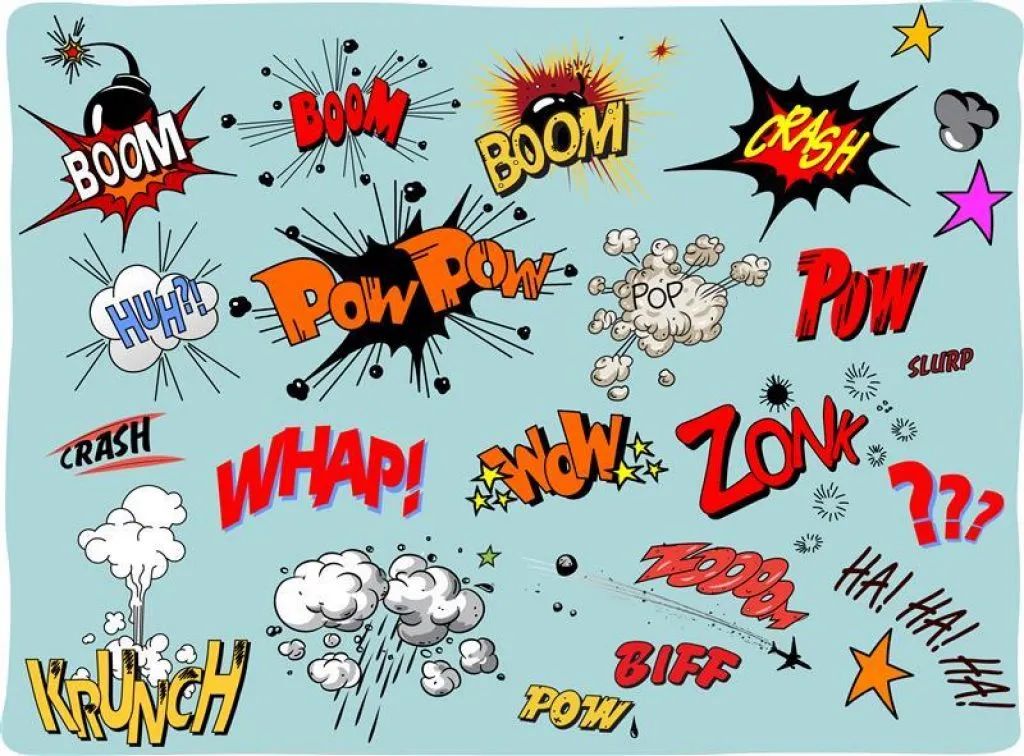
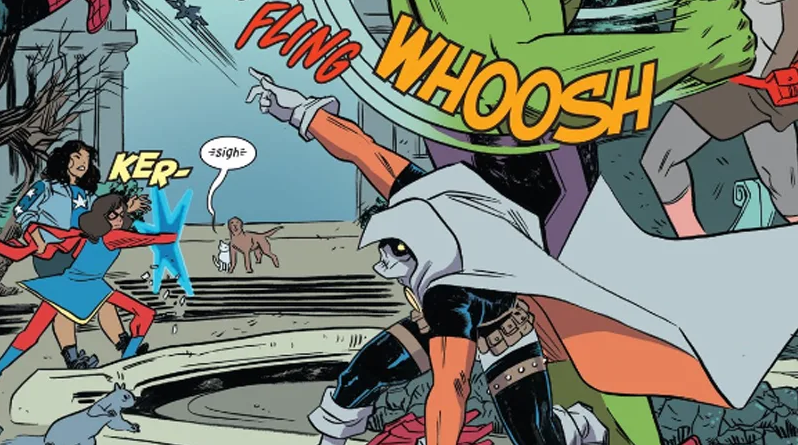

了解常見的擬聲詞能幫助我們在閱讀文學作品時更好地;而在寫作中,只需要適當地加入一些擬聲詞,敘述性文章就能變得變得更生動有趣。例如:
The loud boom of the fireworks scared the dog.
The train made a choo-choo sound and smoke billowed from its chimney.
Phew! I only just made it on time.
On my first morning on the farm, I was awoken suddenly by the cock-a-doodle-do of the resident rooster.
Ticktock, ticktock… the sound of the clock was all that could be heard in the hospital waiting room.
Ahem! I can hear everything you are saying about me.
It was lovely to wake up to the tweet of the birds outside my bedroom window.
下一次進行敘述/描述性寫作時,嘗試開始運用不同的聲音形容詞和擬聲詞來潤色你的故事吧。









