
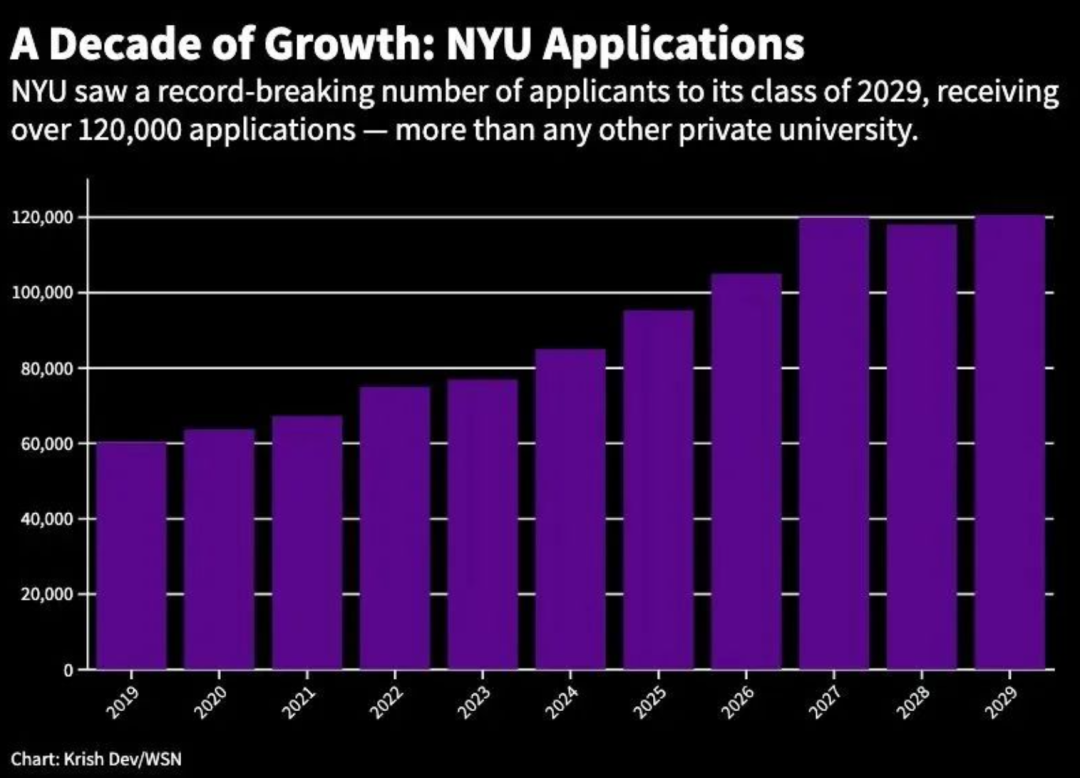
在2024-25申請季,紐約大學(NYU)全球申請量達120,633人,較去年增長3%,創歷史新高!成為全美最熱門的私立大學之一。雖然申請人數創新高,但是2025Fall的錄取率卻跌至7.7%!僅約9,240名學生獲得錄取,競爭激烈程度堪比藤校...
圖源:網絡
在當前激烈的申請競爭中,學霸們的標化成績和課外活動履歷往往難分高下。然而,一篇出色的文書卻能成為脫穎而出的關鍵——它不僅能清晰展現申請者的綜合素質,更能讓招生官留下深刻印象。
近日,紐約大學
公布了4篇美本申請文書
讓我們一探究竟吧!
圖源:網絡
Essay 1: Santería
這篇文書以細膩的筆觸講述了作者本人通過家族傳統桑特里亞教(Santería)重新獲得文化認同的心路歷程。將文化傳承與個人發展相結合的敘事策略,正是其打動招生官的關鍵所在。
In her cramped kitchen, Titi Nana cracked the egg in the center of the pan, the cheeriness of the bright yellow yolk contrasting the harshness of the caldero. In a flourish, she jerked the bottle of alcohol in her hand, flames erupting from the griddle. She instructed me: “Wipe it all off,” gesturing to dust off my shoulders and arms into the inferno. I laughed nervously as I removed the maldad [evil] from my body, one brush at a time.
I left Titi’s apartment that day confused about how our family’s practice of Santeri?a [witchcraft] fit in with my outward embrace of my heritage. I felt as if the parts of my Latina identity I claimed openly — dancing salsa to Celia Cruz or enjoying lecho?n y arroz con habichuelas en Navidad — were contradicted by my skepticism towards Titi’s rituals. My experience with Santeri?a wasn’t new, as proven by my mother’s kitchen altar lit dimly by prayer candles and adorned with evil eyes, statues of San Miguel, and offerings to Elegua; however, I’d never before witnessed such a tangible demonstration of my family’s ritualistic beliefs. Although it surrounded me, I refused to believe in the effects of Santeri?a… so I shunned it entirely.
Moving to a predominantly white boarding school and away from the rituals my family had passed down, I avoided addressing the distance I had wedged between myself and my background. I pushed away all things Latina as my fear of failing to honor my Puerto Rican heritage intensified. This distance only grew as my classmates jokingly commented on my inability to speak Spanish and my white- passing complexion, further tearing away bits of my Latinidad with each snide remark.
In an effort to build myself back up, I began to practice the small bits of Santeri?a that I comprehended: lighting candles for good luck, placing a chalice of water by my bedside to absorb all maldad, and saying my prayers to San Miguel and my guardian angels each day. To my disbelief, the comments that attacked my Latinidad, or lack thereof, faded along with the aching feeling that I had failed to represent my heritage. As I embraced the rituals that I initially renounced, I finally realized the power in Titi’s practices. In all of her cleansing and prayer rituals, she was protecting me and our family, opening the doors for us to achieve our goals and overcome the negativity that once held us back. In realizing the potential of Santeri?a, I shifted my practices to actively protecting myself and others against adversity and employed Santeri?a as a solution for the injustice I witnessed in my community.
Santeri?a once served as my scapegoat; I blamed the discomfort I felt towards black magic for the imposter syndrome festering inside me. Until I embraced Santeri?a, it only served as a reminder that I wasn’t Latina enough in the eyes of my peers. Now, I understand that while intangible, ethereal, even, the magic of Santeri?a is real; it’s the strength of my belief in myself, in my culture, and in my commitment to protect others.
Essay 2: Suburban vs Urban Schools
作者通過親歷的三所不同高中的對比,將個人創傷轉化為公共議題的寫法,展現了超越年齡的社會洞察力和少數族裔青年的覺醒歷程。
They talked about the past, but never the present. In my suburban schools, they talked about Martin Luther King Jr., and Harriet Tubman, and Rosa Parks, but for some reason, not Malik el-Shabazz. I use his chosen name because that’s probably what he would’ve wanted and because Malcolm X was mentioned in passing. My ancestors had their own struggles with white people, but no generational impact that holds a light to American slavery. My parents come from a land I only know by name and the stories they tell, and whatever I can gather from Google Maps. While I am African, I mentally distanced myself from true African-Americans; I did not deserve pity for the unspeakable horrors, nor praise for their strength and hope in face of them. In my school, there were barely ever any black kids in my class, and no true African-Americans, so I was the sole focus during lessons on Blackness, where they’d look at me, or avoid eye contact. It wasn’t until I transferred to an inner-city high school that I saw the truth. It wasn’t until I went from the blue and glass monsters that rose out of the ground like mountains in my suburban high school, to the small brick building with gated windows in Boston, that I realized there were schools 20 miles away with mostly kids of color. They were not that different from kids in the suburbs, except for their choices.
I moved in with my dad in Boston, transferring to a small school in the city. In three months at my suburban high school, through a rotating schedule in a labyrinth of opportunities, I needed my schedule every day. On my 3rd day at my Boston school, I knew exactly where to go. For the first time, my schedule was given, not created. The gated windows intimidated me on my first day, and I thought the kids would be crazy or “hood”. What I really discovered was a lot more of them looked like me. There were over 200 students at this school, almost entirely students of color, and a majority white staff. There were no real electives and only one language available at the school. I had to go back a year in math because the system wasn’t designed for students ahead in other districts. We didn’t even have a full-time nurse. Students take public transportation, and kids from three different schools had to fit on buses that fit 38 people. Some bus drivers did not care enough to get every student on board. The ones that did broke federal guidelines. For lunch, every student in Boston is qualified for free meals, a fact frequently thrown around like an accomplishment, but in truth, the lunch is worse than prison food. I’ve seen kids search for seconds of this stuff, while students in the suburbs complain about “limited” choices.
So, what’s the difference between inner-city schools and suburban ones? Well, it’s a series of simple decisions, compounded into disastrous circumstances. I’m afraid the real question is, what’s the difference between inner-city kids and suburban ones? The only difference I’ve seen is that most suburban kids look like the founding fathers we learn about in class, and most of the inner-city kids look like the slaves they bought and bruised. My experience at three vastly different high schools has shown me these problems in educational disparity are closer to home than we think, a crucial misstep in correcting the wrongs of this country. These experiences have given me a unique perspective, and a responsibility to act. I’m planning a protest when schools open back up, which isundefined. There are solutions to these problems, but inaction perpetuates. As King once said, “the arc of the moral universe is long, but it bends towards justice.” Almost 70 years after Brown v. Board of Education, equality hasn’t been achieved, so we’ll fight to achieve it.
Essay 3: Friday Night Concerts
作者以音樂為線索,講述了通過鋼琴藝術突破應試教育桎梏、重構自我價值體系的成長故事。尤其精彩的是對父愛"欲言又止"的刻畫,與主人公藝術領悟的"不言自明"形成詩意呼應!展現了藝術治愈與家庭紐帶的雙重力量。
During my sophomore year, my dad and I established a Friday after-school ritual. My 90-minute commutes home from school are normally devoted to studying, but Fridays are reserved for listening to music with him. We alternate picking songs: a shared favorite or something new. These long car rides sparked my curiosity in music.
I began reading books about our favorite artists and roaming Spotify for hours, listening to a variety of new songs. My playlist ranged from The Beatles and Queen to Ella Fitzgerald, Debussy, and even Montserrat Caball. Most nights I lie in bed with headphones. Music is not background noise, but an immersive experience. I love to let the melody overtake me, to have the volume so high that I can hear every lyric, every crack and nuance in the singer’s voice.
One night I was listening to Bohemian Rhapsody, completely captivated. I loved how the melody made me feel–thrilled yet distressed. I craved more. I wanted to participate, to obtain what felt like magic. So I hurried downstairs to our home piano — an ancient Costco keyboard missing half the keys. I’d never played before, but was determined to learn the song. I first relied on Youtube videos, and soon progressed to other songs using just my ear. My parents, with enough convincing, agreed to buy me a used piano.
So my dad and I were back in the car. One bleak winter night, we pulled into a gravel driveway, the parking lot of an aging, shack-like store. My dad glanced over at me, raising his eyebrows. “I’ll go in first.”
The door creaked open, revealing a glossy black piano. It stood directly in the center of the room, twinkling,bathing in the blinding ceiling lights. I rushed to the piano, running my hands along the ivories, feeling their weight push against mine–oh the magic of a full set of keys!
It wasn’t long before I released the full potential of my weight, striking the first chord to Bohemian Rhapsody. Rich, smooth notes poured out from the piano, swirling through the air in bursts of color. They rushed through me, lit up my eyes, tugged at my heart, until I was completely consumed in their bright, pulsing waves.
I used to think grades were an estimation of my self-worth; I thought fixating on them would fulfill me, when, really, I was unhappy. Music brings me balance and joy. I love escaping through songs and fully absorbing theartists’ pain or excitement. Playing the piano makes these emotions tangible, and it’s empowering and liberating. It gives me something else to challenge and identify myself with. It gives me another source of fulfillment, one that’s even more rewarding, because I pursue it independently.
I practice for hours every day, perhaps to the annoyance of my family. But I know they’re proud, especially my dad. He’s never one to shower me with compliments, nor belt along behind me at the piano. But I feel his pride when he blurts, “You should learn this song” in the car, or when he prompts me to play at holiday parties, his beaming reflection in the piano’s lacquer.
I’m proud of myself, too. I don’t know exactly what I want to do with my love for music or piano. I don’t fancy myself as a concert pianist, nor do I strive to become one. I play for the feeling. I’ll never tire of completing a song,when my heart sings and my eyes start to swim, because every note, every beautiful wash of color, I earned myself.
Essay 4: Three-Headed Monster in ELA Class
這篇文書通過"考試失利-學習方法革新-職業理想確立"的敘事鏈條,將個人成長故事升華為少數族裔突破結構性困境的隱喻。尤其精彩的是將醫學專業術語轉化為文化適應過程的詩意表達,使移民經歷與學術追求形成DNA雙螺旋般的糾纏。
I was sitting at my desk in freshman ELA class, as confident as America’s Top Model walking down the runway. It was the end of class and I was excited to see how well I did on the first quiz of the year. My eyes were stalking my teacher as he walked through the aisles, passing back the quizzes. As was the case growing up, I couldn’t wait for my teacher to put my quiz on my desk so I could flip it over for the world to see my A. Finally, the moment arrived. I flipped over the paper, expecting fireworks and confetti to come down when I locked my eyes on my grade. The only problem was that there was no A in sight.
All my life, I’ve felt pressure to achieve the highest grades to honor my mom’s sacrifice. She walked away from everything she knew in the Dominican Republic so that we could immigrate to the United States when I was nine. Her goal was for me to receive a better education and have more opportunities. Getting below an A meant that I wasn’t trying hard enough and that my mom sacrificed in vain. The pressure from my mom was so consuming that my perception of a successful education was entirely defined by grades. My most efficient strategy for earning A’s was memorizing what my teachers taught me and spitting it back out on tests. Since this strategy was so effective, there was no need worrying whether I learned the material or not. I was getting great grades and my mom was pleased, so I was content.
I stared at the C at the top of the quiz like a three-headed monster. My world was crashing down. My first thought, which I quickly dismissed, was that I needed to transfer. However, I’m not the type of person to run from a challenge. I started to rethink how I could engage the course material, rather than simply memorize it. It was clear that my old ways had gone extinct. Instead of cramming, I began studying a week before an exam. Instead of expecting to master a skill when the assessment came, I sought feedback on my progress weeks before the assessment in order to improve. After implementing these new strategies, I not only earned A’s again, but I was able to gain life-long learning skills.
I now have the knowledge and mastery of skills to succeed in college. Now that I recognize the true learning process, I have the power to continue to strive for success. When I took Biology in high school, I was fascinated by being able to develop an in-depth understanding of our bodies and the world around us. Biology allowed me to think critically and to see beyond the surface. Specifically, I enjoyed having the opportunity to apply my knowledge in labs by generating hypotheses and testing them. I’m looking forward to taking advantage of your resources to participate in research and prepare for a career as an anesthesiologist.
I aspire to be an anesthesiologist because I hope to help people ease their fears and pain when going into surgery. I recognize that becoming an anesthesiologist is a difficult task, but thanks to lessons I’ve learned, I’m excited to overcome challenges thrown my way the same way I overcame my struggles in ELA class. Facing that challenge, and discovering the power of learning, helped me grow immensely. Truthfully, there will always be fireworks and confetti in my head at the sight of an A, but I now recognize that the learning is far more lasting than an A.
目前Common APP已經公布2026Fall美本申請主文書題目,同學們是否都有了思路呢?小林有以下幾點文書小Tips帶給大家!
文書寫作小Tips
在美本申請中,文書是招生官了解你的重要窗口,甚至可能成為決定錄取的關鍵因素。它不僅僅是一份材料,更是一次自我展示的機會——你需要通過文字讓招生官看到一個真實的、立體的你。
無論是獨特的成長經歷、深刻的個人反思,還是鮮明的性格特質,都應當真誠而生動地呈現。以下是一些文書寫作建議供同學們參考 🔽
1、開頭很重要!
哥倫比亞大學的一位招生官曾公開過審核一份申請材料的全過程,其中文書及補充文書的審核用時僅僅5分鐘。
因此,一篇文書想要在短短幾分鐘內快速吸引招生官的眼球、勾起他們的好奇心,一個引人入勝的開頭必不可少。
2、將招生官帶入自己描述的場景中
耶魯大學本科招生辦公室副主任Keith Light曾在某節目中提到:在閱讀文書時,最大的享受就是在腦海中設想這些優秀的申請者,他們的創造力、思考深度、寫作角度等,見文如見人。
對于同學們來說,寫出一篇生動且富有畫面感的文書,更容易讓讀者“同步”你的真情實感,讓他們能夠認識真正的你。
3、獨特性是吸引招生官的要點
無論哪種選題,都應該是幫助招生官更全面的了解申請人本人,所以在文書中大家要寫的是個人實際參與過的經歷。
不要忽略或者看輕任何一件“雞毛蒜皮”的小事,也許正是這件不起眼的小事可以深刻地向招生官展現你自己。
如果還在為文書構思發愁,不妨參考頂尖名校錄取案例!翰林給大家準備了2023-24年哈佛大學優秀文書范文&點評,掃描下方二維碼,立即免費獲取靈感指南!
掃碼領取
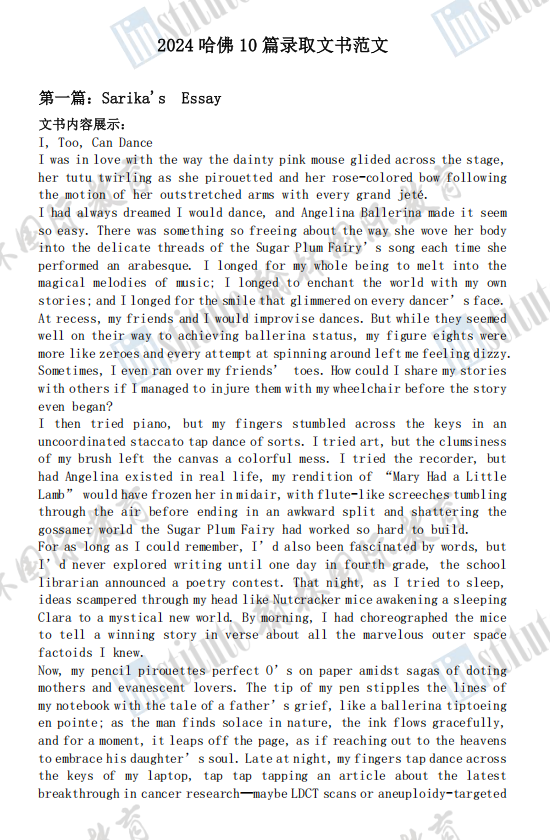
僅展示部分
2023-24年哈佛大學
優秀文書范文&點評
掃碼領取

當然,文書固然重要,但全面提升個人競爭力才是申請成功的關鍵。
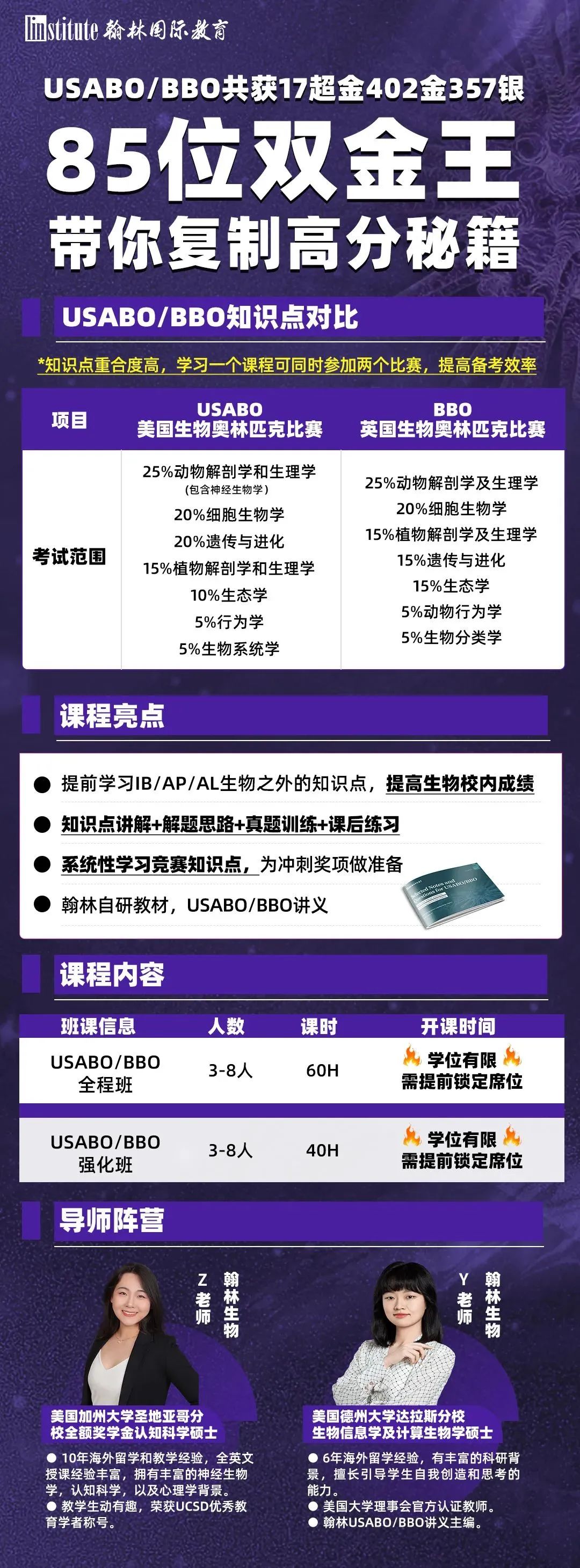
翰林各科國際賽事課程/組隊
正在火熱招募中







* 以上賽事主辦方為海外機構,不與任何中國的大學、中學或小學升學加分活動掛鉤,其成績不會作為任何中國中小學升學或評優的依據,僅定位為針對中學生的課外興趣活動和國際教學交流活動。
我要咨詢/報名
更多信息可咨詢顧問
往期文章閱讀推薦:









