
文科寫作類競賽作為背景提升的重要一環,近些年來也愈發受到留學生們的青睞。
除了John Locke這種耳熟能詳的天花板級寫作比賽之外,哈佛國際評論學術寫作競賽也是一個適合想要鍛煉思辨能力、培養全球視野的比賽!
距離HIR夏季賽論文提交
還有不到15天
!!!
同學們論文進度如何了?
《哈佛國際評論》學術寫作挑戰
《哈佛國際評論》學術寫作挑戰是面向全球中學生的英語寫作類活動,旨在鼓勵青年學生以寫作的方式表達對共建人類命運共同體及國際事務的關注與思考。
適合學生
全球9-12年級高中生
賽事時間
競賽分為春季、夏季、秋季/冬季三個不同的提交周期。
☑ 2024年春季賽:
提交截止日期:5月31日
答辯日:6月29日
☑ 2024年夏季賽:
提交截止日期:8月31日
答辯日:10月5日
☑ 2024年秋/冬季賽:
提交截止日期:25年1月2日
答辯日:25年2月5日
命題領域
HIR作為一個自命題學術論文,主題不需要出現在文章題目或內容中,只要選題角度和寫作內容能夠反映競賽主題理念即可。
命題方向包含但不局限于:農業、商業、網絡安全、國防、教育、就業&移民、能源&環境、金融&經濟、公共衛生、科技、太空、貿易、交通運輸等領域。
寫作要求
字數:800-1200(不包括圖表、數據表或作者聲明)
需標注對書籍和文獻的引用,符合引用規范,清晰體現出基于研究得出的觀點和見解。
比賽流程
? 先注冊并付款后才可提交作品
? HAWC的參賽費用為1480元/隊(可單人或組隊參加,每隊不超過兩人),費用包括賽事注冊費、評審費、配套課程、線上答辯、HIR期刊訂閱、證書制作、提名認證服務
? 哈佛國際評論的主編們對作品評分
? 如果被選為決賽選手,學生將被邀請參加HIR決賽答辯。在HIR答辯日,學生將向哈佛國際評論評委進行15分鐘的演講和口頭答辯
? HIR競賽官網:
https://hir.harvard.edu/contest/
獎項設置
? 所有提交的作品都將獲得哈佛國際評論的字母等級評定。
? 在沒有資格參加HIR決賽答辯的情況下獲得及格分數的參賽者將獲得表彰獎。
? 根據他們在HIR決賽答辯的初步成績和表現,決賽入圍者將有資格獲得以下獎牌:
🏆HIR 嘉獎獲獎證書(獲獎率約 40%)
🏆銅獎:HIR 銅獎獲獎證書、網站上提名
🏆銀獎:HIR 銀獎獲獎證書、網站上提名
🏆金獎:HIR 金獎獲獎證書、獲獎作品及參賽者姓名公布于官網
比賽詳情可掃碼咨詢
👇👇👇

掃描上方二維碼,可咨詢顧問更多信息
HIR推薦理由
1.TOP大學背景加持
背靠世界頂級學府哈佛大學,該國際專業賽事匯聚了眾多頂尖學者、資深編輯及才華橫溢的學生作為投稿者,確保了賽事的權威性。
入圍決賽的選手將享有與評審團進行個性化深入對話的寶貴機會,這不僅是一次思想的碰撞,更將成為未來申請美國頂尖本科課程時的一大亮點與助力。
2.選題自由度高,文理科“通吃”
哈佛國際評論寫作大賽倡導學生跨越學科界限,自由探索從農業、商業到網絡安全,再到國防、教育、就業與移民、能源與環境、金融與經濟、公共健康、科學與技術、太空、貿易及交通等廣泛議題,搜集素材并撰寫文章。
確保了無論學生背景是文科還是理科,都能在其擅長的領域內發揮所長。
3.有利于提高綜合學術能力
參與學術寫作競賽,學生需歷經選題構思、獨立深入探究及精細文字雕琢等多元學術挑戰,此過程不僅錘煉了他們的綜合學術素養,還為他們提供了豐富的學術實踐經歷,使他們能夠預先領略并適應本科層次學術任務的多樣性與高標準。
HIR推薦閱讀
為了給同學們提供更多寫作靈感,我們從HIR官網選取了一些不同領域的范文,給大家進行參考,可以從中學習好的方法論~
01、The Future of the Sino-Venezuelan Relationship: Make or Break?
Finance & Economics
Law & Diplomacy
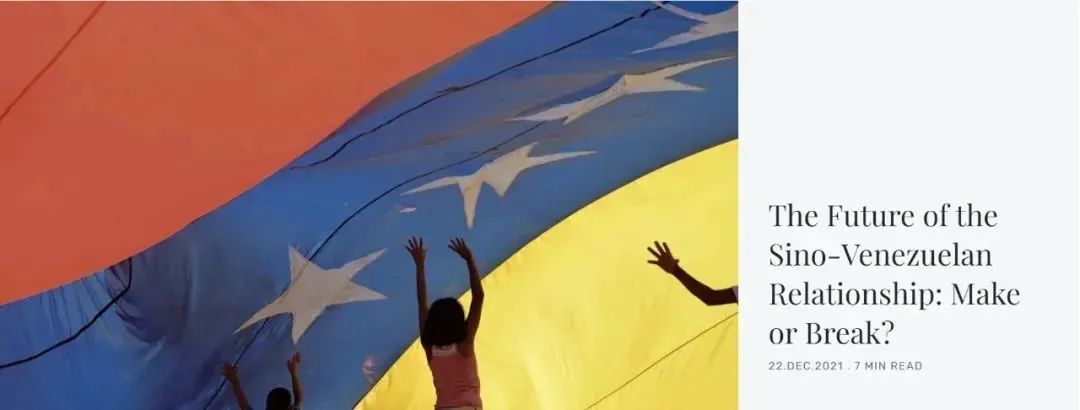
With the largest oil reserves in the world, Venezuela is a country that has undergone many changes since the 20th century. The nation went from being the wealthiest per capita country in South America during the OPEC oil embargo of 1973 to having a hyperinflation rate close to 10 million percent in 2019. Venezuela’s modern history revolves around their oil industry, dating back to the discovery of rich reserves in 1922. In just seven years, the country was producing 137 million barrels per year. At the time, it made them the second largest oil producer in the world.
Such large growth does not go unnoticed by global superpowers. Major nations have become involved in Venezuela as a result. One of these countries is China, the world's largest importer of oil. Venezuela's relationship with China grew with President Hugo Chavez’s rise to power in 1998. Throughout his presidency, the two countries worked together to establish mutually beneficial projects that helped the Latin American country in exchange for its abundant natural resources.
These projects have required a large amount of capital. Since 2007, China has invested around US$67 billion into Venezuela. Compared to the rest of Latin America, this is more than 40 percent of Chinese investment in the continent.
Graph displaying Chinese foreign investment in South America. “Top 5 Chinese Loan Recipients in Latin America and the Caribbean” by IAD China-Latin America Finance Database.
Apart from its oil supply, China saw Venezuela as an open market for engineering projects and arms deals. During the inception of the current Sino-Venezuelan relationship, Chinese companies would compete for large infrastructure projects, such as Latin America’s first high-speed railway. Most of these projects ceased with the downfall of the Venezuelan economy. However, China is still Venezuela’s second largest seller of arms.
Its location also makes it a prime spot for exerting influence over the continent. Its proximity to the United States means that China’s involvement symbolizes a concern for the North American superpower, which has historically sought to establish itself as a dominating foreign influence in Latin America through its many interventions during the Cold War years.
Although the relationship between China and Venezuela seemed to work successfully, many things changed with the death of President Chavez in 2013 and the collapse of oil prices in 2016. During this time, the country’s total output of oil decreased by 25 percent. The World Bank has placed Venezuela’s government effectiveness in the 2.4 percentile of countries while its corruption percentile is 3.85. Currently, 96 percent of the Venezuelan population lives under the poverty line. The high hopes China had for the Latin American country fell with the collapse of Venezuela’s economy. Recent studies predict that the country still owes China around US$20 billion.
Given the large risks that China is currently facing with Venezuela, different entities question China’s future plans with the country. There are different theories for why the Asian giant is still so heavily involved in the Latin American nation.
Shared Political Ideology
During Chavez’s presidency, many were quick to question if the new alliance between the two countries were based on shared political ideologies. Both governments have greatly authoritarian views that differ from most American countries. China claims that the partnership “did not have an ideological purpose, and was not designed to confront third parties nor to affect Venezuela's relations with any other country.” Meanwhile, Chavez would emphasize that Venezuela’s political relations with foreign nations were based on their negative relations with the United States. If it is the case that the relationship between the two countries is based on their political ideas, it would seem important for China to protect Venezuela from a collapse.
Future Plans with Venezuela
Another possible driver is China’s future geopolitical plans within the nation and the continent. When relationships with the Latin American country first began, China was still establishing its presence in the developing world. Venezuela was the start of China’s investments in the region, which grew from US$12 billion in 2000 to US$300 billion in 2019. Venezuela also supported China through various multilateral organizations. There has been a large exchange of services between the two countries, ranging from military training to communication satellites.
The dynamics of the relationship has changed since the early 2000s. Under authoritarian President Nicolas Maduro, the Venezuelan government is now seen by many countries as corrupt and inefficient. China’s alliance with the nation is hurting the reputation that it has strived to develop. China still plans to be a leader in the South American economy, given its large investment plans in the region. If China is to continue its relationship with Venezuela, they will have to do so without directly supporting the regime itself. This lack of support must be made public, which could have detrimental effects on the current contracts with Venezuela and the relationship between China and its allies. Due to these externalities, it seems unlikely that the Asian country will take such action. However, this approach could bring support from most Latin American countries in which China has investments, given that most of Latin America supports President Juan Guaido and the democratic resistance. Even with the current change in the relationship, state-owned Petroleos de Venezuela still has China as its second largest customer.
Stakes are Too High to Leave
There is reason to believe that China feels it is too involved with Venezuela. With its large outstanding loan, China could be focused more on getting its payments back than strengthening its diplomatic relations. When economic models for Venezuela changed in 2016, China cut off all its lines of credit with the nation. Venezuela’s drop in oil production and the drop in oil prices also make it harder for China to trust Venezuela with its payment. In response to the changing economic state of the Latin American country, the Asian giant has revealed existing communication channels with Venezuela’s opposition party to ensure debt payments. Ultimately, China has to decide if Venezuela’s debt is more valuable to them than their shared political philosophy.
Venezuelan crude oil production by year and World price of crude oil per year. “Venezuela: From Oil Boom to Bust” by the Federal Reserve Bank of St. Louis; U.S. Energy Information Administration.
Steps Forward
Despite China’s current goals in Venezuela, the Asian nation remains in a suboptimal position. While they have a strong incentive to help rebuild Venezuela’s economy in the form of repayments, doing so would not be a simple task. China would have to invest even more of its capital into the nation while also ensuring that corruption does not deplete the value of Chinese investments. Some estimates state that an investment of US$150 billion over the next 10 years will be necessary to get Venezuela back to past levels of oil production . Most of the capital will have to come from foreign investments. If China wants to ensure their payments, they would have to further help the Latin American country. This kind of initiative would increase tensions with the US, given the direct opposition that the US maintains to the current Venezuelan regime.
China could also aid the opposition in Venezuela if they promise to repay its loans. This carries precautions on its own, given that Chinese allies like Russia and Cuba have a substantial incentive to stay active in the region. These incentives come in the form of military deals with Venezuela. These countries would also not be able to be as involved in the region as they currently are if a new government takes over. If China were to support the opposition, it would negatively affect its relationship with current allies.
There would be great ideological tensions within China itself if it supported the democratic opposition, given the communist and authoritarian philosophy of its own government. Supporting a democratic government would be seen as largely hypocritical by the rest of the world. Even though China’s administration is greatly different from that of Venezuela, the shared basis in which their governments stand leaves China almost unable to support a democratic administration. If China were to support the Venezuelan resistance, it would not look good for the Asian country and what it stands for. China could try to make it clear that their sole interest is the debt, although they would have to do so very carefully.
China could also forgive its loan with Venezuela and move on with its geopolitical strategies. This approach would prevent further rising tensions with the US coming from involvement the South American country. The downside is the precedent that it sets. China is involved in risky investments with developing countries through their Belt and Road Initiative. If it allows one of its investments to default, it would make it easier for another country to do the same. This has the potential to disrupt their initiative, given that not all developing economies are able to pay their loans. This is part of the reason why investments in these regions are seen as high-risk. If China’s investments begin to default, the country will lose capital and its reputational power as leading the developing world. The Asian giant will have to decide if helping Venezuela is worth the potential sacrifice that it may bring to their political agenda.
Regardless of China’s decision, there will be consequences that will impact countries both directly and indirectly. It is important for the Asian giant to think of how they want the world to see them and what relationships they value most. Given its larger global strategies, China will also need to assess what it is willing to sacrifice in order to become the most influential power in the developing world.
鏈接:https://hir.harvard.edu/the-future-of-the-sino-venezuelan-relationship-make-or-break/
02、Running Dry: The Battle for Water Security in Uruguay and Why It Foreshadows a Greater Issue
Energy & Environment
Development
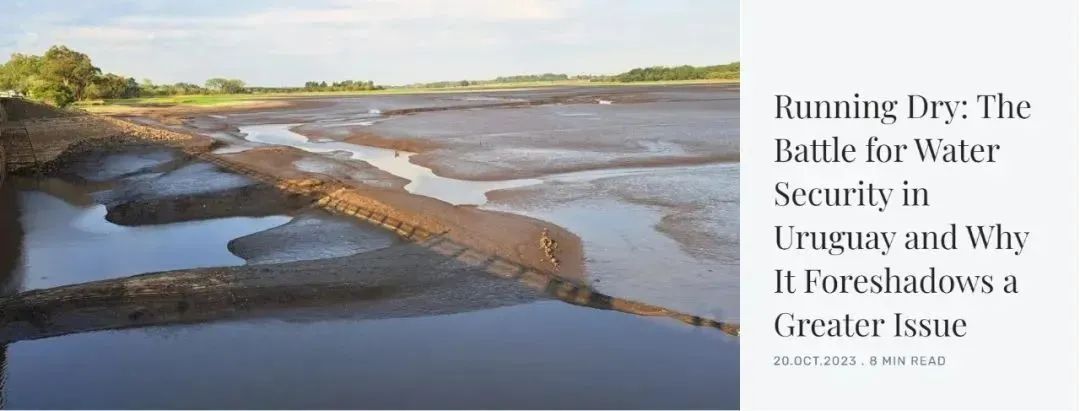
On June 22, Uruguay’s Archbishop, Daniel Sturla,tweeted: “Our God, we ask You to give us the necessary rain.” He was responding to the water crisis the South American nation has faced for the past three years, the worst in over half a century. While some thanked the Archbishop for his efforts, others pointed out that God is probably not very active on Twitter.
Home to just over 3.5 million people—less than the Greater Boston Area—Uruguay has beenovershadowedby neighboring giants Argentina and Brazil for most of its history. However, itboastsone of the highest human development indices and GDP per capita in the region. In 2004, Uruguay also became the first country in the world torecognizeaccess to drinking water as a constitutional right, a pledge it is currently struggling to uphold.
Since 2020, Uruguay hassuffereda series of droughts that have led to billions in losses in the agricultural sector, the country’s biggest industry. Most alarmingly, the droughts havethreatenedaccess to safe drinking water for the capital of Montevideo’s Metropolitan Area, where 60 percent of the population—approximately 1.9 million people—live. Montevideo’s main water source, the Paso Severino Reservoir, currently holds nine percent of its normal capacity, a figure thatreachedan all-time low of 1.7 percent in early July. This droppromptedthe Uruguayan government, led by center-right president Luis Lacalle Pou, to declare a water emergency on June 19.
Step 1: Add 440mg of Salt
In order to meet demand, the State Sanitary Works Administration (OSE), the body in charge of the country’s water supply,decidedto gather water from sources closer to the River Plate. This solution, however,poseda new problem. The river’s proximity to the Atlantic causes it to have greater salinity, which spread to the entire network. The World Health Organizationrecommendsthat sodium levels in drinking water not go above 200 mg/L; in Montevideo, current valuesaretwice that.
“Of course, lack of water is worse, but drinking saltwater for a prolonged period can have devastating cardiovascular consequences,”saidcardiologist álvaro Niggemeyer. The Health Ministryinformedthe public that, while the water is technically potable, pregnant women, infants, and people suffering from cardiovascular and other health issues should minimize their tap water intake and take additional precautions.
The rest of the population quickly followed suit. A poll from Junefoundthat six percent of Uruguayans continue to drink tap water, compared to over 66 percent last year. Conversely, bottled water sales haveskyrocketedby 573 percent from 2022. Retailers were forced to implement purchase quantity restrictions, but scarcity prevails—in large part due to hoarding levels not seen since the beginning of the COVID-19 pandemic. “We receive over 200 bottles a day, and they don’t even last two hours on shelves,” one grocery store managersaid. Suppliers nationwide have been working at maximum capacity, and the government isconsideringremoving taxes from imported bottled water.
“We’re in a complex situation, one which unfortunately requires us to wait for it to rain. But rest assured that anything we can do to ease the crisis we will do,”saidPresident Lacalle Pou.
It Wasn’t Always Like This
Having clean and abundant water has become ingrained in Uruguay’s national identity. Children are taught early about the countryhavingone of the largest renewable water reserves per capita—five times the world average—and how Uruguay is (or was) the only South American nation with universal access to safe drinking water.
In normal years, Uruguayreceivesapproximately 1300mm of rain, a valuecurrentlyat 300mm. Montevideo was one of the first capital cities in Latin America toinstallpiped water systems, yet it is now scrambling to find water to pump—butwhy?
A Historic Dry Spell
For three and a half years, Uruguay has faced itsworst droughtin 74 years, caused by the weather phenomenon ofLa Ni?a–which cools the Pacific Ocean’s surface and leads to dry periods–and further aggravated by increased temperatures.
Rainfall in Uruguay usuallyresultsfrom the movement of cold fronts in winter (June to August) and regular thunderstorms during summer (December to February). This year, however pleasant to beachgoers, the latter never came, with certain regionsexperiencingthe hottest temperatures in over 40 years.
Many were quick to point the finger at climate change, which exacerbated the issue but was not the sole culprit. The World Weather Attribution, a group of independent scientists studying the impacts of climate change on extreme weather events,concludedin a February report that “reduced rainfall is within the natural variability,” but the “consequences of drought are becoming more severe due to the strong increase in extreme heat.” In any given year,La Ni?ahas a five percent chance of developing, yet 2023 marks the third consecutive period it has formed—an anomaly which expertsagreeis in large part due to global warming. Therefore, although the dry spell falls within expected climatic variations, extreme weather conditions have enabled it to have more drastic effects. In addition to Uruguay, neighboringArgentinaandBrazilhave been facing similar issues.
The situation ispredictedto improve in the spring (September to December) once theEl Ni?ophenomenon reaches the region, which, opposite toLa Ni?a, brings high levels of precipitation. However, some are skeptical that it will not be enough. “We’re relying on rain as the only answer, but completely neglecting the political and cultural change needed about how we view water,”saidgeographer Marcel Achkar.
Historical Mismanagement of Environmental Resources and Normalcy Bias
Never has Uruguay faced a water crisis of this magnitude, undermining a popular misconception that water resources were virtually inexhaustible. “We tend to think nothing could ever happen here,”jokedDaniel Panario, Director of the Ecology Institute within the University of the Republic. In many ways, Uruguay won the geographic lottery: well-defined, temperate seasons; arable lands; and minimal propensity to natural disasters. But the current crisis highlights the flaws in Uruguay’s management of environmental resources.
The aforementioned constitutional reform in 2004 was a landmark decision inensuringequitable access to water, but many have said the Uruguayan government has since dropped the ball. This decision established the basis for public water resource management, emphasizing social participation and sustainability. While it is praised for enabling the country to achieve almost universalaccessto water, subsequent utilization suggests that the pledged focus on human consumption has not been fully realized.
Carmen Sosa, a member of the National Commission in Defense of Water and Life—which led the fight for reform in 2004—saidin an interview that “our water resources have been looted by agribusiness and multinationals.” She continued: “The rice industry consumes four times more water than the population, wood pulp 10 times more, soybeans 17 times more, and livestock 20 times more.” The top 19 most water-demanding companiesconsumemore than the entire population, the latter comprising only five percent of the overall usage. Finnish cellulose giant UPM alone, which has operations in the country’s North,consumesmore water than half of the Uruguayan population combined.
These businesses extract water from the same sources as the general public but are not bound by the same rules. As a consequence of the crisis, OSEimposedfines on excessive water consumption for individuals, yet no restrictions were implemented for the industrial sector. Researchers havewarnedfor years that this business model was unsustainable, but resources continued to be depleted despite what was pledged in 2004.
Poor planning and constant postponement of infrastructure projects are also to blame. The last major reform to Uruguay’s water network was in 1987 with theinaugurationof the Paso Severino reservoir. Since then, projects were proposed—and quickly left behind—by administrations across the political spectrum. Most notably, former president José Mujicainitiatedthe Casupá Project back in 2013, which would have been able to fulfill 70 percent of Montevideo’s demand; however, 10 years and three administrations later, it is nothing but an idea. “We all fell asleep,”admittedMujica.
Severe underfunding of OSE has also undermined efforts to maintain existing infrastructure, particularly pipes. OSE’s investmentbudgetin relation to GDP was 0.1 percent in 2022—a value that has seen a downward trend since the early 2000s. It isestimatedthat50 percent of water is lostin the distribution process because of leakages, but insufficient funds and attempts to reduce OSE’s workforce have slowed efforts to fix them.
The current situation broke thenormalcy bias(the idea that because something did not happen in the past, it will not happen in the future) mentality that much of the population—and the government—employed to justify the misuse of resources and downplay the severity of the crisis. Preventive investments and cultural changes are necessary to prevent these sorts of disasters from increasing in frequency and magnitude. However, many politicians have deferred such actions because the benefits are seen far later than their political mandates end, proven by Lacalle Pou’s middle-to-short-term solutions for the long-term crisis.
Thirsting for Solutions
Lacalle Pou’s administration waspraisedinternationally and domestically for its swift and humane approach to the COVID-19 pandemic, yet many Uruguayans question Pou’s strategy regarding the water crisis. “We acted thinking that it was a temporary matter and that the rains were going to come,"acknowledgedVice Minister of the Environment Gerardo Amarilla. About 63 percent of Uruguayansdisapproveof the administration’s drought management, a recent poll found.
In the short term, the government has addressed the issue of the growing demand for bottled water. Parliament recentlyapproveda temporary tax relief on bottled products, which would make them 30 percentcheaper, and begandistributingtwo liters of water a day to more than 500,000 citizens of the Montevideo Metropolitan Area living in low-income households. Both efforts combined aresetto cost US$22 million and will last a month unless extended by Parliament.
Middle-to-long-term solutions have fallen victim to political discourse. Lacalle Pou’s right-wing coalition proposed a new initiative, theNeptune Project, which would create a privately-owned potabilization plant on the River Plate that would beloanedto OSE for US$40 million annually. The left-wing Broad Front opposes the move and defends going forward with the Casupá Reservoir instead. A spokesperson for the partysaidNeptune would be “a highly inconvenient privately managed project, with an enormous cost that will defund OSE.” The Head of Stateclarifiedthe Casupá Project “was not discarded.”
As the debate continues, finding a sustainable approach to tackle the water crisis remains a pressing task for the Uruguayan government, especially given growing concerns from social and international groups.
“It’s Not Drought, It’s Pillage”
Activists took to the streets on May 31 to protest the crisis’ mismanagement. Their slogan can still beseenacross Montevideo’s walls:It’s not drought, it’s pillage. “We just want the government to respect our Constitution, to keep businesses like Google under control,” a demonstrator explained. Theyalludedto the search giant’s recently announced plans to open a data center in Uruguay, whichsparked outrageafter sources estimated it would consume two million gallons of water daily—equivalent to the daily consumption of 55,000 people combined.
The international community shares these concerns. A recent UN reportfeared“risk of de facto water privatisation” and condemned the prioritization of industrial usage. “Uruguay must put human consumption at the forefront, as indicated by international human rights standards," the report said. In response, the Uruguayan governmentissueda statement highlighting the report's “inaccuracies.”
Looking Forward
If anything beneficial comes out of this crisis, it should be a wake-up call to Uruguayans that water is not infinite, that natural resources must be used and regulated responsibly by everyone, from individuals to Big Agro.Deemedthe most democratic nation in the Americas by The Economist, Uruguay must once again grant people equitable access to drinking water, a recognized constitutional right since 2004.
Uruguay’s present may be the future for several nations. They should look at Montevideo’s crisis and learn from its successes—and its failures.
The cover photo, titled "Represa de Canelon Grande seca durante la sequia," was taken by Enxuta and is licensed under CC BY-SA 4.0.
鏈接:https://hir.harvard.edu/running-dry-the-battle-for-water-security-in-uruguay-and-why-it-foreshadows-a-greater-issue/
03、Public Health and Overpopulation: The United Nations Takes Action
Public Health
Anniversary
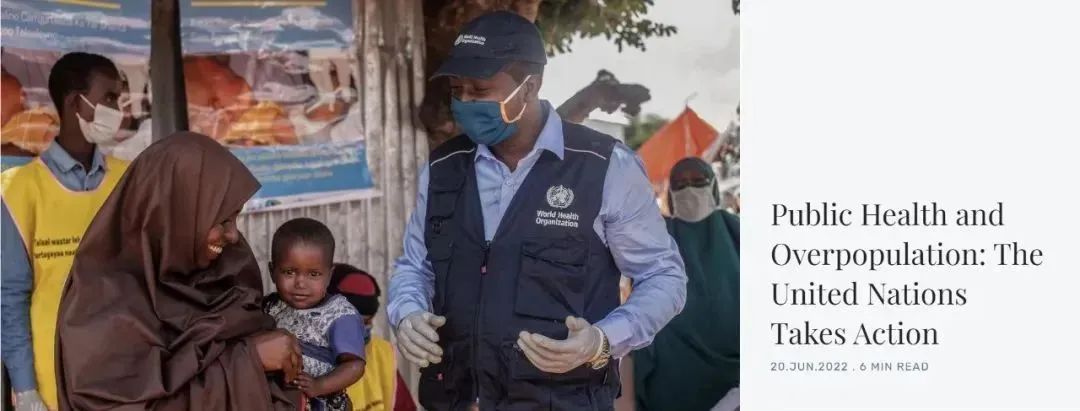
With the world’s population rising faster than ever before, will our population growth outpace our resource reserves? How can the dangerous effects of overpopulation be managed without diminishing the major improvements in our quality of life that come about thanks to population growth?
The UNprojectsthat over half of the Earth’s population growth in the next three decades will occur in the continent of Africa. This is due to the fact that, from 2010 to 2015, Africa’s population grew at a rate of 2.55 percent annually, with the continent still maintaining thehighestpace of population growth among other continents. The UN predicts that, behind Africa, Asia will be the second greatest donor to future international population growth, with an expected addition of approximately one billion people by 2050. In contrast, within every European nation, fertility rates are currentlybelowthe population replacement level, which is approximately two children per woman. In most of Europe, fertility rates have remained beneath replacement level for decades. The global population grew fourfold in the past 100 years, so what impact could increased population growth have in the future? Will there be mass-migration? Overcrowding in already densely populated or resource-rich areas? Poor living conditions and sanitation similar to Industrial Revolution era slums?
The global population is currentlyrisingat a steady rate. The number of humans existing on Earth has never been as high as it is now. In 1800, Earth had approximately 1 billion inhabitants, which rose to 2.3 billion in 1940, then 3.7 billion in 1970, and approximately 7.5 billion today. In the last five decades, Earth hasexperiencedan extreme population boom. This phenomenon is known as overpopulation, where the condition in which the amount of humans currently existing on Earth outstrips future resource availability and earth’s carrying capacity. Throughout human history, birth and death rates have always counterbalanced each other, which ensured that Earth had a maintainable population growth level. However, in the 1960s, the global population increased at an unparalleled rate. This brought about a variety of apocalyptic predictions, most prominently, a revival of the Malthusian trap panic.
Paul R. Ehrlich’s 1968 novel,The Population Bomb, eerilyechoesThomas R. Malthus’s landmark 1798Essay on the Principle of Population. Ehrlich’s novel proposes theories regarding potential outcomes for when agricultural growth does not keep pace with population growth. Ultimately his theories say that the world’s food supply will inevitably become inadequate for feeding the general population, whose numbers would continue to swell until famine, disease epidemics, war, or other calamities took root. These Malthusian predictions about out-of-control population growth have resulted in a variety of detrimental global impacts, particularly the emergence of extreme reproductive control measures, which have taken center stage on an international scale. Today, despite the fact that population scientists mostly agree that Malthus’s forecasts were overblown, the lingering prevalence of these fears have contributed to millions of forced sterilizations in Mexico, Bolivia, Peru, Indonesia, Bangladesh and India, as well as China’s two-childpolicy. Overall, this has left many wondering whether extreme population growth projections are legitimate or merely groundless panic perpetuated by alarmists.
The Demographic Transition
In reality, rising birth rates and population booms are components of a four-step processcalledthe demographic transition, which the Earth is currently undergoing. Most developed nations havealready madethis transition, but other countries are currently experiencing this change. In the 1700s, the entire world was undergoing the first stage of the demographic transition. During this time, the continent of Europewas ineven poorer condition than the modern-day definition of a developing region, and was afflicted with inferior public health, sustenance, and medical facilities. Birth rates were higher; however, death rates were also higher. For this reason, population growth remained largely stagnant.
Statistically, in the 1700s, womenbirthedfour to six children. However, on average, only two survived to adulthood. When the Industrial Revolution began in Great Britain in the mid-18th century, the Earth experienced the most significant shift in human lifestyles since the Agricultural Revolution. The Industrial Revolution altered every aspect of society, and fostered a greater sense of global interconnectedness. For example, many peasantsbecamefactory workers, manufactured productsbecamewidely available due to mass production, and countless scientific advancements improved existing methods of transportation, communication, and medicine.
Gradually, this economic developmentcreateda middle class and, after the work of union activists, ultimately raised the standard of living and health care for the impoverished labor demographic. Thus began the second transition stage. The increased availability of better foodstuffs, sanitation, and medicine directly contributed to lower death rates, causing a population explosion that doubled Great Britain’s population from 1750 to 1850. In the past, families tended to have more children because not all were expected to survive, but when child mortality rates decreased, the third transition stage was launched. This stage involves reduced conception rates and slowing population growth. Ultimately, a balance was established, with fewer deaths and births, creating a stable population growth rate and signifying the attainment of the fourth and final stage of the demographic transition.
Even as birth rates havedecreaseddramatically, Earth’s population is still rising at an alarming rate because the humans conceived during the population boom of the 1970s and 1980s are currently having more children; however, the current average number of children per family remains two and a half, while it was five during the late 1970s. As this generation ages and its fertility diminishes, the rate of population growth will likely continue to decrease in every nation. Most of the world’s countries have reached the fourth stage of the demographic transition. In approximately 80 years, developed countries will experience a reduction in fertility from over six children to fewer than three children. Malaysia and South Africa reached this point in 34 years, Bangladesh in 20 years, and Iran in 10 years. If developing countries are afforded more support, they will reach this point much faster.
Overall, most scientistspostulatethat human population growth will eventually come to an end, and the UN predicts that Earth’s population will not exceed twelve billion. Some of the major causes of population growtharereduced infant mortality rates, increased lifespans, higher fertility rates, advances in science and technology, and improved access to proper medical care. With the UN’s continued assistance, concurrent with overpopulation, the development level of the global community will increase, and the number of people living in poverty will decrease. Nonetheless, an ever-expanding human population is an immense social and economic challenge that necessitates the alignment of different national interests, especially with regards to reproductive rights, resource availability, and environmental concerns.
The United Nations Takes Action
In 1969, the United Nations Population Fund (UNFPA) wasestablishedin order to lead the UN in implementing population programs fundamentally based on the notion of family planning, or the “human right of individuals and couples to freely determine the size of their families” without governmental interference or legislation. In 1994, at the International Conference on Population and Development in Cairo, Egypt, the designated objectives of the UNFPA were determined in greater depth. It was decided that the UNFPA would specifically focus on the gender and human rights elements of population issues; consequently, the UN Population Fund was granted the lead role in aiding nations in fulfilling the Conference’s Programme of Action.
The three most significant sections of the UN Population Fundmandateare “Reproductive Health,” “Gender Equality,” and “Population and Development.” The United Nations Population Division (UNPD) works toconfrontthe interconnected global issues posed by population growth, which is primarily fueled by rising fertility rates, increased longevity, and greater international migration. The UN produces the official demographic approximations and predictions for every country and all regions of the world. The UNFPA specificallyaddressesglobal population by compiling data and statistics regarding migration, fertility, marriage, regional development, urbanization, world population projections, and national population policies.
In November 2012, the UNFPAdeclaredfamily planning a global human right; however, approximately 12 percent of 15 to 49-year-old women internationally are not afforded access to family planning. This is considered an egregious modern-day human rights infringement. The UNFPA aids various UN bodies like the Commission on Population and Development, and endorses the implementation of the Programme of Action undertaken by the International Conference on Population and Development (IPCD) in 1994. The UNFPA has been successful in urging international cooperation on the issue of securing family planning as a human right,pushingthe UN toholdthree conferences concerning the issue of population, along with two special sessions of the General Assembly and asummit in 2019.
The Way Forward
Ultimately, apocalyptic population growth fears are overblown, and as such, draconian population control regulations are unnecessary. We have witnessed progress on an international scale in this area, perhaps most notably with Chinarevokingits infamous, longstanding one-child policy just seven years ago. However, a broader global focus on guaranteeing family planning as a human right remains essential. In the words of economist Julian Simon, “Whatever the rate of population growth is, historically it has been that thefood supply increasesat least as fast, if not faster.” Since Ehrlich’s initialfear-mongeringregarding an overpopulation-induced Armageddon, the planet’s population has more thandoubled. However, annually, famine deaths havedroppedby millions. Today’s famines are war-induced, not caused by natural resource consumption. As production rose,prices fellandcalorie consumptionincreased, which decreased malnutrition worldwide. In Simon’s words, human ingenuity is the “ultimate resource.” Therefore, the enactment of heavy-handed population-control regulations is not only abhorrent, but is also irrational and unsupported by scientific evidence.
鏈接:https://hir.harvard.edu/public-health-and-overpopulation/
本期福利
《哈佛國際評論》優秀范文
掃碼領取

我要領取!
愛好寫作的同學們看過來!除了接下來的HIR秋季賽之外,小林還為你整理了這些文科寫作競賽!
高含金量文科賽事List
🏆 John Locke 寫作比賽
🏆《New York Times》紐約時報寫作
🏆哈佛國際經濟學論文大賽
🏆 IEA 全球經濟學論文比賽
🏆馬歇爾學會經濟論文比賽
🏆RES青年經濟學家寫作
🏆《The Concord Review》歷史論文
🏆國際DNA Day論文比賽
🏆Scholastic Art & Writing Awards
如果你也想提升自身的文學寫作能力
翰林特別開設了文科寫作輔導課程
一對一定制化輔導
給予學生研究和寫作上的專業建議
協助學生打磨和撰寫高質量的論文
更多信息可掃描上方二維碼 咨詢顧問
翰林文科導師陣容(部分)

翰林白老師
霍特國際商學院舊金山分校社會企業創業碩士
●西班牙巴塞羅那自治大學(美國德州農工梅斯商學院海外交換)企業管理學士
●美國大學理事會、劍橋國際教育、IBO三認證老師
●IEO、NEC、FBLA認證教練
●國家中級經濟師
●學員戰績斐然,曾多次帶出IEO全國第一,NEC全國第一,NEC全球單項第一
●2022年 指導高中學生以第一作者身份發表ICEMGD國際經濟學會議期刊,論文進入CPCI檢索
●2023年執教Johnlocke經濟學方向5名學員中4名入圍(shortlisted)

翰林文科沈老師
悉尼大學文學士
墨爾本大學教育學院中學教育碩士
●澳大利亞維多利亞州人文學科(歷史、政治、地理、經濟、宗教和道德)注冊教師。
●澳大利亞National History Challenge (澳洲版NHD)家歷史大賽州級評委,熟悉國際文科競賽考量維度。
● 2020年開始,連續數年執教數十名學生獲得John Locke論文比賽中的Very High Commendation,Commondation等獎項,指導的心理學方向論文學生成功進入普林斯頓大學。

翰林彭老師
賓夕法尼亞大學教學和領導力碩士
●衛斯理大學跨學科教育學士
●本科期間同時輔修了環境學和心理學等課程,研究生期間學習內容涉及社會學和哲學
●曾在深圳私立國際學校任教10-12年級托福和英文演講課程
●4位學生入圍哈佛國際評論答辯環節,其中最好成績為銀獎
●3位學生入圍2023年Johnlocke心理方向和低年級組的論文比賽
* 以上賽事主辦方為海外機構,不與任何中國的大學、中學或小學升學加分活動掛鉤,其成績不會作為任何中國中小學升學或評優的依據,僅定位為針對中學生的課外興趣活動和國際教學交流活動。









