
由哈佛大學(xué)本科經(jīng)濟學(xué)會
&《哈佛大學(xué)經(jīng)濟學(xué)評論》聯(lián)合主辦
獲得諾貝爾經(jīng)濟學(xué)獎得主親自指導(dǎo)
哈佛國際經(jīng)濟學(xué)論文大賽HIEEC
開題啦!

論文提交截止時間
2024年 1月5日
掃碼報名
2023HIEEC賽題
Q1
Advances in artificial intelligence (AI) have the potential to affect growth, inequality, productivity, innovation, and employment. OpenAI’s ChatGPT, in particular, has greatly increased public awareness about the significance of AI and its implications for the future. What impact will the development of AI have on economic inequality, the composition of the workforce, and economic output as a whole? How can nations prepare for the micro and macroeconomic changes brought about by AI?
人工智能 (AI) 的進(jìn)步有潛在影響增長、不平等、生產(chǎn)力、創(chuàng)新和就業(yè)的可能。特別是 OpenAI 的 ChatGPT,極大地提高了公眾對“AI的重要性”及“其對未來影響”的意識。AI的發(fā)展將對經(jīng)濟不平等、勞動力構(gòu)成和整體經(jīng)濟產(chǎn)出產(chǎn)生什么影響?各國如何為AI帶來的微觀/宏觀經(jīng)濟變化做好準(zhǔn)備?
Q2
Measuring national and global economic activity allows us to understand how economies change in size and structure—how they grow and contract. In addition to Gross Domestic Product (GDP), government budgets, and the money supply, alternatives like the Human Development Index (HDI) and Gross National Income (GNI) are used to assess economic progress. What are the advantages of our current economic indices, including GDP, HDI, GNI, government budgets, and the money supply, and in what areas are they lacking? Which of these indices do you find most helpful, and how can we enhance or combine them to improve our understanding of economic measurement?
通過衡量國家和全球經(jīng)濟活動,我們可以了解經(jīng)濟的規(guī)模和結(jié)構(gòu)如何變化,即它們?nèi)绾卧鲩L和收縮。除了國內(nèi)生產(chǎn)總值 (GDP)、政府預(yù)算和貨幣供應(yīng)量外,人類發(fā)展指數(shù) (HDI) 和國民總收入 (GNI) 等替代方案也被用來評估經(jīng)濟發(fā)展。我們目前的經(jīng)濟指數(shù),包括GDP、人類發(fā)展指數(shù)、國民總收入、政府預(yù)算和貨幣供應(yīng)量,有哪些優(yōu)勢?它們在哪些方面有所欠缺?你認(rèn)為這些指數(shù)中哪一個最有幫助,我們?nèi)绾渭訌娀蚪M合它們以提高我們對經(jīng)濟計量的理解?
Q3
Proponents of income redistribution support the idea that redistribution policies will increase economic stability and give more opportunities to the less wealthy. Others, however, are more skeptical and believe it could have negative consequences for economic growth. Current methods of redistribution include taxation, welfare, public services, and other monetary policies. What strategies for income redistribution should the U.S. adopt from other countries? What economic impacts could a wealth tax or super millionaire tax have? What type of redistribution is most effective and feasible? What would be the impacts of the U.S. enacting universal basic income? Discuss the implications of any of these issues and feel free to expand on other areas of economic redistribution.
收入再分配的支持者有這樣一種觀點,即再分配政策將增加經(jīng)濟穩(wěn)定性,并為較不富裕的人提供更多機會。然而,其他人則持懷疑態(tài)度,認(rèn)為這可能會對經(jīng)濟增長產(chǎn)生負(fù)面影響。目前的再分配方法包括稅收、福利、公共服務(wù)和其他貨幣政策。美國應(yīng)該從其他國家采取哪些收入再分配策略?財富稅或超級百萬富翁稅會產(chǎn)生哪些經(jīng)濟影響?哪種類型的再分配最有效和最可行?美國實施全民基本收入制度將產(chǎn)生什么影響?請討論這些問題的影響,并隨意擴展經(jīng)濟再分配的其他領(lǐng)域。
Q4
As the United States weighs the impacts of China’s rise to global prominence, economics and national security have become increasingly intertwined. As a result, the United States government has imposed both tariffs and investment restrictions on China to limit the nation’s access to both US markets and intellectual property (specifically in sensitive industries such as semiconductors). What are the economic implications of these policies for United States firms, consumers, and workers? Discuss the most important perspectives of the US-China trade war and provide suggestions on how both countries can manage the prospect of a changing economic order.
隨著美國權(quán)衡中國崛起對全球的影響,經(jīng)濟和國家安全越來越緊密地交織在一起。因此,美國政府對中國實施了關(guān)稅和投資限制,以限制中國進(jìn)入美國市場和知識產(chǎn)權(quán)(特別是在半導(dǎo)體等敏感行業(yè))。這些政策對美國公司、消費者和工人有何經(jīng)濟影響?請討論中美貿(mào)易戰(zhàn)最重要的觀點,并就兩國如何應(yīng)對經(jīng)濟秩序變化的前景提出建議。
看完以上的題目
同學(xué)們的腦中是否已經(jīng)有構(gòu)思、躍躍欲試了呢?
別急!想要參加HIEEC你還需要了解這些!
HIEEC哈佛國際經(jīng)濟學(xué)論文大賽
HIEEC哈佛國際經(jīng)濟學(xué)論文大賽由哈佛本科生經(jīng)濟協(xié)會(HUEA)和《哈佛大學(xué)經(jīng)濟評論》(HCER)聯(lián)合主辦。
哈佛本科經(jīng)濟協(xié)會:“經(jīng)濟學(xué)的核心問題是我們要做什么,而我們的任務(wù)就是通過正面解決這個問題來更好地了解我們所處的這個世界。”
01適合學(xué)生
9-12年級學(xué)生,對經(jīng)濟學(xué)感興趣的學(xué)生
02賽事時間
● 論文提交截止:2024年1月5日晚上11:59(美東時間)
●?公布最佳推薦和入圍名單:2024年2月(美東時間)
●?在網(wǎng)站上公布獲獎結(jié)果:2024年3月(美東時間)
03參賽內(nèi)容與要求
參賽者必須從規(guī)定的4個論文題目中任選1個,結(jié)合經(jīng)濟理論和現(xiàn)實生活中的事例構(gòu)建一個令人信服的論題,完成一篇論文。
①?字?jǐn)?shù)限制在1500字之內(nèi),多出的文字將會被自動刪減。論文的字?jǐn)?shù)限制不包含引用,腳注,標(biāo)題,標(biāo)頭和頁腳
②?參賽者必須作出聲明論文由本人完成,如果選手接受任何外界協(xié)助,則必須要在報名表中說明。如有抄襲,將立即失去比賽資格
③ 同時只有第一次提交的論文會被納入評選,重復(fù)提交不會采納
04獲獎榮譽
★ 前3名獲獎?wù)撐模ń?jīng)作者許可后)將在《哈佛大學(xué)經(jīng)濟學(xué)評論》在線出版物上發(fā)表
★?前10名入圍名單將在網(wǎng)上公布,并由2016年經(jīng)濟學(xué)諾貝爾獎得主Oliver Hart進(jìn)行評審
★?另有20位參賽者將獲得“最佳推薦”榮譽獎,他們的名字將在網(wǎng)上公布
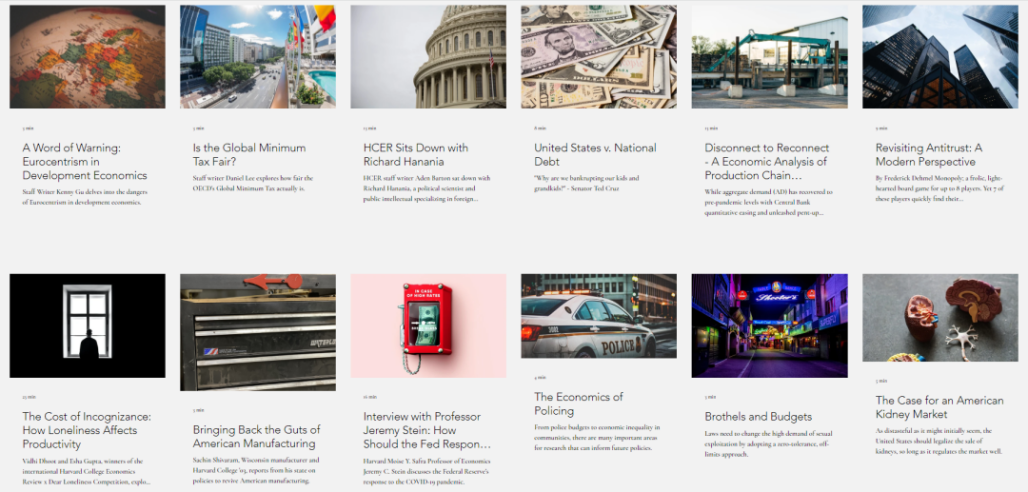
本期福利
HIEEC 往年獲獎?wù)撐?/strong>
 (部分福利預(yù)覽)
領(lǐng)取方式
掃描文中二維碼
添加顧問老師免費領(lǐng)取
* 以上賽事主辦方為海外機構(gòu),不與任何中國的大學(xué)、中學(xué)或小學(xué)升學(xué)加分活動掛鉤,其成績不會作為任何中國中小學(xué)升學(xué)或評優(yōu)的依據(jù),僅定位為針對中學(xué)生的課外興趣活動和國際教學(xué)交流活動。









