2024HIMCM全球高中生數(shù)模賽A題

2024HiMCM全球高中生數(shù)模賽A題全文如下
Problem A:To Play or not to Play: Modeling Future Olympic Games
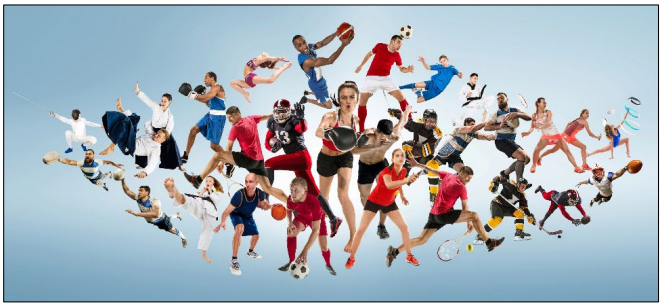
The International Olympic Committee (IOC) is planning the 2032 Summer Olympics in Brisbane, Australia. As the Olympics evolve, the IOC aims to keep the Games both relevant and impactful by adding sports, disciplines, or events (SDEs) that resonate with modern values and appeal to a global audience. Throughout Olympic history, SDEs have been introduced, removed, or even reintroduced to reflect the times. For example, in 2020, Karate, Sport Climbing, Surfing, and Skateboarding made their Olympic debut. However, Karate was no longer included in the 2024 Paris Olympics, while Breaking (also known as breakdancing) was introduced. Looking forward to the 2028 Los Angeles Olympics, Flag Football, Lacrosse, and Coastal Rowing will be added, while Baseball and Softball will return to be contested in the 2028 Games after a 20-year absence.
To guide these decisions, the IOC’s Olympic Programme Commission has developed a set of criteria to help ensure that each sport aligns with Olympic values.[1] IOC Criteria for Sports Inclusion is summarized below:
● Popularity and Accessibility: Enhances the Olympic Games’ appeal and global interest without excessively increasing costs or logistical demands.
● Gender Equity: Ensures that both men and women athletes have equal opportunity to participate.
● Sustainability: Promotes environmental and social responsibility.
● Inclusivity: Represents diverse cultures and promotes global participation (at least 75 countries across four continents practicing the sport).
● Relevance and Innovation: The sport must appeal to younger audiences, reflect modern trends, and incorporate innovations including physical virtual sports where appropriate while respecting Olympic traditions.
● Safety and Fair Play: Maintains high standards for athlete protection and anti-doping.
The IOC has hired your team, HiMCM Olympic Consultants (HOC), to assist in evaluating which SDEs should be added (or potentially removed) from the 2032 Summer Games. Your task is to create a mathematical model that evaluates SDEs against these criteria to provide wellreasoned recommendations. This model will be used to make quantitatively informed decisions about which SDEs best fit the Olympics’ evolving vision.
Your Tasks
1. What factors need to be considered when addressing the IOC criteria? List and describe the various factors your team identifies. Note that factors may be quantitative or qualitative, constant or variable, and deterministic or probabilistic. Be sure to justify your choices and to include units where appropriate.
2. Use your factors to build a model (or set of models) to help the IOC evaluate which SDEs align best with Olympic criteria.
3. Test your model on at least three SDEs that have been added or removed from recent Olympics, namely Olympic years 2020, 2024, and 2028 and at least three SDEs that have continuously been in the Olympic programme since the 1988 games or earlier. The supplied data HiMCM_Olympic_Data.xlsx provides information about which sports and disciplines, and number of events, have appeared in each Olympics since their modern formation. Be sure to highlight the general applicability of your model by choosing a diverse collection of SDEs to evaluate. Discuss how your model affirms these SDEs’ current Olympic status.
4. Identify three SDEs that could be new additions or reintroductions for the 2032 Olympics in Brisbane. Make sure to identify which SDE should be considered first, second and third for inclusion in the Brisbane games. Are there any SDEs that you believe have potential for inclusion in an Olympic games in 2036 or beyond?
5. Perform sensitivity analysis to address the robustness of your model. Identify what aspects of your model make an SDE score well and discuss if these represent a strength or weakness of your model, especially in light of it being used as a decision-making tool.
6. Draft a one- to two-page letter addressed to the IOC summarizing your findings in a nontechnical way. Explain your model’s rationale and its results for the evaluated SDEs. Include your recommendations for which SDEs to add or remove and why your model supports these conclusions.
Your PDF solution of no more than 25 total pages should include:
? One-page Summary Sheet.
? Table of Contents.
? Your complete solution.
? One- to two-page IOC letter
? References list.
? AI Use Report (If used does not count toward the 25-page limit.)
Note: There is no specific required minimum page length for a complete HiMCM submission. You may use up to 25 total pages for all your solution work and any additional information you want to include (for example: drawings, diagrams, calculations, tables). Partial solutions are accepted. We permit the careful use of AI such as ChatGPT, although it is not necessary to create a solution to this problem. If you choose to utilize a generative AI, you must follow the COMAP AI use policy. This will result in an additional AI use report that you must add to the end of your PDF solution file and does not count toward the 25 total page limit for your solution.
NEW HiMCM/MidMCM: Online Submission Process
The purpose of this article is to assist and guide students and advisors participating in HiMCM/MidMCM. In the article, COMAP, provides information about the new online submission process using the new online submission page https://forms.comap.org/242386224483964. You will need your team's control number, advisor id number and your problem choice to complete your submission.
Data
HiMCM_Olympic_Data.xlsx – Data set of current and discontinued summer program.
Sport and Discipline: The sports (and disciplines) make up the current and discontinued Summer Olympic Games official program and are listed alphabetically according to the
name used by the IOC.
Code: Each discipline is marked with a unique 3-character identifier code by the IOC.
Sports Governing Body: A listing of the sports governing bodies associated with Olympic sports.
1896 – 2028: The four number code in each column represents the year of the associated Olympic Games. Figures in each cell of the associated column indicate the number of events for each sport contested at the respective Games; a bullet (?) denotes that the sport was contested as a demonstration or unofficial sport.
Glossary
Deterministic: processes that have only one (predetermined) outcome.
International Olympic Committee (IOC): is the international, non-governmental, sports governing body of the Olympic Games and the Olympic Movement. The IOC is best known as the organization responsible for organizing the Summer and Winter Olympics.
IOC’s Olympic Programme Commission: has, among other duties, the responsibility for analyzing the programmes for the Summer and Winter Olympic Games.
Physical virtual sport: refers to a sport that integrates physical activity with virtual or digital elements, often through advanced technology like augmented reality (AR), virtual reality (VR),or esports platforms. These sports combine real-world physical exertion or skill with virtual settings or competitions, bridging traditional physical sports and digital interaction. One example of a physical virtual sport is Zwift cycling, where athletes use stationary bikes equipped with sensors to track their speed and resistance. The data is then streamed into a virtual environment where cyclists "ride" through various digital courses, competing with other participants online. This type of setup blends real physical cycling with a virtual competition, allowing for both athletic performance and digital engagement.
Probabilistic: processes based on the theory of probability or that randomness plays a role in predicting future events.
Programme: of the Olympic Games is the programme of all sports competitions established by the IOC for each edition of the Olympic Games.
SDE: Sport, Discipline, or Event
Sport: The IOC defines an Olympic sport as a discipline that is governed by a single international sports federation (IF). A single sport may contain one or more disciplines, each of which is the focus of one or more events.
Discipline: A branch of a sport that includes one or more events.
Event: A competition within a discipline that results in a ranking and awards (e.g. medals).
Example of the relationship between sport, discipline, and event in the Olympic programme from the 2024 Paris Olympics:
● World Aquatics is the IF that governs the sport of aquatics
● Within the sport of aquatics are multiple disciplines – artistic swimming, diving, marathon swimming, swimming, and water polo.
● Within the discipline of diving are eight medal events:
○ Individual 3m springboard - men & women
○ Individual 10m platform - men & women
○ Synchronized 3m springboard - men & women
○ Synchronized 10m platform - men & women
Sports governing body: A sports governing body is a sports organization that has a regulatory or sanctioning function. Sports governing bodies come in various forms and have a variety of
regulatory functions, including disciplinary action for rule infractions and deciding on rule changes in the sport that they govern. Governing bodies have different scopes. They may cover a range of sports at an internationally acceptable level. An example of a sports governing body is an International Federation. International Sports Federations (IFs): are international nongovernmental organizations recognized by the (IOC) as administering one or more sports at the world level. Recognized IFs must ensure that their statutes, practice and activities conform with the Olympic Charter, ultimately, they are responsible for the integrity of their sport on the international level.
Reference
[1] Factsheet: The programme of the Games of the Olympiad, ?International Olympic Committee, June 2024.
Accessed online: https://stillmed.olympics.com/media/Documents/OlympicGames/Factsheets/The-programme-of-the-Games-of-the-Olympiad.pdf
Disclaimer
COMAP is a non-profit organization dedicated to improving mathematics education with an emphasis on increasing student proficiency in mathematical modeling. This contest problem references material from the International Olympic Committee (IOC). We acknowledge and respect the IOC’s ownership of this material, and it is used here solely for educational, noncommercial purposes to enrich learning experiences for participants. This content is not endorsed by or affiliated with the IOC.
以上就是關(guān)于【2024HIMCM全球高中生數(shù)模賽A題】的解答,如需了解學(xué)校/賽事/課程動(dòng)態(tài),可至翰林教育官網(wǎng)獲取更多信息。
往期文章閱讀推薦:


翰林AMC8視頻課重磅上線!

國(guó)際競(jìng)賽真題資源免費(fèi)領(lǐng)取






