2017 AP Physics C物理C—Mechanics力學真題系列之Practice Exam簡答題免費下載

歷年AP Physics物理學系列
真題與答案下載

翰林國際教育全網首發
力爭超快速發布最全資料
助你在升學路上一帆風順
為你的未來保駕護航
2017 AP Physics C Mechanics Practice Exam Free-Response Questions Free Download
2017 AP 物理C力學模考簡答題部分免費下載
此套題僅?p II含有簡答題,
共計時45分鐘,共3題
占總分50%
每道大題可能含有不同數量的小題
可以使用計算器
部分真題預覽:
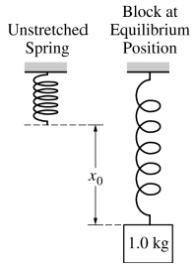
1)A spring of negligible mass and with a spring constant of 50 N/m is hung vertically, as shown above in the figure on the left. A block of mass 1.0 kg is attached to the spring and slowly lowered a distance x0?until it hangs at rest at the equilibrium position, as shown above in the figure on the right.
On the dot below that represents the block, draw and label the forces (not components) that act on the block when it is at the equilibrium position shown. Each force must be represented by a distinct arrow starting on, and pointing away from, the dot.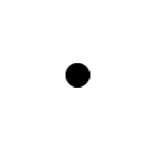
Calculate the distance x0 that the spring is stretched from its original length to the equilibrium position.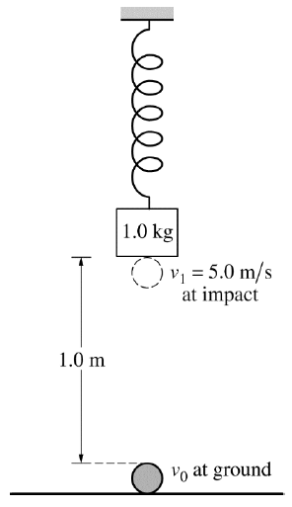
While the 1.0 kg block is in equilibrium, a 0.20 kg ball of clay is launched with speed v0?vertically from the ground 1.0 meter below the hanging block. The clay has speed v1?= 5.0 m/s when it collides with the block.
Calculate the speed v0?.
Upon impact, the clay sticks to the 1.0 kg block.
- Calculate the speed of the block immediately after the collision.
- Calculate the kinetic energy lost in the collision.
- Determine the period of oscillation for the block-clay-spring system.
When the oscillating block-clay-spring system reaches its maximum speed after the collision, will the spring be stretched from its original length by a distance greater than, less than, or equal to x0??
____ Greater than ____ Less than ____ Equal to
Justify your answer.
The collision is repeated using a rubber ball with the same mass as the ball of clay. The rubber ball is launched vertically with the same speed v0?. The collision between the rubber ball and the block is elastic. Will the speed of the block immediately after colliding with the rubber ball be greater than, less than, or equal to the speed of the block you calculated in part (d)i ?
____ Greater than ____ Less than ____ Equal to
Justify your answer.
以上就是關于【2017 AP Physics C物理C—Mechanics力學真題系列之Practice Exam簡答題免費下載】的解答,如需了解學校/賽事/課程動態,可至翰林教育官網獲取更多信息。
往期文章閱讀推薦:
2026 AP大考放榜時間定了!隱藏成績規則大變天,手把手教你查/藏/送/復議!
AP考試迎來史上最大變革!2027年:語言/統計考綱革新 + 兩門全新科目首考!

翰林AMC8視頻課重磅上線!

國際競賽真題資源免費領取