CIE IGCSE Biology: 復習筆記:10.1.1 Pathogens & Barriers

CIE IGCSE Biology: 復習筆記:10.1.1 Pathogens & Barriers
Pathogens
- A pathogen is a?disease-causing organism
- Pathogens are passed on from one host to another and therefore the diseases they cause are known as?transmissible diseases
- Pathogens can be passed on from host to host in different ways, including:
- Direct contact?- the pathogen is passed directly from one host to another by transfer of body fluids such as blood or semen (eg HIV, gonorrhoea, hepatitis B & C)
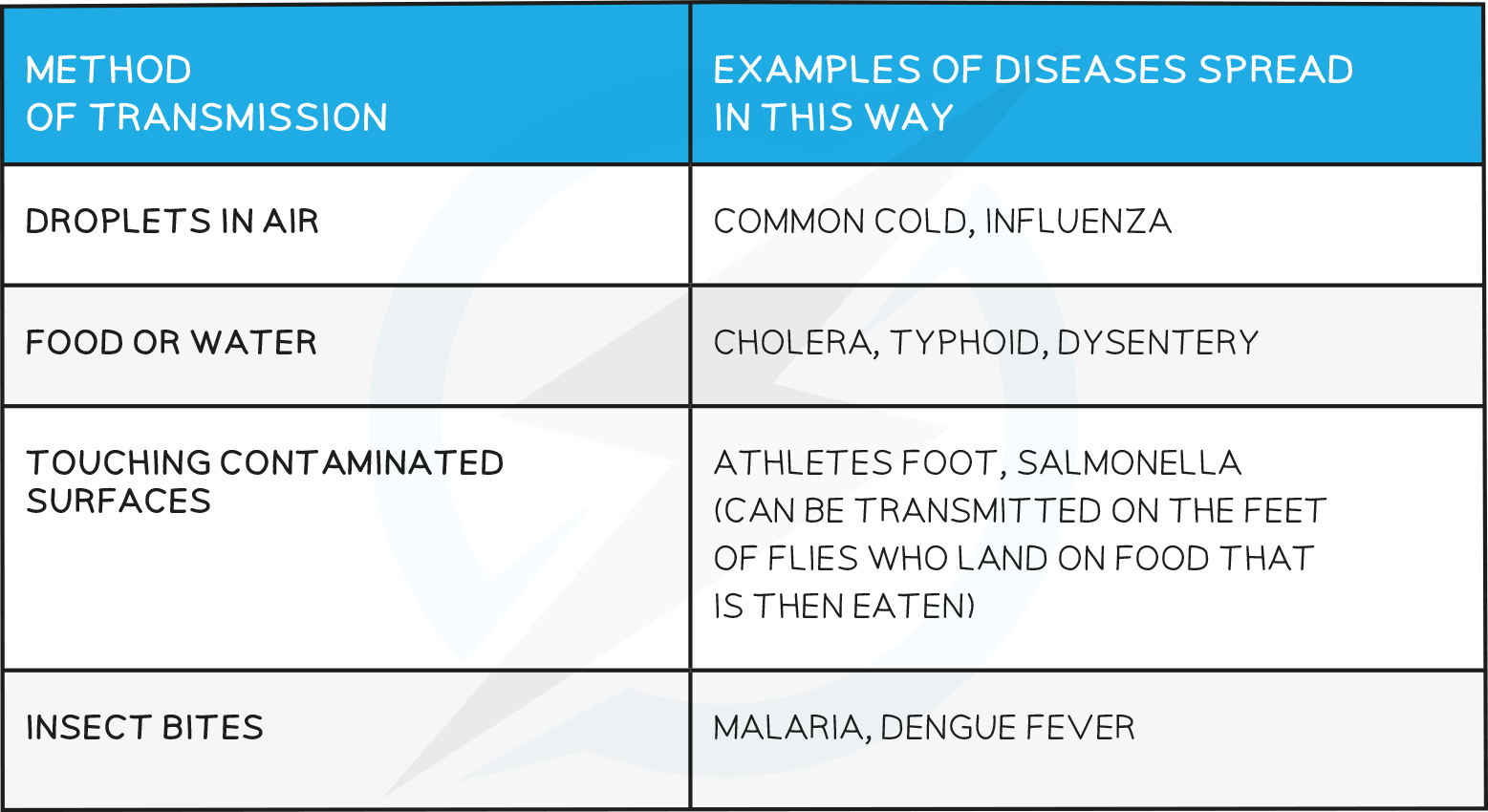
- Indirect contact?- the pathogen leaves the host and is carried in some way to another, uninfected individual
Methods of Transmission Table
The Body Defences
There are?3?main ways in which the body defends itself against disease:
Mechanical barriers?– structures that make it difficult for pathogens to get past them and into the body
a)?Skin?- covers almost all parts of your body to prevent infection from pathogens. If it is cut or grazed, it immediately begins to heal itself, often by forming a scab
b)?Hairs in the nose?- these make it difficult for pathogens to get past them further up the nose so they are not inhaled into the lungs
Chemical barriers?– substances produced by the body cells that trap / kill pathogens before they can get further into the body and cause disease
a)?Mucus?- made in various places in the body, pathogens get trapped in the mucus and can then be removed from the body (by coughing, blowing the nose, swallowing etc)
b)?Stomach acid?- contains hydrochloric acid which is strong enough to kill any pathogens that have been caught in mucus in the airways and then swallowed or have been consumed in food or water
Cells?- different types of white blood cell work to prevent pathogens reaching areas of the body they can replicate in
a) By?phagocytosis?- engulfing and digesting pathogenic cells
b) By producing?antibodies?- which clump pathogenic cells together so they can’t move as easily (known as?agglutination) and releasing chemicals that signal to other cells that they must be destroyed
轉載自savemyexams
以上就是關于【CIE IGCSE Biology: 復習筆記:10.1.1 Pathogens & Barriers】的解答,如需了解學校/賽事/課程動態(tài),可至翰林教育官網(wǎng)獲取更多信息。
往期文章閱讀推薦:
翰林獨家 | 經(jīng)濟學競賽核心精講,一冊打通NEC/IEO/USAEBO!
IGCSE全A*,A-Level階段卻崩了?別忽視IGCSE選課的重要性!


翰林AMC8視頻課重磅上線!

國際競賽真題資源免費領取






