CIE A Level Physics復(fù)習(xí)筆記17.1.1 Describing Oscillations

Describing Oscillations
- An?oscillation?is defined as:
Repeated back and forth movements on either side of any equilibrium position
- When the object stops oscillating, it returns to its equilibrium position
- An?oscillation?is a more specific term for a vibration
- An?oscillator?is a device that works on the principles of oscillations
- Oscillating systems can be represented by displacement-time graphs similar to transverse waves
- The shape of the graph is a sine curve
- The motion is described as?sinusoidal
Properties of Oscillations
- Displacement (x)?of an oscillating system is defined as:
The distance of an oscillator from its equilibrium position
- Amplitude (x0)?is defined as:
The maximum displacement of an oscillator from its equilibrium position
- Angular frequency (?)?is defined as:
The rate of change of angular displacement with respect to time
- This is a scalar quantity measured in?rad s-1?and is defined by the equation:

- Frequency (f)?is defined as:
The number of complete oscillations per unit time
- It is measured in Hertz (Hz) and is defined by the equation:

- Time period (T)?is defined as:
The time taken for one complete oscillation, in seconds
- One complete oscillation is defined as:
?The time taken for the oscillator to pass the equilibrium from one side and back again fully from the other side
- The time period is defined by the equation:

- Phase difference?is how much one oscillator is in front or behind another
- When the relative position of two oscillators are equal, they are?in phase
- When one oscillator is exactly half a cycle behind another, they are said to be in?anti-phase
- Phase difference is normally measured in radians or fractions of a cycle
- When two oscillators are in antiphase they have a phase difference of?π radians
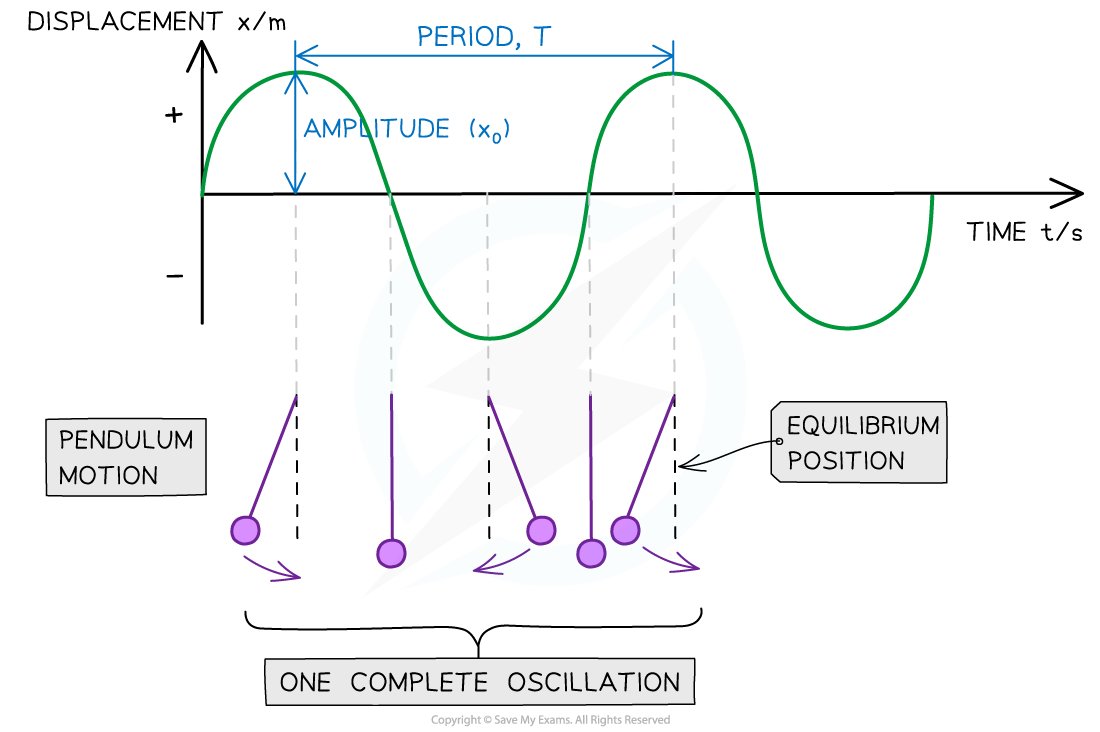
Displacement-time graph of an oscillation of a simple pendulum
Worked Example
A student sets out to investigate the oscillation of a mass suspended from the free end of a spring. The mass is pulled downwards and then released. The variation with time?t?of the displacement?y?of the mass is shown in the figure below.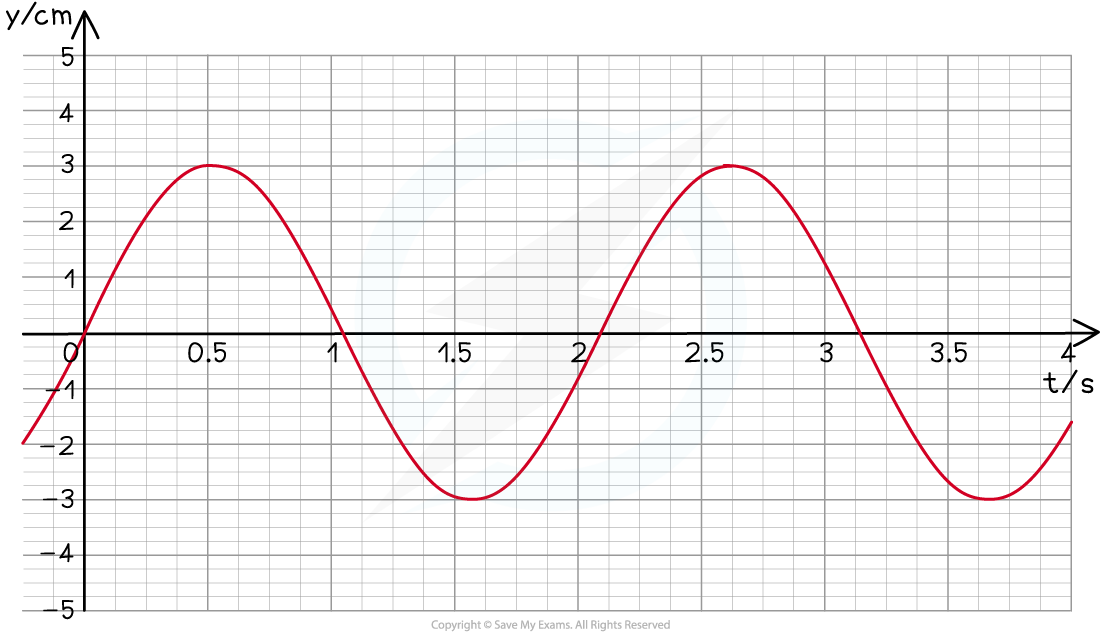
Use the information from the figure to calculate the angular frequency of the oscillations.
Step 1: ??????????
Write down the equation for angular frequency

Step 2: ??????????
Calculate the time period T from the graph
The time period is defined as the time taken for?one complete oscillation
This can be read from the graph:
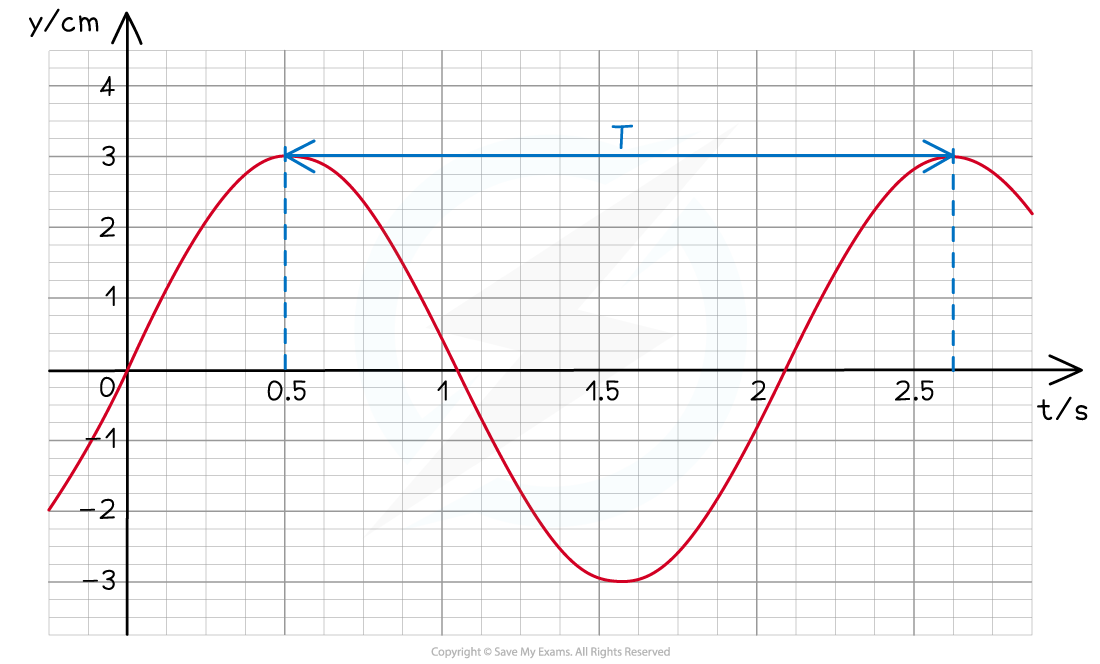 T = 2.6 ? 0.5 = 2.1 s
Step 3:
Substitute into angular frequency equation

Exam Tip
The properties used to describe oscillations are very similar to transverse waves. The key difference is that oscillators do not have a ‘wavelength’ and their direction of travel is only kept within the oscillations themselves rather than travelling a distance in space.
轉(zhuǎn)載自savemyexams
以上就是關(guān)于【CIE A Level Physics復(fù)習(xí)筆記17.1.1 Describing Oscillations】的解答,如需了解學(xué)校/賽事/課程動(dòng)態(tài),可至翰林教育官網(wǎng)獲取更多信息。
往期文章閱讀推薦:
MIT官方發(fā)布【2026年夏季推薦閱讀書單】!橫跨科學(xué)/人文/經(jīng)濟(jì)...
全網(wǎng)破防!ALevel CIE數(shù)學(xué)M1疑似錯(cuò)題?經(jīng)濟(jì)P2難度飆升?5月6日大考考情分析必看!


翰林AMC8視頻課重磅上線!

國(guó)際競(jìng)賽真題資源免費(fèi)領(lǐng)取






