Alevel數(shù)學(xué)干貨,微積分之鏈?zhǔn)椒▌t

Alevel數(shù)學(xué)干貨,微積分之鏈?zhǔn)椒▌t
1.The China rule (鏈?zhǔn)椒▌t)
If y=f(u) is a differentiable function of u and u=g(x) is a differentiable function of x, then y=f(g(x)) is a differentiable function of x and
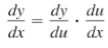
or, equivalently,

如果復(fù)合函數(shù)處處可導(dǎo),可使用鏈?zhǔn)椒▌t來(lái)進(jìn)行求導(dǎo),外部函數(shù)的導(dǎo)數(shù)乘以內(nèi)部函數(shù)的導(dǎo)數(shù)。
常考題型解析:
Example 1

SOLUTION
As you saw earlier, you can break down this expression as follows.
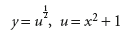
Differentiation these gives
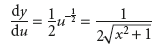
and

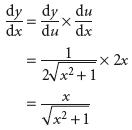
By the chain rule
2. Related-Rate Problems
相關(guān)變化率問(wèn)題
Differentiation with respect to different variables
對(duì)于不同變量的微分
The chain rule makes it possible to differentiate with respect to a variable which does not feature in the original expression. For example, the volume V of a sphere of radius r is given by

Differentiating this with respect to r gives the rate of change of volume with radius,

However you might be more interested in finding dv/dt, the rate of change of change of volume with time, t. To find this, you would use the chain rule:
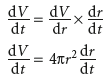
相關(guān)變化率問(wèn)題是復(fù)合函數(shù)求導(dǎo)的應(yīng)用,例,半徑為r的球體積為
體積對(duì)半徑進(jìn)行微分,可得到體積對(duì)于半徑的變化率,

要求出體積對(duì)于時(shí)間的變化率dV/dt,可以使用鏈?zhǔn)椒▌t,通過(guò)半徑r對(duì)時(shí)間t進(jìn)行微分。
常考題型解析
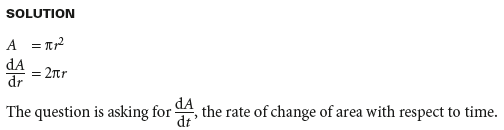
Example 2


以上就是關(guān)于【Alevel數(shù)學(xué)干貨,微積分之鏈?zhǔn)椒▌t】的解答,如需了解學(xué)校/賽事/課程動(dòng)態(tài),可至翰林教育官網(wǎng)獲取更多信息。
往期文章閱讀推薦:
國(guó)家級(jí)頂尖科創(chuàng)培養(yǎng)項(xiàng)目!深度解析上海市“中學(xué)生英才計(jì)劃”,新高一學(xué)生該如何布局?
面向新高一!新一輪上海市 “中學(xué)生英才計(jì)劃” 開始備賽,提前規(guī)劃該做好哪些準(zhǔn)備?


翰林AMC8視頻課重磅上線!

國(guó)際競(jìng)賽真題資源免費(fèi)領(lǐng)取






