2020年John Locke論文寫作競賽經濟學三等獎論文全文


約翰洛克寫作學術活動(John Locke)是由位于英國牛津的獨立教育組織John Locke Institute與英國牛津大學和美國普林斯頓大學等名校教授合作組織的學術項目,意在考察學生在不同學科領域內的基本知識結構,議論文的基本寫作格式與技巧,獨立思考能力以及清晰的邏輯和辯證分析能力。以17世紀英國著名哲學家、古典自由主義鼻祖John Locke命名,是人文社科含金量最高的國際征文比賽之一。
John Locke寫作比賽提供哲學、政治、經濟學、歷史、心理學、宗教、法律共七個領域的內容(僅限高中組,初中組題目是額外的),喜愛文科方向的學生絕對不要錯過!
2022年6月30日?晚上11:59pm(GMT)
● 高年級組:15歲~18歲
●?低年級組:15歲及以下
Q1. Is Bitcoin a blessing or a curse?
Q2. What’s wrong with the housing market? How can we fix it?
Q3. Should Amazon pay people more? What would happen if they immediately increased every worker’s salary by twenty percent?
Q4.? Is Henry George’s land value tax fair, efficient, both, or neither?
What is the socially efficient level of crime??(Professor Daniel d’Amico, Brown University)
Jaimin Shah, King Edward VI Grammar School, United Kingdom
Third place for?the 2020?Economics?Prize ?| 7?min read?
Nelson Mandela once said, “when a man is denied the right to live the life he believes in, he has no choice but to become an outlaw[1].” It is on this belief that neoclassical economics is firmly founded – the rationale that all economic agents within the market mechanism behave rationally. Consumers are indirectly seeking to maximise utility, firms (whilst upholding their philanthropic Corporate Social Responsibility[2]) are working to elevate their profits and the government is attempting to satisfy macroeconomic targets ranging from equity and equality (an alleviation on the Gini Coefficient[3]?for the latter), to international trade and income redistribution. Law-breakers fulfil the first of these three maximisation objectives and so are part of the trio of economic agents as well – they are integrated into the society around us. Despite particular causes of crime being irrational, such as the erratic behaviour associated with addiction (meaning a nuanced, non-zero optimum is required here, preserving a nation’s productive potential), the fundamental principle of informed decision-making (intrinsic cost-benefit analyses) means that this ‘socially efficient’ level of crime exists and can be estimated, as will be demonstrated below.
To begin with, it seems appropriate to graphically and intuitively prove that this so-called ‘social optimum’ de facto exists. One can simplify the overarching problem to a matter of market failure – whereby there is a misallocation of resources in the economy causing a?divergence between marginal social cost (MSC) and marginal social benefit (MSB). It is due to this interpretation of crime, that one can associate it with causing negative externalities in production (an external cost to a third party, when a good or service is created, not reflected in market prices). The good or service in this case is (quite abstractly) violent crime in particular. Taking the broad example of bank robberies, Maj Hansen and Ask Elklit found that around 15% of the sample in their seminal research paper suffered from probable ‘acute stress disorder’ after the occurrence of the deeply unfortunate event[4]. Moreover, this can even be extended to Post?Traumatic Stress Disorder (PTSD), where an investigation carried out by Italian doctor G. P.?Fichera, led to the conclusion that 13% of the sampling units were likely to have this condition[5]. Initiating economic analysis here, this illustrates that the cost of embarking on this unlawful activity, given the monumental repercussions if caught (the marginal private cost, MPC), is not equal to the costs to society (in terms of MSC) given the ‘collateral damage’ and severe emotional trauma the unlucky few unfortunately have to endure – this leads to psychiatric costs and counselling, increasing the disbenefits the state as a whole experiences. As a result, one can ascertain that negative externalities in production (where MSC > MPC) are clearly present in this scenario and thus in the more general case of aggregate-level crime too. Inspecting Figure 1, one can see that MPC (called PMC in this case) is at a lower level than MSC (SMC here) and hence the market is at equilibrium P1Q1 as opposed to P2Q2 (the latter of which is allocative efficiency, where MSC = MSB). Consequently, a socially efficient level of consumption does de jure exist in this sub-market (the aforementioned allocative efficiency). If this is achieved, the shaded deadweight loss (net welfare loss) to society would be eliminated and so the optimum would be reached, implying there could be a more quantitative-based answer to this discussion.
?
Now that it seems evident that there is a precise level of crime that would be socially efficient (as shown previously by mapping this macroeconomic variable as having negative externalities in production), one should consider the causes of crime with a more general view to quantify this problem. Moreover, the ‘Chicago School Social Disorganisation Theory’ is one of the leading conjectures put forward to attempt to explain criminal behaviour.?Clifford Shaw and Henry McKay (the major proponents) suggested that crime was a function of neighbourhood interactions and was not due to individuals and their actions entirely[6]. This links to another contemporary theory first developed by Emile Durkheim and Robert Merton entitled ‘Anomie Theory’ or ‘Strain Theory’ whereby the violent distaste for significant gaps between the wealthiest and the poorest induce a crime-seeking incentive[7]. Both of these ideas put the burden of the blame on the surrounding environment for concocting criminals into our modern-day society. Considering the aforementioned Gini Coefficient (calculated as?area
------
and its accompanying Lorenz Curve (see Figure 2), the 2018 value for this was found to be 0.35 (where 0 is perfect equality and so 1 is perfect inequality) by the ONS[8]. What this illustrates is that, the emphasis Strain Theory and equivalent psychological explanations put on society for creating stark material-income divisions, means that a socially efficient level of crime would have to be individualised; this would take into account the cause, motive, severity and so on, as certain wrongdoings due to difficult personal circumstances (inequity and inequality) may be thought to be more morally acceptable than others. Perhaps more leniency can thus be attributed to this niche over the aforementioned violent crime situation. This means that the socially efficient level of crime should be bespoke to account for these underlying reasons and would not simply be one concrete statistic that encompasses the entire economy.
?
Utilising this logic further, it is apposite to briefly analyse the problem of addiction within crime itself to determine what form of social optimum would be best in this specific case. Taking the market for cocaine as an example, this is a good that is classically thought to have a highly inelastic demand where the price elasticity of demand (responsiveness of quantity demanded to a change in the price of the product) is mathematically between 0 and -1 (non-inclusive). This is due to the good being habit-forming for some consumers but more profoundly addictive for others. This can be clearly demonstrated in Steven D. Levitt and Stephen J. Dubner’s book ‘Freakonomics’ where these two economists carried out a statistical investigation into the substantial effects of ‘crack cocaine’ on the African American community in Bogotá, Colombia. The obsession with taking and selling this Class A drug led to a quadruple in homicides rates amongst young urban males of this ethnic community in 5 years[9] – even statistical investigations highlight this association of addiction to cocaine. Moreover, Figure 3 conveys this relationship in the ‘RAND model for cocaine[10] in the USA’ – supply is thought to be highly elastic due to the volume of cocaine in circulation (during the reign of the Medellín Cartel 15 tonnes of this drug was entering the USA daily[11]) and demand has a shape reminiscent of a ‘rectangular hyperbola’ due to the fact that at high prices, only the addicted households remain with a virtually perfectly price inelastic demand. To convey this addiction to be irrational (and so the social optimum would have to be approached cautiously), one can model the experienced utility (actual utility) versus the decision utility (utility thought to be experienced when making consumption decisions). Using the assumption of quasi-linearity (where good [12]):
?
Hence using these hypothetical quasi-linear utility functions (simply to model addiction to cocaine at a basic, univariate level), one would be attempting to maximise
Therefore, one can see the issue of addiction purely mathematically in this supposed scenario – irrationality is present as [13], e.g. banking). The latter would lead to a decrease in the factor of production of labour (given the extent of UK cocaine usage and thus potential addiction – 4.2% of UK adults[14]) in the economy hence leading to an inwards shift of the aggregate production possibility curve (see Figure 4 – convex to illustrate the laws of increasing opportunity cost and diminishing marginal returns). This causes long-run aggregate supply (LRAS) to shift leftwards and aggregate demand (AD) to experience a contraction (using the Monetarist viewpoint instead of Keynesian here, where LRAS is perfectly price inelastic at the ‘natural rate of output’) – one can see on Figure 5 that real GDP decreases from Y-Y’ and price level increases from P-P’ consequently going against two macroeconomic objectives of long-run economic growth and price stability (2% for the CPI in the UK).
?
Taking these propelled, serious consequences into account, one can make a judgment about the socially efficient level for crime more generally using a ‘differential diagnosis’ (coined by Professor Jeffrey Sachs but now for criminological economics rather than development economics[15]). Taking into account ‘Social Disorganisation Theory’ and ‘Strain Theory’, the social optimum for misdemeanour offences should remain relatively close to the levels they are at in present day (perhaps 70-80% of the current summation of offences). This is due to low-level infringements aiding to provide subsistence for the judiciary system (e.g. projected increases in the Ministry of Justice’s budget to $8.1bn in 2020-21[16]) and their relative seriousness in comparison to the rest of aggregate crime, being minimal. Given that the?police and defence forces are ‘economic goods’ (scare resources), comparatively less assets should be devoted here. Regarding the aforementioned issue of addiction, especially excessive, irrational cocaine usage, 60-70% of current levels would likely bring about a social optimum as conveyed above. Finally, in terms of wrongdoings that carry more gravitas, such as the previously displayed emotional consequences of bank robberies or the cocaine- fuelled quadruple in homicide rates amongst African Americans in Bogotá (within half a decade), the social optimum for these crimes should be as close to zero as humanely possible. Although Alasdair MacIntyre’s thoughts about Kant’s Categorical Imperative can rather tenuously justify crime for basic, humanitarian needs[17], it is evidently not socially, economically, morally or ethically acceptable for forms of violent crime to exist on a large scale and hence, internalising the significant externalities for these ‘crimes against humanity’ should attempt to eliminate this market altogether. This would not only be socially and economically efficient (in terms of an eliminated deadweight loss to society intertwined with improved scarce resource allocation) but would also be socially sustainable thus paving the way for generations present and generations to come.
Author's Note
?
My approach to this question was simple – I desired to simplify and breakdown the problem into something more manageable and more quantifiable. Due to the word constraint, it was not feasible to analyse every type of crime (white-collar, murder, arson, assault etc.) in detail, and hence I decided to split the overarching theme into three sub-sections as is demonstrated in the paper below. The use of hypothetical econometric analysis further on in the paper is simply designed to provide a deeper understanding of the issue being discussed at the time. It is not based on real-life observation, experimentation and data collection but serves the purpose to reiterate my argument and overall line of reasoning, in a different, niche, mathematical way (contrasting to the nature of the question which is open-ended and broad).
?
Footnotes
?
1 GoodReads [internet]. Nelson Mandela Quotes; 2020. Available from:?https://www.goodreads.com/author/quotes/367338.Nelson_Mandela
2 Forbes [internet]. Why CSR? The Benefits of Corporate Social Responsibility Will Move You to Act; 2013 May?12. Available from:?https://www.google.com/amp/s/www.forbes.com/sites/devinthorpe/2013/05/18/why-?csr-the-benefits-of-corporate-social-responsibility-will-move-you-to-act/amp/
3 Economy [internet]. The Gini-coefficient: How do we measure inequality? Available from:?https://www.ecnmy.org/learn/your-society/the-question-of-equality/the-gini-coefficient-how-do-we-?measure-inequality/
4 Hansen M, Elklit A. Predictors of acute stress disorder in response to bank robbery. European Journal of Psychotraumatology, 2:1, p. 5864. 2011 May 12.
5 Fichera G.P. et al. Post-traumatic Stress Disorder among bank employee victims of robbery. Occupational Medicine, vol. 65, issue 4, pp. 283-89. 2015 June.
6 Porter, Jeremy & Capellan, Joel & Chintakrindi, Sriram. The Encyclopaedia of Crime & Punishment, p. 1179. 2015 December 28.
7 Agnew R. Encyclopaedia of social problems; Strain Theory. Thousand Oaks: SAGE publications, pp. 904-906. 2008.
8 Office for National Statistics. Household income inequality, UK: financial year ending 2019, p. 4. 2020 March 3.
9 Levitt SD, Dubner SJ. Freakonomics. 4th Ed. Penguin Random House UK; p. 112. 2015.
10 Manski CF, Pepper JV, Thomas YF. Assessment of Two Cost-Effectiveness Studies on Cocaine Control Policy,?p. 9; National Research Council. National Academic Press, Washington DC. 1999.
11 Independent [internet]. 10 facts reveal the absurdity of Pablo Escobar’s wealth. Business Insider. 2017 December 2017. Available from:?https://www.google.com/amp/s/www.independent.co.uk/news/people/pablo-escobar-worth-wealth-money-?how-much-a8133141.html%3famp
12 Caltech [internet]. Principles of Economics with Calculus; online course, EDX. 2020 January 7. Available from:?https://www.edx.org.uk/course/principles-of-economics-with-calculus
13 The Guardian [internet]. Confessions from the City: why firms are failing to tackle the cocaine crisis. 2017 September 9. Available from:?https://www.google.com/amp/s/amp.theguardian.com/society/2017/sep/09/city-firms-failing-to-tackle-?cocaine-crisis
14 The Guardian [internet]. Confessions from the City: why firms are failing to tackle the cocaine crisis. 2017 September 9. Available from:?https://www.google.com/amp/s/amp.theguardian.com/society/2017/sep/09/city-firms-failing-to-tackle-?cocaine-crisis
15 Sachs J. The End of Poverty; how we can make it happen in our lifetime. 1st Ed, Penguin Books Ltd, p. 273, 2005.
16 HM Treasury [internet]. Policy Paper – Spending Round 2019. UK Government. 2019 September 4. Available from:?https://www.gov.uk/government/publications/spending-round-2019-document/spending-round-2019
17 Dimmock M, Fisher A. AQA Philosophy and OCR Religious Studies; Chapter 11 – Stealing in Ethics. Open Book Publishers. 2017.
?
Bibliography
?
Agnew R. Encyclopaedia of social problems; Strain Theory. Thousand Oaks: SAGE publications, pp. 904-906. 2008.
Fichera G.P. et al. Post-traumatic Stress Disorder among bank employee victims of robbery. Occupational Medicine, vol. 65, issue 4, pp. 283-89. 2015 June.
Hansen M, Elklit A. Predictors of acute stress disorder in response to bank robbery. European Journal of Psychotraumatology, 2:1, p. 5864. 2011 May 12.
Levitt SD, Dubner SJ. Freakonomics. 4th Ed. Penguin Random House UK; p. 112. 2015.
Manski CF, Pepper JV, Thomas YF. Assessment of Two Cost-Effectiveness Studies on Cocaine Control Policy, p. 9; National Research Council. National Academic Press, Washington DC. 1999.
Office for National Statistics. Household income inequality, UK: financial year ending 2019, p. 4. 2020 March 3.
Porter, Jeremy & Capellan, Joel & Chintakrindi, Sriram. The Encyclopaedia of Crime & Punishment, p. 1179. 2015 December 28.
Sachs J. The End of Poverty; how we can make it happen in our lifetime. 1st Ed, Penguin Books Ltd, p. 273, 2005.
2022年John Locke論文學術活動已經放題啦!
對其他學科領域感興趣的同學
可掃碼添加微信咨詢
免費領取歷年相關獲獎論文學習

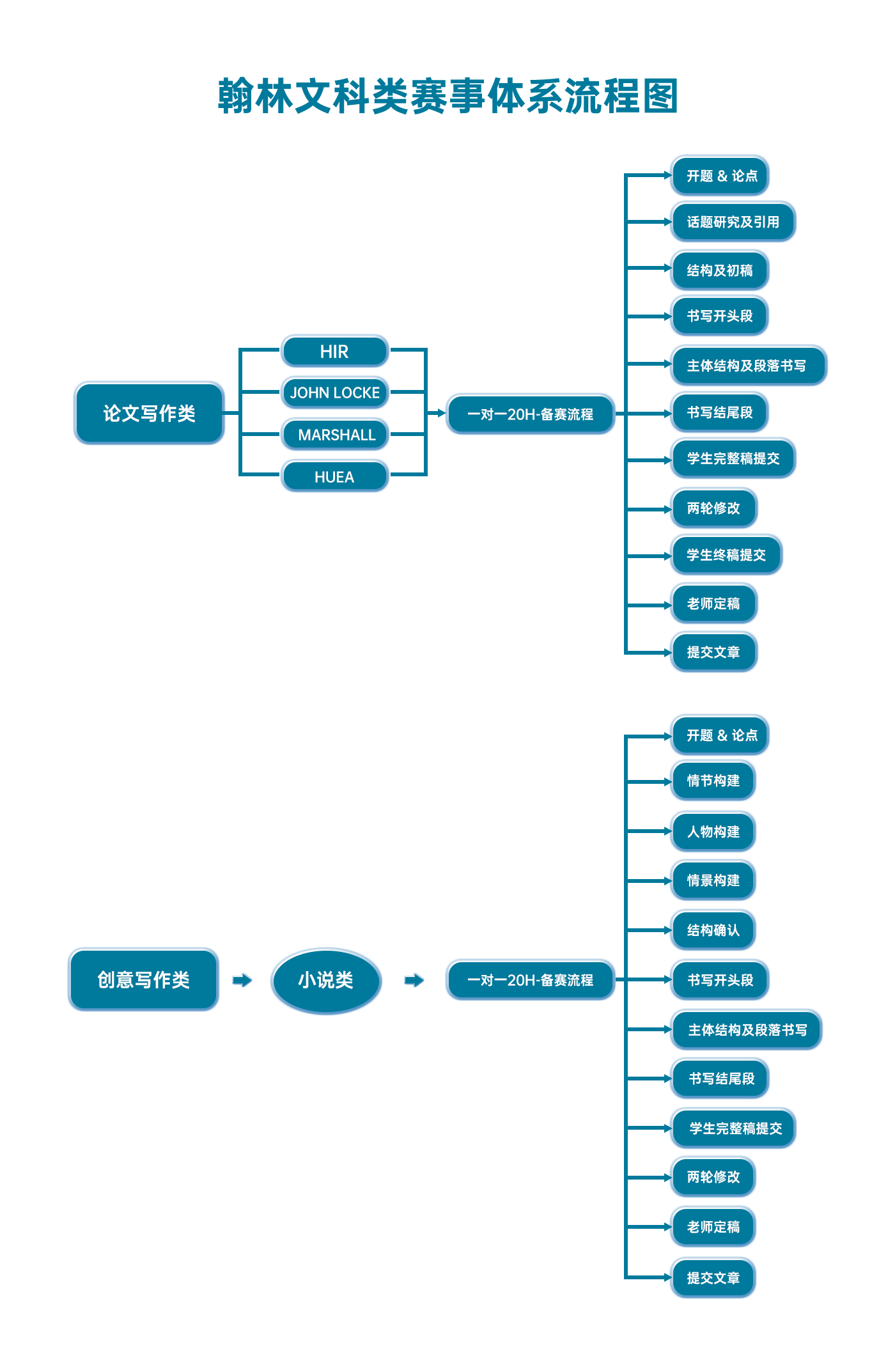
翰林文科學術活動課程體系流程圖
以上就是關于【2020年John Locke論文寫作競賽經濟學三等獎論文全文】的解答,如需了解學校/賽事/課程動態,可至翰林教育官網獲取更多信息。
往期文章閱讀推薦:
2026 IPsyO心理學奧賽模擬測試今晚開啟!缺席=白丟3分!
2026理工科競賽“大洗牌”:線上考試終結、報名門檻收緊、晉級規則重塑...你準備好了嗎?


翰林AMC8視頻課重磅上線!

國際競賽真題資源免費領取






