九月開學季,各大高校都斯坦福大學2024級開學典禮在弗羅斯特露天劇場舉行,歡迎來自全美和世界各地的1704名新生和60名轉學生入讀斯坦福大學。
新任校長喬納森·萊文(Jonathan Levin)發表了開學演說,并強調,“大學生活的核心在于提出問題”,激勵學生保持好奇、不斷探索并心存感恩。
喬納森·萊文(Jonathan Levin)
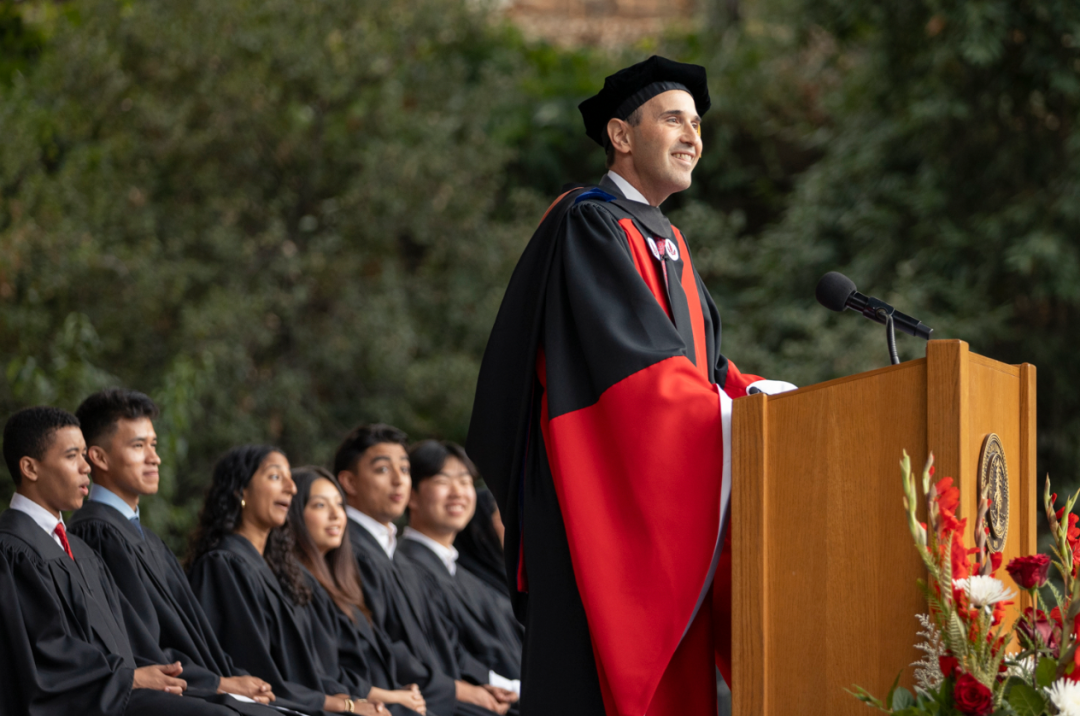
喬納森·萊文(Jonathan Levin),1972年11月17日出生于美國康涅狄格州紐黑文,經濟學家,美國藝術與科學院院士,2024年4月被任命為斯坦福大學第13任校長。
?喬恩·萊文是耶魯前校長理查德·萊文的兒子,老萊文在耶魯做了20年校長,是該校最為成功的領導人之一。他們都是經濟學家,都擁有斯坦福本科和英國牛津碩士學位,不過父親在耶魯拿到博士,兒子的博士學位在MIT拿到。
?2011年,他獲得了專門表彰美國40歲以下最杰出經濟學家的約翰·貝茨·克拉克獎章(John Bates Clark Medal),
?出任校長前,萊文是菲利普·奈特講席教授和斯坦福商學院院長。
? 還擔任拜登總統科學技術顧問委員會的成員。
演 講 正 文 如 下 :
各位新生、轉學生和你們的家人們:
歡迎來到斯坦福大學!我們一起期盼著你們的到來,非常高興看到大家終于來到校園。
和你們一樣,我本人也在開啟新的職業篇章。盡管我在斯坦福(經濟系),還擔任過斯坦福商學院院長,但剛剛才就任斯坦福校長。
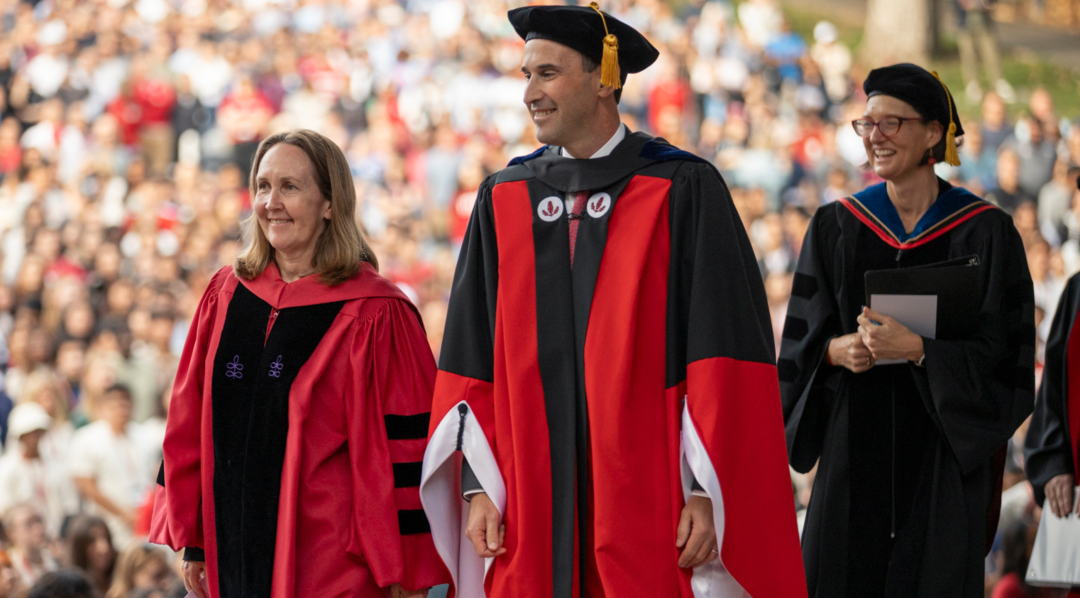
和你們一樣,我也踏上了一條學習和探索之旅,歷經多年,我已經愛上斯坦福及其代表的一切。對于面臨的機遇和我們的未來——尤其是你們所代表的未來,我深感振奮。
我非常高興有機會給你們上第一堂課。
看到你們的光臨,我彷佛也回到了1990年9月在斯坦福就讀本科的第一天。我在東海岸長大成人,因此對橫跨北美大陸來到加州充滿期待和彷徨。
今天,我很想告訴你們的是,在34年前我就坐在你們之中的一個座位上,聆聽校長在開學典禮所說的塑造我的斯坦福本科生涯、影響我的人生軌跡的那些話。數十年過后,這句話依然銘刻在心。
但事實上,我完全記不得開學典禮的任何細節。或許我確實出席了這個活動,但我很肯定沒有注意誰是校長。因為我在斯坦福的開學第一個星期,我日思夜想的是:這些人是誰?他們會有人成為我的朋友嗎?
我覺得你們之中很多人或許同樣如此,這完全合乎情理。
因此,既然我們可以肯定34年后,你們同樣會把這次演講拋到腦后,你們甚至可能完全忘記開學典禮,但我還是想和你們分享一些事情。

大學在于提出問題
讓我先從一個故事開始,這實際上也是我對你們在斯坦福本科生涯的期望。
多年前,我參加過一個面向新生的人文學科精彩講座。主講嘉賓是哲學家喬納森-李爾,主題是關于蘇格拉底。正如李爾所解釋的,蘇格拉底是通過與普通人交談進行哲學研究。
他采用的方法是提出問題,進行蘇格拉底式對話。形形色色的人都會找到蘇格拉底。他們來的時候往往秉持某種信念,例如,某種義正詞嚴或虔誠無比的理論。蘇格拉底刨根問底地提出問題,從而動搖他們的信念。隨著蘇格拉底拋出更多問題,那些人愈發猶疑不定,最終心亂如麻地倉皇離去。
但蘇格拉底坦然相對,與周圍的人不同,他樂于接受未知,他樂于提問,但不執著于答案。

那次講座讓我思考今天你們為什么接受高等教育。
相信有人告訴過你們,上大學是為了獲取知識,當然,這話沒錯。在斯坦福大學,你們肯定會學到很多理論、事實以及技能。
然而,大學的核心在于提出問題,在于接受你們未知的事物——總會發現新的方法來解決一項課題、重構思維模式、或進行更深入的研究。
現在,喬納森·李爾的演講繼續涉及另一個異常相關的論點。李爾觀察到,蘇格拉底感興趣的問題在于:如何讓諸如在座各位的學生們作為個體并在社會中茁壯成長;以及你們期盼什么樣的生活。
講座接近尾聲時,在場聽眾提出一些問題。一位學生起身道,“李爾教授......我怎么才能不虛度此生呢?”這個場景在我腦海中一直揮之不去:首先,因為這是一個很難回答的問題;其次,因為在那個瞬間,我彷佛穿越回古希臘,來到蘇格拉底(而不是李爾教授)的身邊。
當然,這個問題也成為那次講座的聚焦點。盡管在接下去的數周內,你們會忙于結交好友,厘清自己的課程和活動、記住各個宿舍的位置,不過我們希望你們在校期間不要忘記這些重大問題:
我們該如何為美好生活做好充分準備?
成為社會和民主制度中的公民意味著什么?
在每一種文化中,這些問題都會時刻觸及到你們。事實上,斯坦福的本科課程也會要求你們應對這些問題。
應對這些問題,也是我們一再強調斯坦福除了提供技能和學位、而且還有真正的博雅教育的部分意義所在。
因此,我希望你們在斯坦福學到新的專業和技能,無論是國際關系、創意寫作、還是分子生物學。你們會遇到未來的終生摯友;你們會愛上這個美麗的校園;你們會找到一條職業路徑。
最為重要的是,你們會帶著諸多問題離開學校,并且更加心安理得于無從知曉所有答案。

我的幾個建議
現在,在說出對你的期望后,我想分享三個建議。
1、保持好奇,拒絕評判
首先,花時間觀察你們身邊的1,700位同學;還有為數更多的研究生和教師團體。在斯坦福大學,你們周圍有著無數來自五湖四海的、背景各異、興趣和抱負廣泛的人們。

我們的一項共同挑戰是營造一個有助于所有這些擁有無數熱情和看法的人茁壯成長的氛圍。如果關注過去年的校園,你們會明白這并非理所當然。
我喜歡電視教練泰德·拉索,他的格言是“要好奇,不要評判”。對于彼此之間各種不同的想法和觀點,斯坦福是一個充滿好奇,而非評判的地方。這意味著保持開放的心態,參與對話,對周圍的人們保持好奇心。
如果你們還能記得一點點這次演講的內容,我希望你們記住的是以上這點。因為這確實是斯坦福強有力社區的核心所在。
2、有目的地進行探索
其次,你們能夠在斯坦福選擇幾乎所有的知識領域,而且這個校園里總有人處于該領域的前沿。
你們可以選修海帶森林生態學、希臘神話、AI社會和經濟影響、以及數百門其他專業的課程。
你們還可以加入超過650個學生俱樂部(這還沒算上運動隊)。當我回憶起自己的新生宿舍時,身邊有的同學加入歌唱團、競選學生會、制造太陽能汽車、以及爭奪全美高校體育協會(NCAA)錦標。同宿舍的一幫學生打破蛙跳世界紀錄,在春季學期,他們花了整整兩周時間內繞著威爾伯運動場(Wilbur Field)又蹦又跳。
我的一位至交好友沒有參加任何有組織的課外活動。不過他喊得出我們這個年級所有1,700位同學的名字。這也很好——甚至可能比打破蛙跳世界紀錄更棒。
因此,你們在斯坦福期間即將面臨的一項艱巨決定就是要搞清楚自己該做什么、以及把自己的時間花在何處。
在斯坦福多年來,我發現最成功的學生懂得平衡之道。他們有意識地設定目標和制定計劃(季度或年度)——但他們也對意外之喜保持開放態度。他們愿意嘗試新鮮事物或結識新朋友。
我希望你在校期間努力找到這種平衡。
3、感恩
我的第三個也是最后一個建議更為個人化。
斯坦福在讀體驗肯定不會完美無缺。你們每一位都會遭遇失望、障礙和挫折。你們中有人是克服了重大挑戰得以來到這里,未來數年,我們所有人都會面臨艱難險阻。
盡管如此,我們也非常幸運。作為一名斯坦福學生,很多大門已經向你們敞開。你們能夠在本科階段就進行科學研究,得到諾貝爾獎得主教授的言傳身教,到佛羅倫薩、開普敦或香港交換學習。在這里,相比世界上很多其他地方,你們享有非同尋常的自由。
大多數的人沒有機會坐在這里。因此,我們都應該,通過謙卑和服務,努力讓自己無愧于這個校園。
這里有一些人應該得到更多。他們竭盡全力幫助你們來到這里,他們為你們感到無比自豪。本著感恩的精神,我希望大家花點時間分享對家人和親人的感激之情。
在結束之前,我想再說一遍:我們很高興你們來到斯坦福。
你們來到一個非凡的地方,身邊都是出類拔萃的人、有著無數的可能性。用你們的時間來保持好奇、進行探索,并對面臨的機遇心存感恩。
我迫切希望看到你們在這里的成長、你們如何激發自己的好奇心。我知道這將引領你們走向非凡的未來。
2028屆的同學們,歡迎來到斯坦福大學!
Convocation remarks by Stanford President Jonathan Levin
First-years, transfer students, and families: Welcome to Stanford!
We’ve been eagerly anticipating your arrival and it was a joy to see you moving in this morning. We’re so glad you’re here.
Like you, I am beginning a new chapter. Although I’ve spent many years on the Stanford faculty – teaching in the economics department, and then as the dean of Stanford’s business school, I am just starting as Stanford’s president.
Like you, I am setting off on a journey of learning and discovery. Over the years, I have come to love Stanford and all that it represents. I’m energized by the opportunities before us, and by our future – the future that you represent.
I couldn’t be more excited to welcome you as my first class.
Watching you arrive brought me back to my own first days as an undergraduate at Stanford, in September of 1990. I grew up on the East Coast, so moving across the country to California was filled with both anticipation and uncertainty.
Now, I’d like to say that 34 years ago, I sat in one of your seats at Convocation and Stanford’s president said something that shaped my time at Stanford, that affected the course of my life, something that I remember decades later.
But actually, I can’t remember anything about Convocation. And assuming I attended, I’m pretty sure I wasn’t paying attention to the president. Because my first week at Stanford, what I was thinking was: Who are all these people? Will any of them become my friends?
I suspect the same may be true for some of you, which is entirely appropriate.
So, now that we’ve established that 34 years from now, you won’t remember this talk, and you may not even remember if you were here, I have a few things I’d like to share.
College is about questions
I’ll start with a story, which is really about my hopes for you at Stanford.
Some years ago, I attended a wonderful lecture for a freshman humanities class. The speaker was the philosopher Jonathan Lear, and the topic was Socrates.
Socrates, as Lear explained, did philosophy by talking to everyday people. The way he did that was to ask questions, to engage in Socratic dialogue.
All sorts of people came to Socrates. Typically, they would arrive with a conviction – for instance, a theory of justice or of piety. Socrates would ask probing questions, and their conviction would weaken. Socrates would ask more questions. They would become even less certain. Eventually, reduced to a state of confusion, they would rush off.
But Socrates stood still. Because unlike the people around him, he was comfortable not knowing. He was comfortable asking questions and not having answers.
That lecture came back to me, thinking about why you are here today.
People will tell you that college is about acquiring knowledge. Of course, there’s a good deal of truth to that. You will learn many theories and facts and skills here at Stanford.
However, at its core, college is about asking questions. It is about learning to appreciate how much you don’t know – that there are always new ways to approach a topic, to reframe your thinking, or to explore more deeply.
Now, Jonathan Lear’s lecture went on to talk about another very relevant point. Lear observed that Socrates was interested in the question of how students, like you, can develop in ways that will allow you to flourish as individuals and in society, and what sort of lives you might aspire to lead.
At the end of the lecture, there were questions from the audience. A student stood up and said, “Professor Lear … how doIlive a good life?” I remember the moment vividly: first, because it was a hard question, and second, because for an instant, there was an extraordinary transference, as if we were in the room not with Professor Lear but with Socrates.
Of course, the question was also the point of the lecture. Although you will be plenty busy in the coming weeks making friends, figuring out your classes and activities, and trying to remember where FloMo and Wilbur and Roble are located, part of what we eventually want you to do at Stanford is to engage with big questions: How do I prepare to live a good life? What does it mean to be a citizen in society or in a democracy?
These questions are asked in every culture, and at every time. Indeed, you will be asked to tackle them as part of the COLLEGE curriculum this year.
Wrestling with them is part of what we mean when we say that Stanford will offer you not just skills and a degree but a true liberal education.
So my hope for you at Stanford is that you will learn new subjects and skills, whether it’s international relations or creative writing or molecular biology. That you will meet people who become lifelong friends. That you fall in love with this beautiful campus. That you find a career path. And most of all, that you leave with many questions, and a greater comfort in not knowing all the answers.
A few pieces of advice
Now, I’ve shared my aspirations for you, and I’d like to share three pieces of advice.
Be curious, not judgmental
First, take a moment to look at the 1,700 students gathered around you. Multiply that by four. Add the coterms, the graduate students, the faculty. At Stanford, you will be surrounded by people from every part of the world, from all different backgrounds, with a vast array of interests and aspirations.
One of our collective challenges is to create an environment where each of us, with so many different passions and views, can thrive. If you’ve followed college campuses for the last year, you’ll know it’s not a given.
I’m fond of the television coach Ted Lasso, whose maxim was: “Be curious, not judgmental.” Stanford is a place to be curious, not judgmental: about each other, about ideas, about different perspectives. That means keeping an open mind, getting into conversations, being inquisitive about the people around you.
I hope if you remember one thing from this talk, you’ll remember that, because it is really at the heart of having a strong community at Stanford.
Explore, with intention
Second, here at Stanford, you can pick virtually any field of knowledge, and there will be someone on this campus who is at its frontier.
You can take classes on the ecology of kelp forests, Greek mythology, the social and economic impact of AI, and hundreds of other topics.
You can join more than 650 student clubs, and that’s not even counting the sports teams. When I think back to my own freshman dorm, there were students who joined singing groups, ran for student government, built solar cars, and competed for NCAA championships. A group of my dorm mates broke the world record for leap-frogging, by spending two weeks lapping Wilbur Field during spring quarter.
One of my closest friends joined precisely zero organized activities. Instead, he memorized the names of all 1,700 people in our class. That also worked out just fine – maybe even better than for the leap-froggers.
So one of the hardest decisions you will face at Stanford is figuring out what to do and how to spend your time.
Over many years here, what I have seen is that the students who are most successful strike a balance. They are intentional in setting goals and making plans – for the quarter or the year – but they also leave themselves open to serendipity. They put themselves out there to try new things or take a risk in meeting new people.
I hope you will try to find that balance during your time here.
Gratitude
My third and final piece of advice is more personal.
Stanford will not be a perfect experience. Each of you will have disappointments and frustrations and setbacks. Some of you have overcome significant challenges to sit here today, and in the next few years, all of us will encounter difficulties.
Yet we are also in a fortunate position. As a Stanford student, many doors are open. You can pursue undergraduate research, take courses taught by Nobel laureates, study in Florence or Cape Town or Hong Kong. You will have freedoms here that compared to many parts of the world are extraordinary.
Most people don’t get the opportunity to be here. So we should all try, through humility and service, to be deserving of these circumstances.
Now in that spirit of gratitude, there is a group of people here who deserve a great deal of it. They have worked hard to help you get to this point, and they are immensely proud of you. So I’d like us to take a moment to share our appreciation for your families and loved ones.
Before I close, I want to say, again: We are so glad you’re here.
You have arrived at a remarkable place, full of extraordinary people and infused with a sense of possibility.
Use your time to be curious, to explore, and to be grateful for the opportunities that are in front of you.
I can’t wait to see what you do with your time here, and the ways in which you engage your curiosity. I know it will lead you to remarkable places.
Class of 2028: Welcome to Stanford!
看完了校長的開學演講,是不是也想加入其中,成為斯坦福大學的一員?光想還不夠,努力提升自己的實力才是硬道理!
同學們可以考慮參加一些高含金量的競賽,為自己的申請添磚加瓦!

了解更多申請詳情
掃碼1v1咨詢顧問老師

我要咨詢!
更多信息可咨詢顧問
本期福利

斯坦福大學推薦書單
掃碼領取